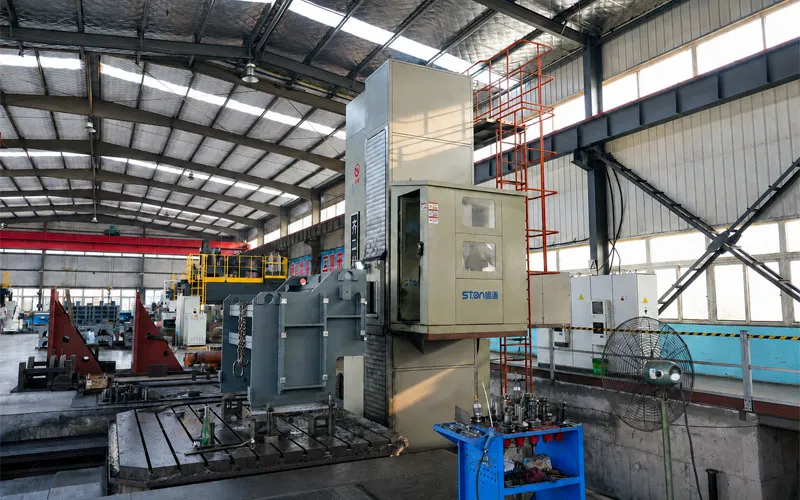
CNC Equipment for Electrical Cabinet and Enclosure Manufacturing
Electrical cabinets, switchgear enclosures and control panels share the same production challenge: every panel needs multiple precise bends, a clean hole pattern, and consistent dimensions across thousands of units — with no room for angular error that keeps a door from closing flush or a latch from lining up.
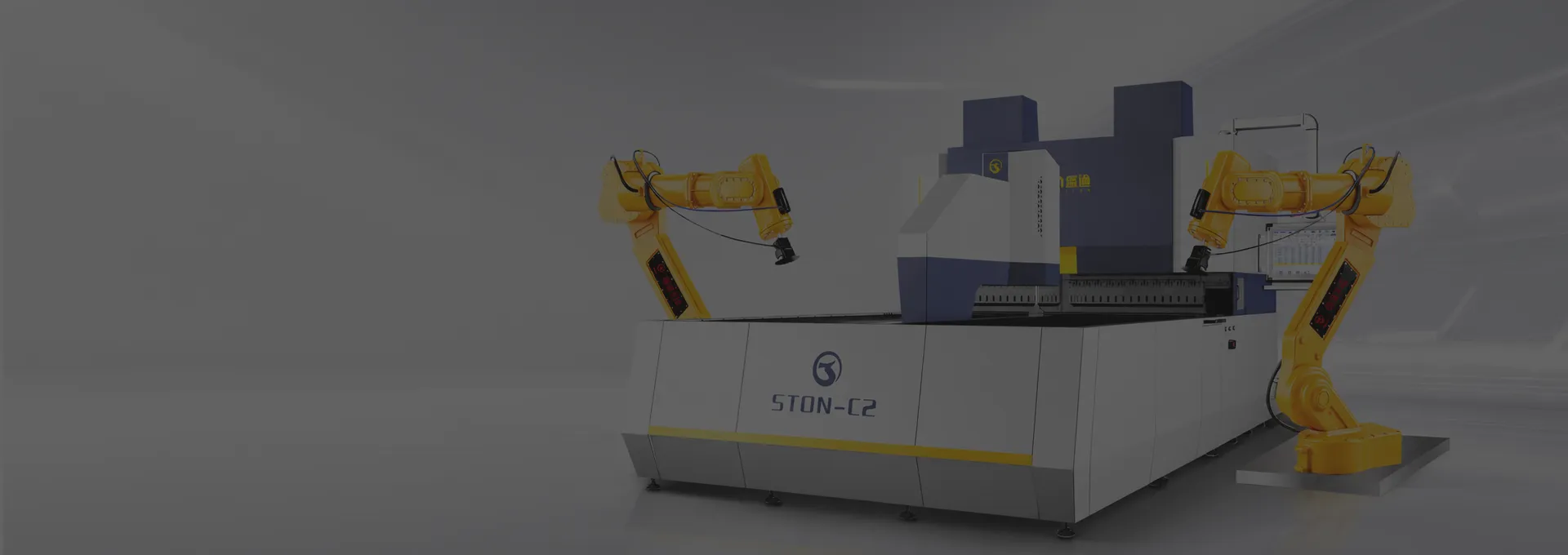
STON manufactures the CNC panel benders, turret punch presses and laser cutting machines that electrical cabinet factories use to solve this, built in-house at our ISO 9001-certified, 20,000㎡ facility in Qingdao, China.
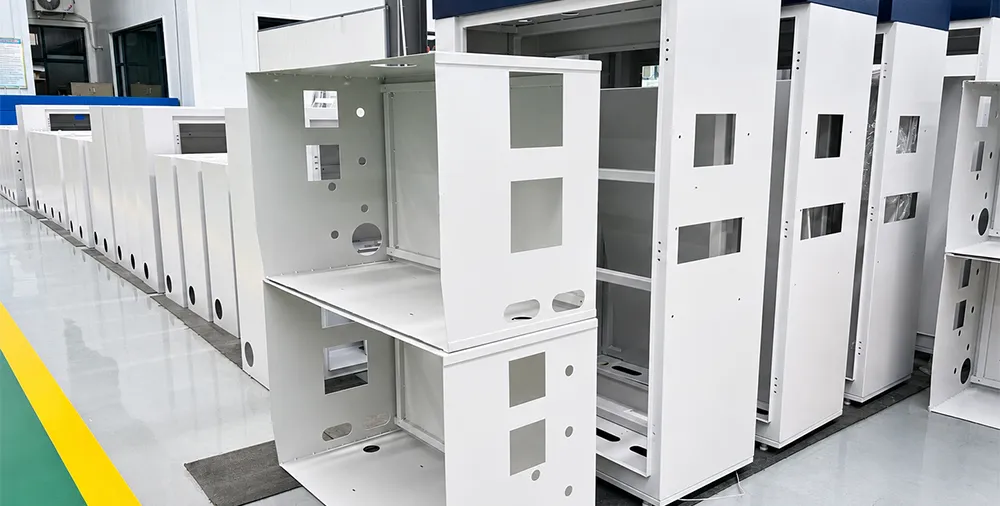
Electrical cabinet bodies and doors formed on STON equipment — Qingdao, China
The process
What equipment does an electrical cabinet factory actually need?
An electrical cabinet is built from flat sheet in two stages: the panel is punched or cut to create mounting holes, ventilation slots and cutouts, then it is bent on four sides to form the enclosure body, door or gland plate. Most cabinet factories need both operations — either as two separate machines or, at higher volume, as an integrated line.
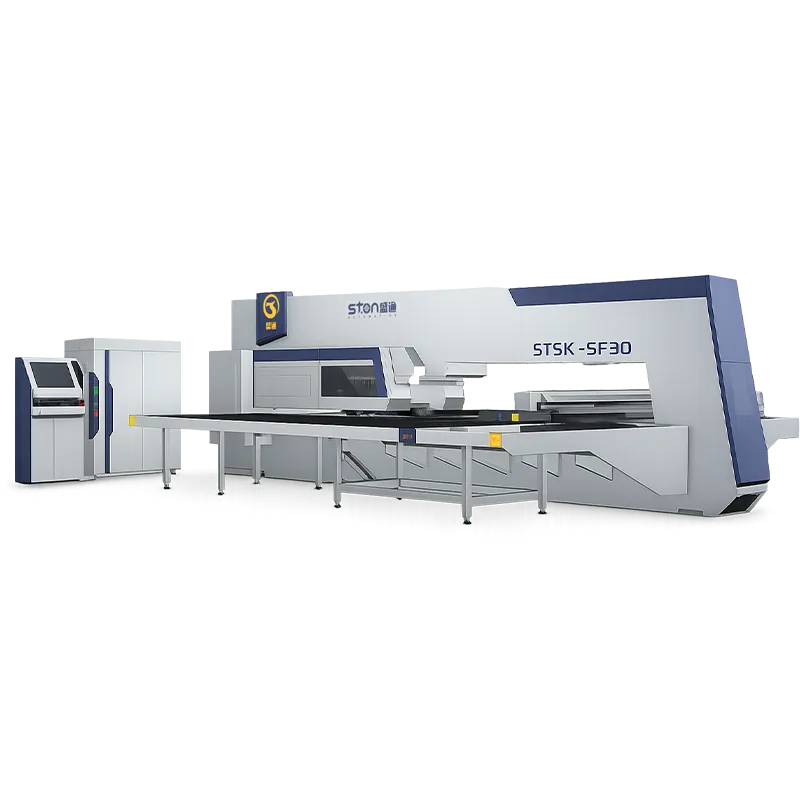
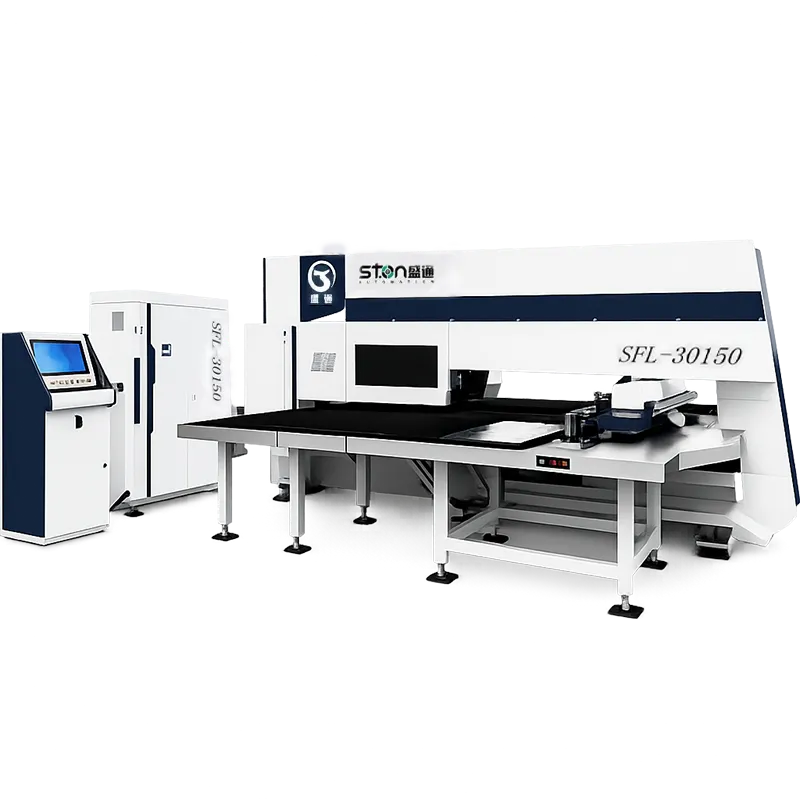
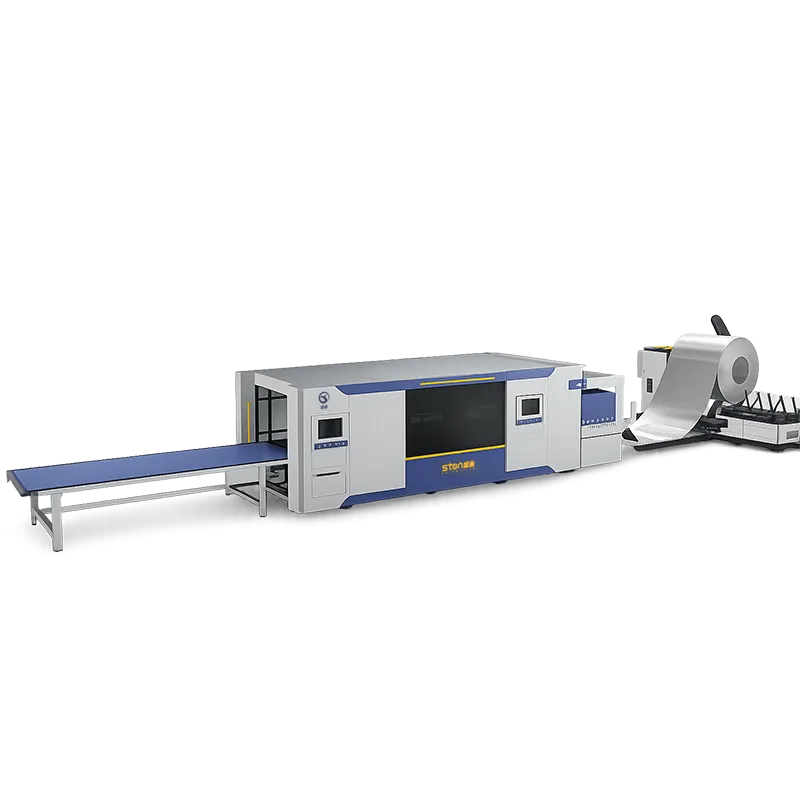
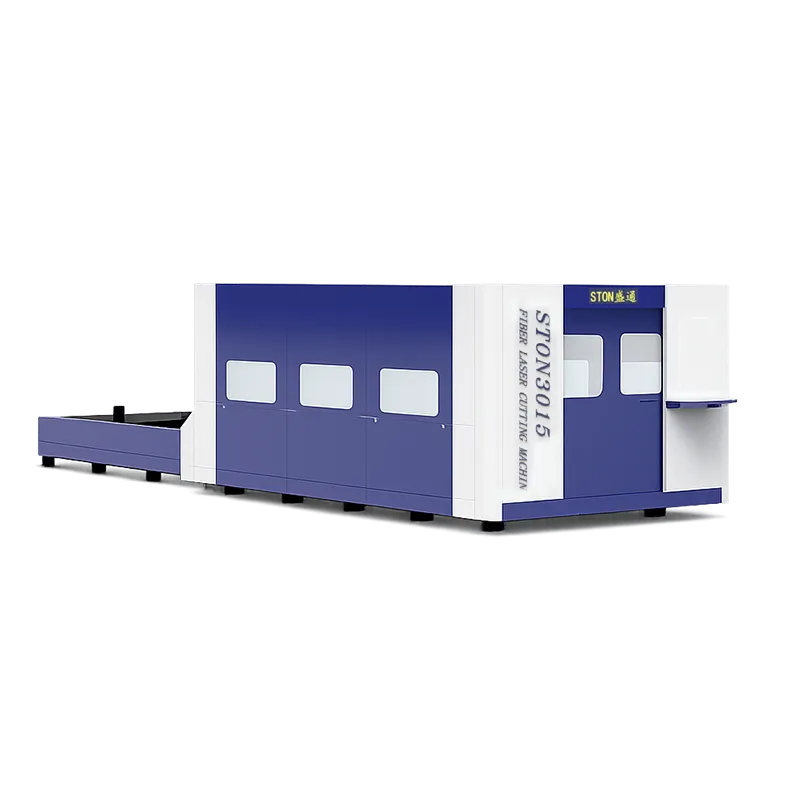
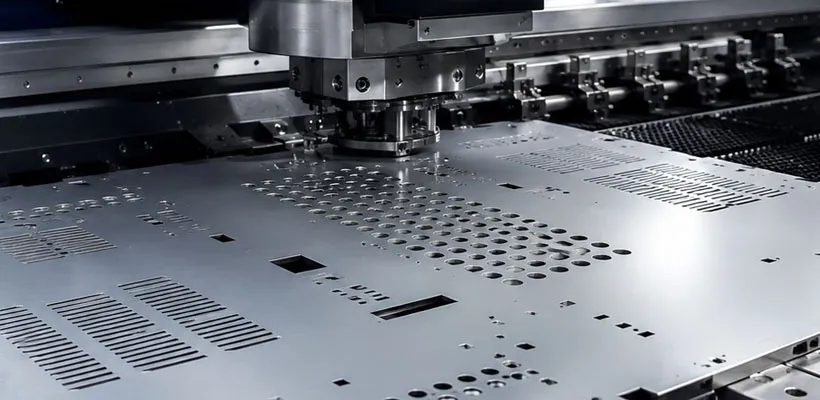
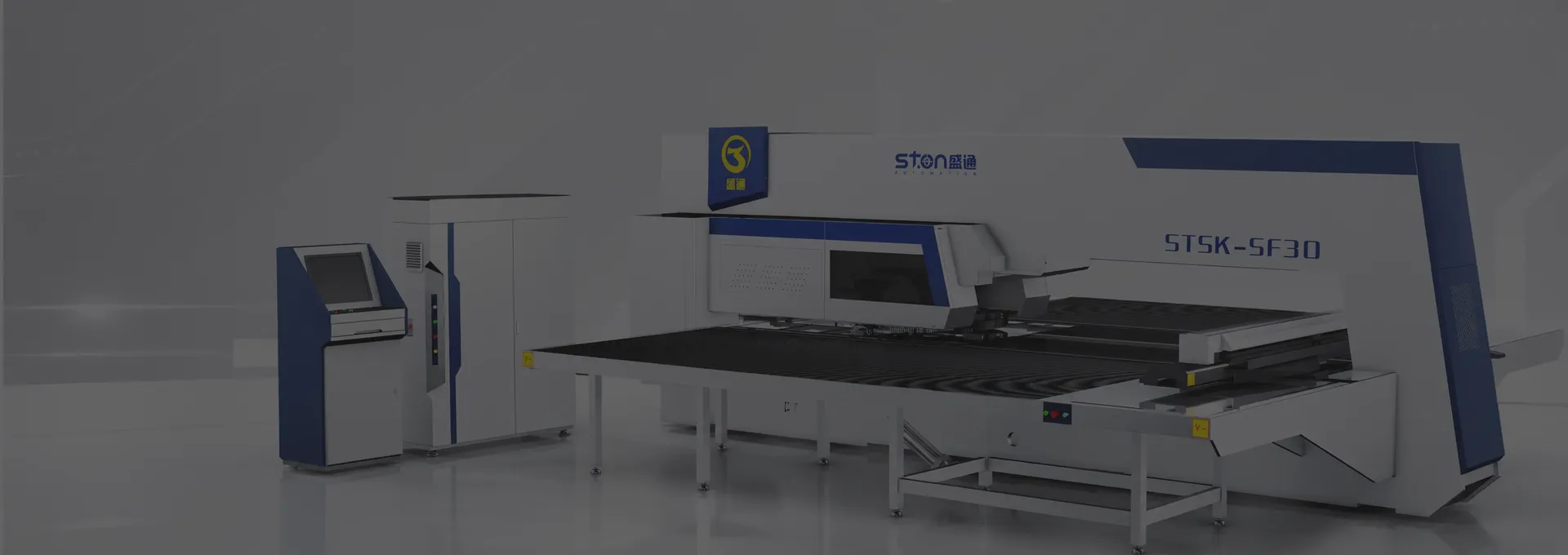
Punching or cutting removes material and creates features that can't be formed by bending alone: screw holes, DIN rail slots, cable gland cutouts, ventilation louvres and nameplate windows. A CNC turret punch press handles repeating hole patterns fastest; a fiber laser handles irregular cutouts and mixed hole sizes without a tooling change.
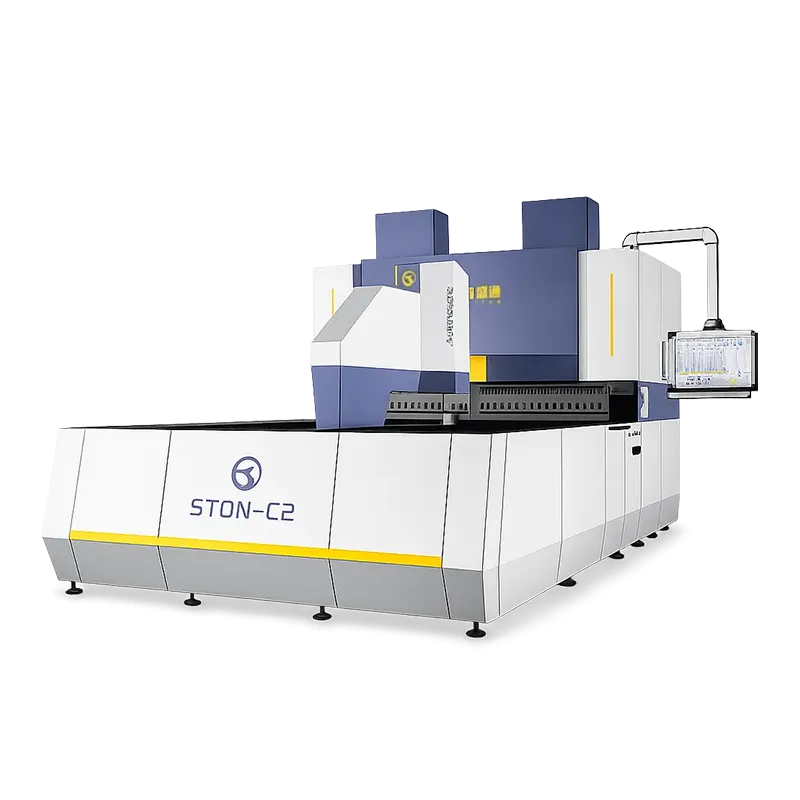
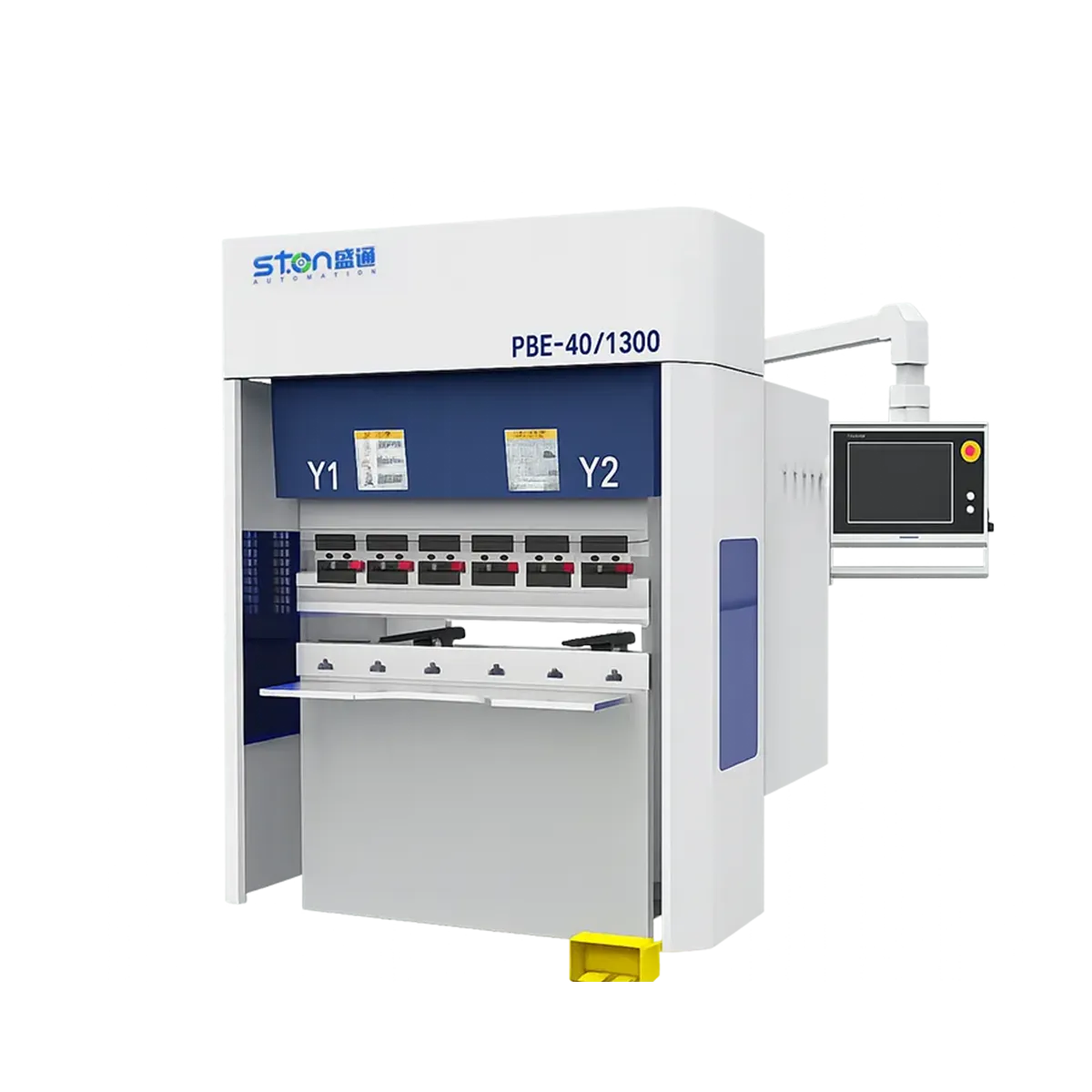
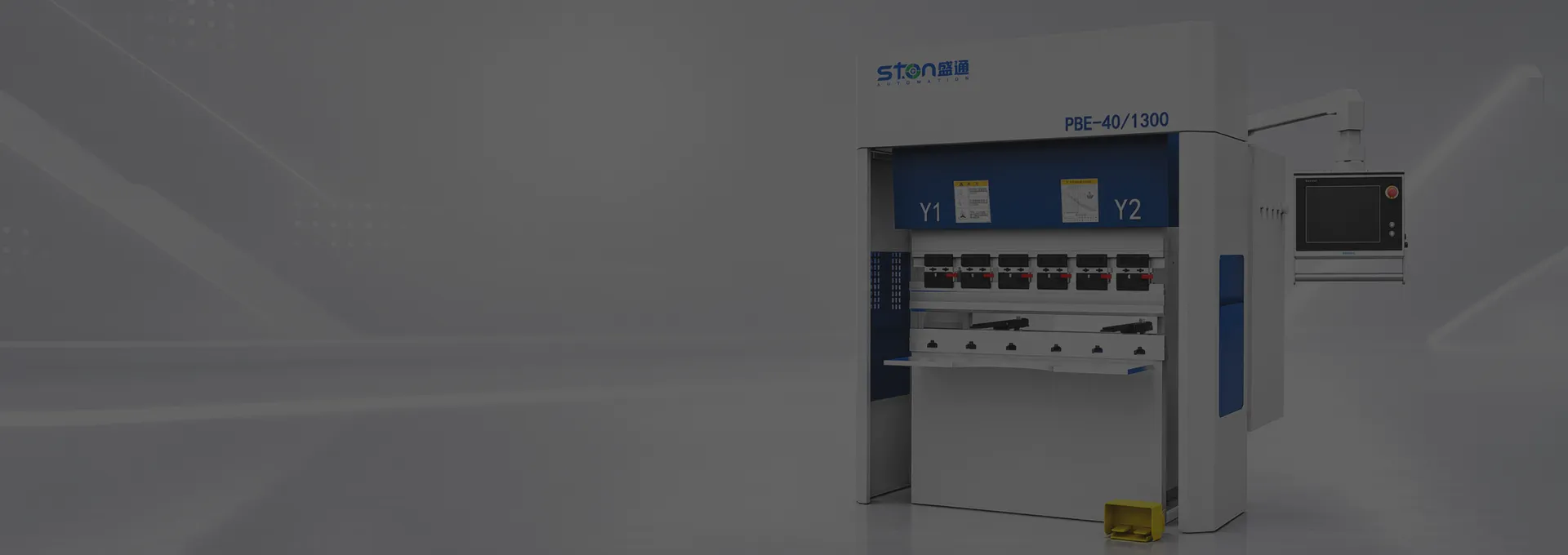
Bending forms the flat, punched blank into the finished four-sided panel. A CNC panel bender forms all four sides in a single clamping operation, which removes the repositioning step — and the angular error that comes with it — that a press brake requires for multi-sided parts.
Which machine produces which part of a typical electrical cabinet
Precision blanking. Holes, DIN rail slots, gland cutouts and louvres produced in one program on the flat blank.Intelligent bending. All four sides formed in a single clamping, with servo-controlled tooling holding the angle across the run.Unmarked finish. Critical for pre-painted and stainless cabinet doors, where handling marks mean rework.
Why factories change equipment
Three problems every electrical cabinet factory runs into
PROBLEM 01
Angular error stacks up across multiple bends
A standard cabinet body needs four to six bends to close into a box. On a conventional press brake, each bend requires repositioning the part, and small angular deviations from each setup accumulate — by the last bend, doors don't sit flush and mounting holes don't align with the frame. This is most common in factories still running cabinet bodies through a single press brake with manual back-gauging.
Cumulative deviation from repositioning, versus forming all sides in one clamping
PROBLEM 02
Manual handling scratches pre-painted and stainless panels
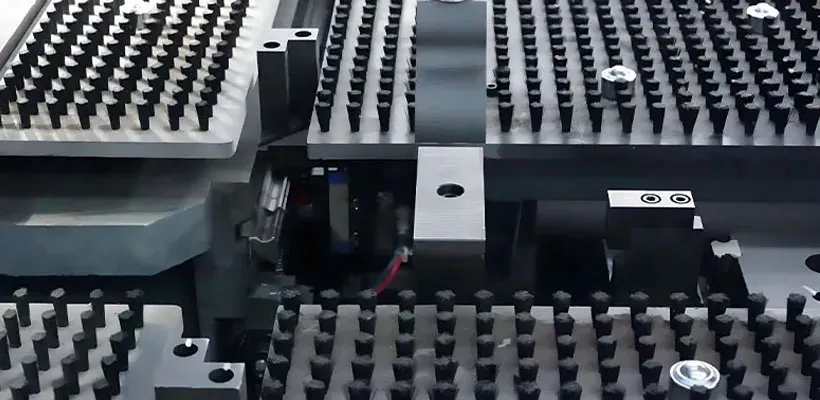
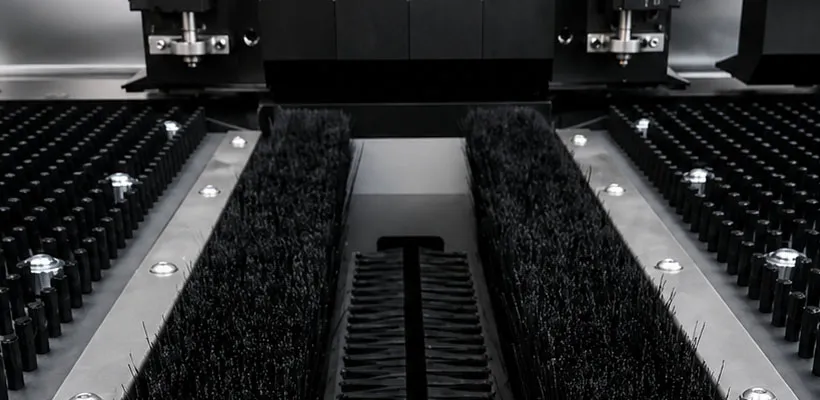
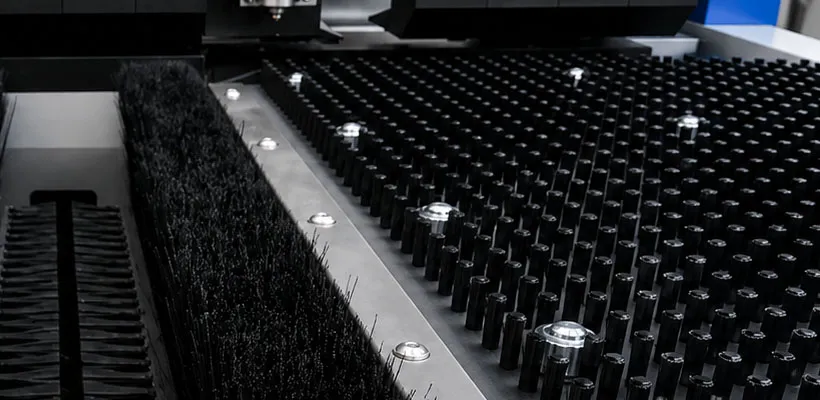
Cabinet doors and visible panels are frequently pre-painted steel or stainless — surfaces that show every handling mark. Sliding a panel across a bare metal worktable, or gripping it with standard clamps during bending, leaves scratches that trigger rework or rejection at final inspection.
PROBLEM 03
Manual bending can't keep up with order volume
A cabinet body that takes six manual bends on a press brake, each requiring a repositioning and an angle check, is slow to produce at scale. As order volume grows, factories either add press brake operators — increasing labour cost and operator-to-operator variation — or look for a way to form the whole panel in one operation.
Where to start
Recommended configuration, by production volume
The right starting point depends on your monthly cabinet volume and how much of your work is punching versus bending. These three configurations are common starting points — talk to us about your specific part mix before committing to one.
Entry · ~500–2,000 parts/month
Turret Punch + Press Brake
Servo CNC Turret Punch Press with a Full Electric CNC Press Brake. Suits moderate hole patterns and a lower share of four-sided bent parts, or product lines still in low-volume validation.
Standard · ~2,000–8,000 parts/month
Turret Punch + Panel Bender
Servo CNC Turret Punch Press with a CNC Panel Bender (Press Arm A2/B2, bending length 1,000–2,000mm). Most cabinet body and door parts form on the panel bender in one clamping instead of multiple press brake setups.
Automated · 8,000+ parts/month
+ Automatic Loading & Unloading
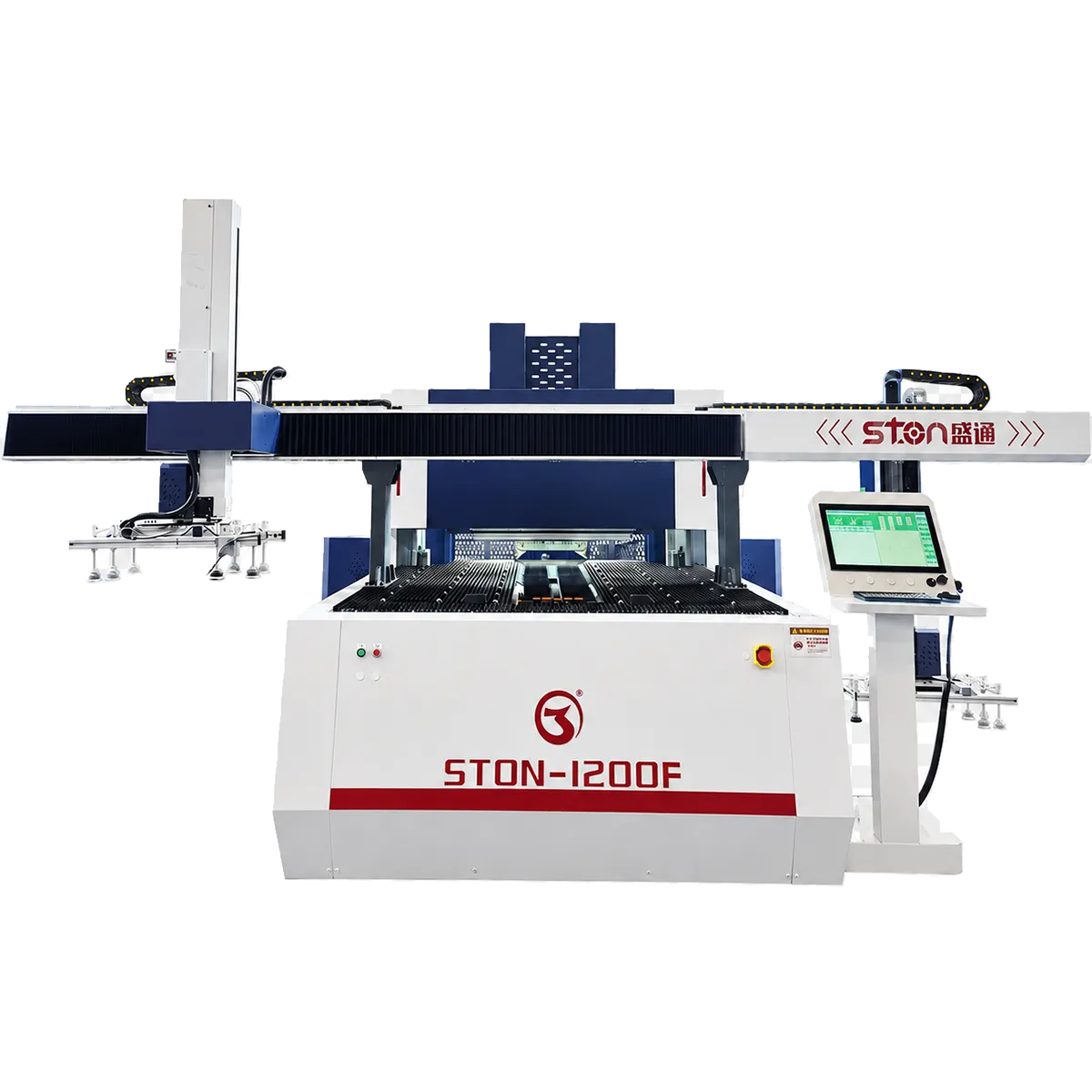
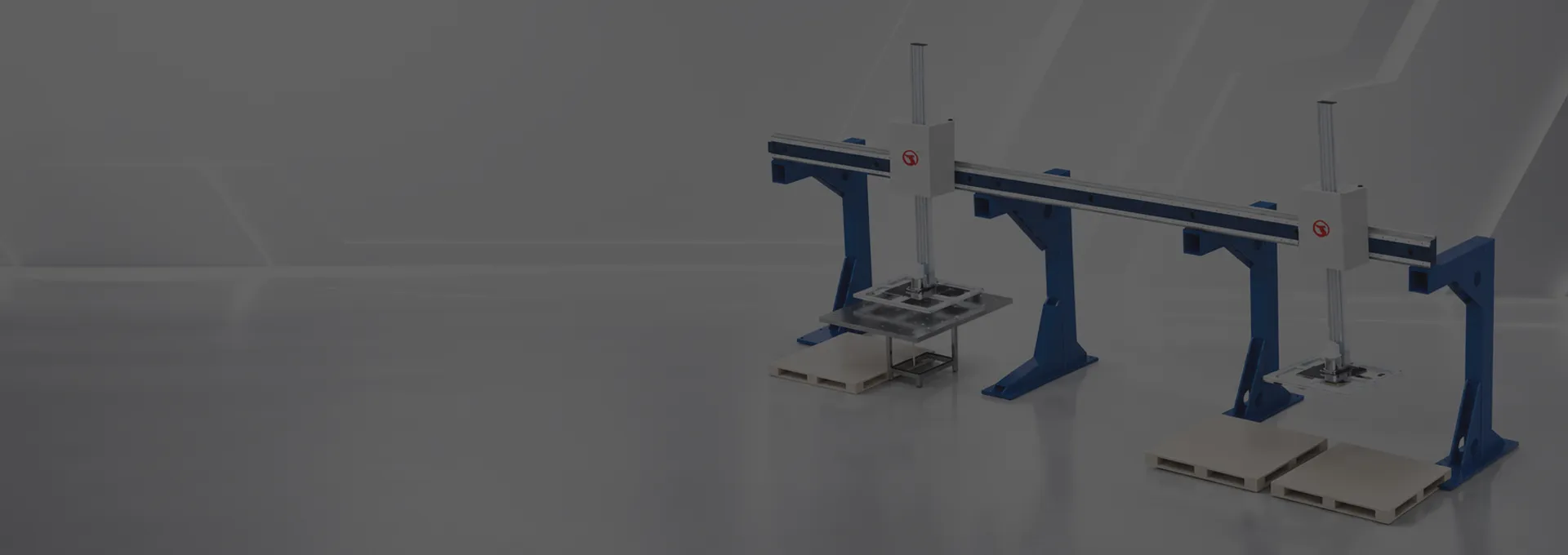
Add a Sheet Metal Automatic Loading and Unloading System once your part family is stable and volume supports unattended or night-shift production.
Volume bands above are general guidance — send your order history or forecast and we'll confirm the right tier for your parts.
Honest limits
What these machines can and cannot form
Our CNC panel benders and turret punch presses are built for flat, four-sided sheet metal parts. Here is the forming window — the material and dimension ranges these machines are designed for.
Material thickness window by machine and material — anything past 6.35mm needs a press brake or another process
Forming window — electrical cabinet parts
Spec
CNC Panel Bender
CNC Turret Punch Press
Cold-rolled steel, max thickness
2.0mm
6.35mm (servo) / 6mm (mechanical)
Stainless steel, max thickness
1.2mm
6.35mm (servo) / 6mm (mechanical)
Aluminum, max thickness
2.5mm
—
Max forming length
1,000–4,100mm (Press Arm A2–F2)
X-axis up to 2,500mm
Punching accuracy
—
±0.1mm
Punching speed
—
405 hits/min (servo) / 260 hits/min (mechanical)
What these machines are not the right fit for
Deep-drawn parts such as pressed instrument housings, roll-formed profiles such as 19-inch rack uprights or continuous-section frame members, and parts thicker than the ranges above all need a different process — typically a press brake for heavier single-bend work, or a separate roll-forming or deep-drawing supplier.
If part of your cabinet design falls outside this window, tell us when you send your drawing and we'll flag it rather than force-fit a machine that isn't right for the part.
Choosing between them
Turret punch, panel bender, or both?
Most electrical cabinet parts need both a hole pattern and a formed shape, so the real question is usually not "which machine" but "in what order and what configuration." Here is how to think about which machine carries the heavier load for your part mix.
Choose…
When…
Turret punch press
Panels have dense or varied hole patterns — DIN rail slots, ventilation louvres, multiple mounting hole sizes on one panel, or cutouts that repeat across many part numbers. The 32-station turret (16A/11B/3C/2D layout) holds a wide range of tools without a manual change.
Panel bender
The bottleneck is bending, not punching — cabinet bodies, doors and gland plates that need three, four or more precise bends per part. Forming all sides in one clamping removes cumulative angular error and changeover time between bends.
Both, in sequence
Most cabinet lines — the turret punch press handles all hole and cutout work on the flat blank before it moves to the panel bender for forming. This is the configuration described in the "Standard" tier above.
End to end
Production flow, from flat sheet to finished cabinet panel
The four production stages an electrical cabinet panel passes through
1
Blanking and punching
Flat sheet is loaded onto the turret punch press (or laser cutting machine for irregular cutouts), which produces all mounting holes, DIN rail slots, ventilation patterns and cutouts in one program.
2
Forming
The punched blank moves to the CNC panel bender, which forms all bend sides in a single clamping operation — typically under a second per bend, with servo-controlled tooling holding angle consistency across the full run.
3
Inspection
Formed panels are checked against key dimensions — angle, flatness, hole-to-bend alignment — before moving to the next production step: welding, powder coating, or assembly, depending on your process.
4
Handling and stacking
On automated configurations, an automatic loading and unloading system transfers panels between the punch press and panel bender and stacks finished parts, removing manual handling that risks scratching pre-painted or stainless surfaces.
The machines
The equipment behind this solution
The machines below are the ones most electrical cabinet factories use for this workflow. Each links to full specifications on our product pages.
Punching
Servo / Mechanical CNC Turret Punch Press
For hole patterns, DIN rail slots and cutouts on flat cabinet panels. Servo version: 405 hits/min, ±0.1mm accuracy, 32-station turret. Mechanical version: 260 hits/min, lower cost for high-volume repeating patterns.
STON is Qingdao Ston Mechanical Technology Co., Ltd., a registered manufacturer at No. 251 Middle Dongyue Road, Huangdao District, Qingdao, Shandong. Our factory operates under ISO 9001 quality management certification.
Machines are supplied with CE documentation under the Machinery Directive 2006/42/EC for export to Europe, and the machine's guarding and control systems are designed in line with EN ISO 12100 (general principles for machinery safety design) and EN ISO 13849-1 (safety-related parts of control systems).
Full customs documentation — Commercial Invoice, Packing List, Bill of Lading and Certificate of Origin — is handled by our export team.
ISO 9001
Factory quality management
CE
Machinery Directive 2006/42/EC
80+ markets
Export experience worldwide
T/T & L/C
30/70 terms, USD or EUR
The manufacturer
Why STON
STON is an original manufacturer, from casting to commissioning. We've built CNC sheet metal fabrication equipment since 2006, and we control the full manufacturing process in-house — from casting and machining structural components to final assembly and testing — at our ISO 9001-certified, 20,000㎡ self-owned facility in Qingdao. That in-house control is what lets us hold ±0.05mm assembly accuracy on every machine we ship.
Every machine comes with 24-hour global support: a preliminary solution or remote guidance within 1 hour of a fault report, and on-site resolution within 48 hours for domestic repairs. Standard machines carry a 1-year warranty, extendable to 18 months for complex automated systems.
Before you commit to an order, we run a free feasibility review on your actual part drawings — not a generic quote — so you know before you buy whether your parts fall inside the machine's forming window.
Trusted by cabinet, enclosure and sheet metal manufacturers worldwide
Proof
A case from an electrical cabinet manufacturer
Case study in preparation — we're documenting a real electrical cabinet production project and will publish verified before/after results, with photographs, here shortly. In the meantime, send us your part drawing and we'll walk you through a comparable configuration.
Questions
Frequently asked questions
Can a panel bender bend 2mm cold-rolled steel for cabinet bodies?
Yes. Our Press Arm panel benders (A2–F2 series) form cold-rolled steel up to 2.0mm within their standard forming window. For parts requiring bending beyond this thickness or with non-four-sided geometry, a press brake is usually the better fit — send us your drawing and we'll recommend the right machine.
What is the smallest electrical cabinet part a panel bender can form?
Minimum part dimensions depend on the specific model — smaller four-sided parts may fall below the panel bender's minimum forming window and are better suited to a press brake. Send us your part drawing and we'll confirm.
Do I need a turret punch press as well as a panel bender?
Most cabinet production does — the turret punch press creates hole patterns and cutouts on the flat blank before the panel bender forms it. See the "Recommended configuration" section above for typical pairings by volume.
How much faster is a panel bender than a press brake for cabinet doors?
A panel bender forms all bend sides in one clamping operation, typically under a second per bend, compared with a press brake's repositioning between each bend. The actual time saving depends on your part's bend count and current process — we can estimate this against your specific drawing.
Can STON machines connect to robots or loading systems we already own?
Our machines support automated loading and unloading integration. Tell us about your existing automation when you send your drawing so we can confirm compatibility.
What power and air supply is required?
Requirements vary by machine and configuration. We'll provide exact power and compressed air specifications as part of your machine quotation.
Do you supply CE documentation for export to Europe, and what quality certifications does STON hold?
Yes, machines are supplied with CE documentation under the Machinery Directive 2006/42/EC, and our factory holds ISO 9001 quality management certification.
How do I confirm my cabinet parts can be made before committing?
Send us a drawing of your cabinet panel, door or body. We run a free feasibility review against the machine's forming window before you commit to an order.
What are the payment and delivery terms?
We accept T/T (30% deposit, 70% before shipment) or L/C, in USD or EUR. Delivery method — sea, land or air freight — depends on your location and order size, and our export team handles full customs documentation.
How much does a panel bender for electrical cabinet production cost?
Pricing depends on model, bending length and configuration (standard versus automated loading). Send us your part specifications and target volume for a quotation.
How are spare parts and service handled outside China?
We provide 24-hour global support with a 1-hour initial response and a 48-hour on-site resolution target for domestic repairs; remote diagnosis and expedited parts shipment support overseas customers.
Next step
Send us your cabinet drawing
Send one representative cabinet panel, door or body drawing. We'll run it against our machines' forming window and come back within 24 hours with a configuration recommendation — no generic quote, no obligation.
Free feasibility review against your actual part drawing
Machine and tier recommendation based on your monthly volume
We tell you up front if a part falls outside the forming window