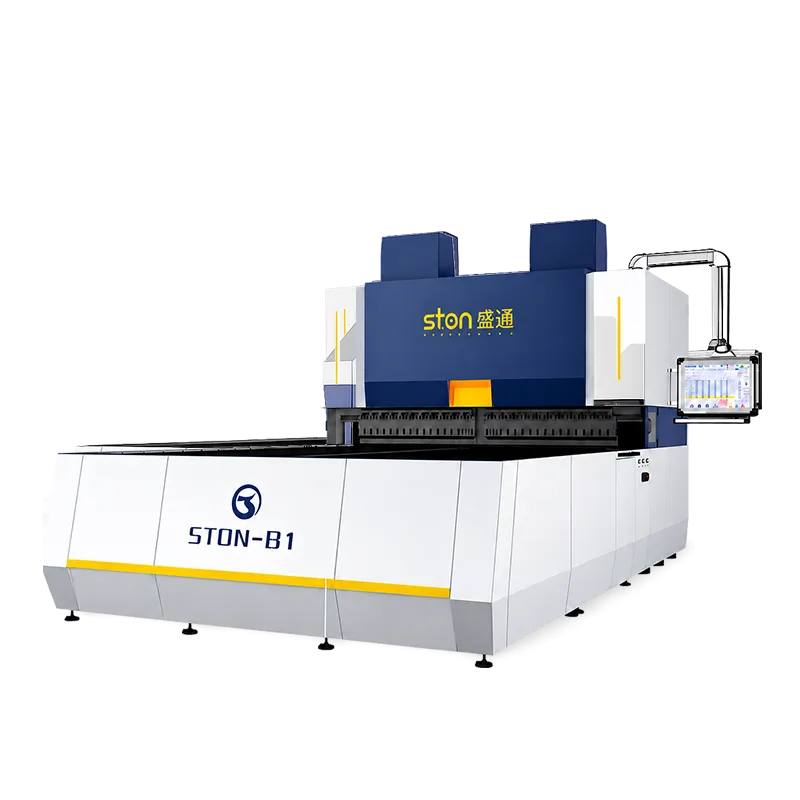
Choose a CNC Panel Bender Around Your Parts and Production Plan
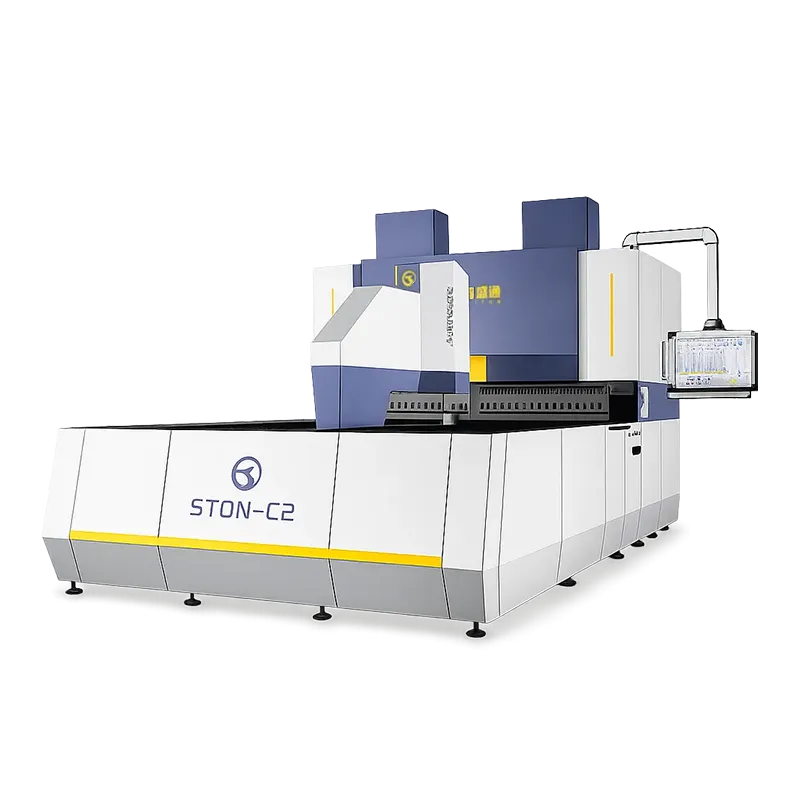
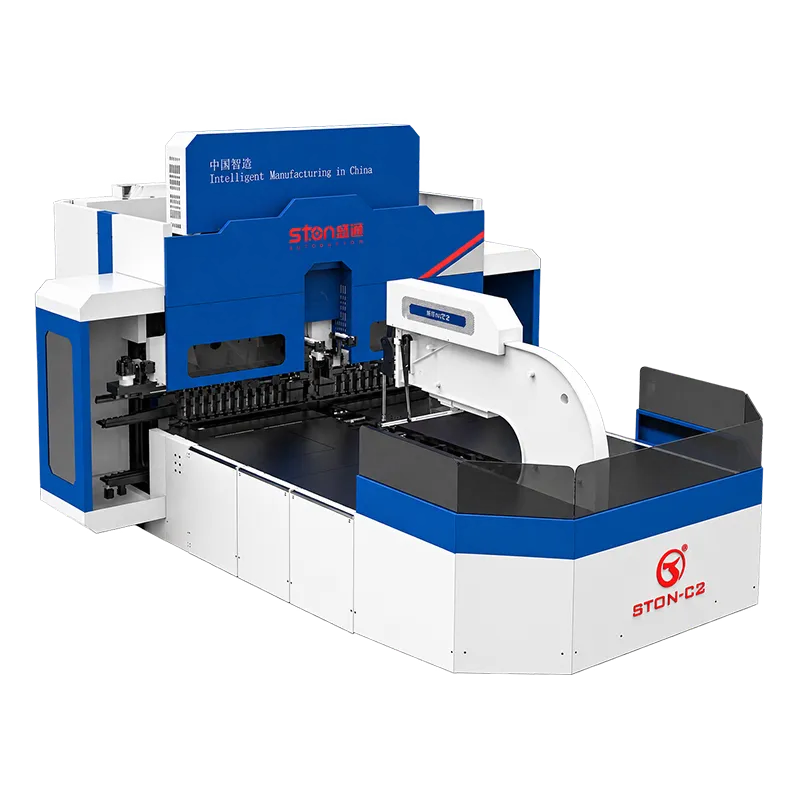
STON CNC panel bender machines automate the repeated up-and-down forming used on cabinets, doors, drawers, HVAC panels and other box-shaped sheet metal parts. The right configuration depends on the part drawing, material, thickness, flange geometry, batch size and desired level of automation. This category includes multiple machine and handling options, so the final selection should be confirmed against representative parts rather than a single catalogue specification.
Parts and Industries Suited to Panel Bending
Panel bending is especially useful when a factory produces repeatable thin-sheet enclosures and panels with several edges. Typical applications include electrical cabinets, control enclosures, server racks, filing cabinets, steel doors, ventilation equipment, kitchen equipment, EV charging or battery enclosures, tool cabinets and medical or laboratory furniture. OEM sheet metal factories can also use a panel bender to standardize bending quality across recurring product families.
- Cabinet and enclosure panels: doors, side panels, shelves and internal partitions.
- Drawer and storage parts: drawer bodies, filing cabinets and tool cabinets.
- HVAC and appliance panels: ventilation panels, housings and covers.
- High-mix OEM work: repeat orders where changeover flexibility and consistent geometry matter.
A2 to F2 Series Selection Guide
STON offers A2, B2, C2, D2 and F2 series options. Available maximum bending lengths run from 1000 to 4100 mm across the recorded series range. Material guidance in the current product resource includes stainless steel up to 1.2 mm, cold-rolled steel up to 2.0 mm and aluminum up to 2.5 mm, with an overall recorded thickness range of 0.15 to 2.0 mm. These values are not universal guarantees for every model, part shape or bending sequence. Engineering confirmation is required for the selected model, material grade, flange geometry and required finish.
Selection should also consider whether the application needs automatic tool change, C-axis lifting, upper or lower auxiliary blades, or W/X/Z heavy-duty upgrades. Automatic tool change can support frequent product changes; auxiliary blades help address specific bending sequences; and heavy-duty options should be evaluated when the part or process moves beyond standard thin-sheet work. Send the actual part drawings so the engineering team can map each option to a real production requirement.
Panel Bender, Press Brake or Automated Cell?
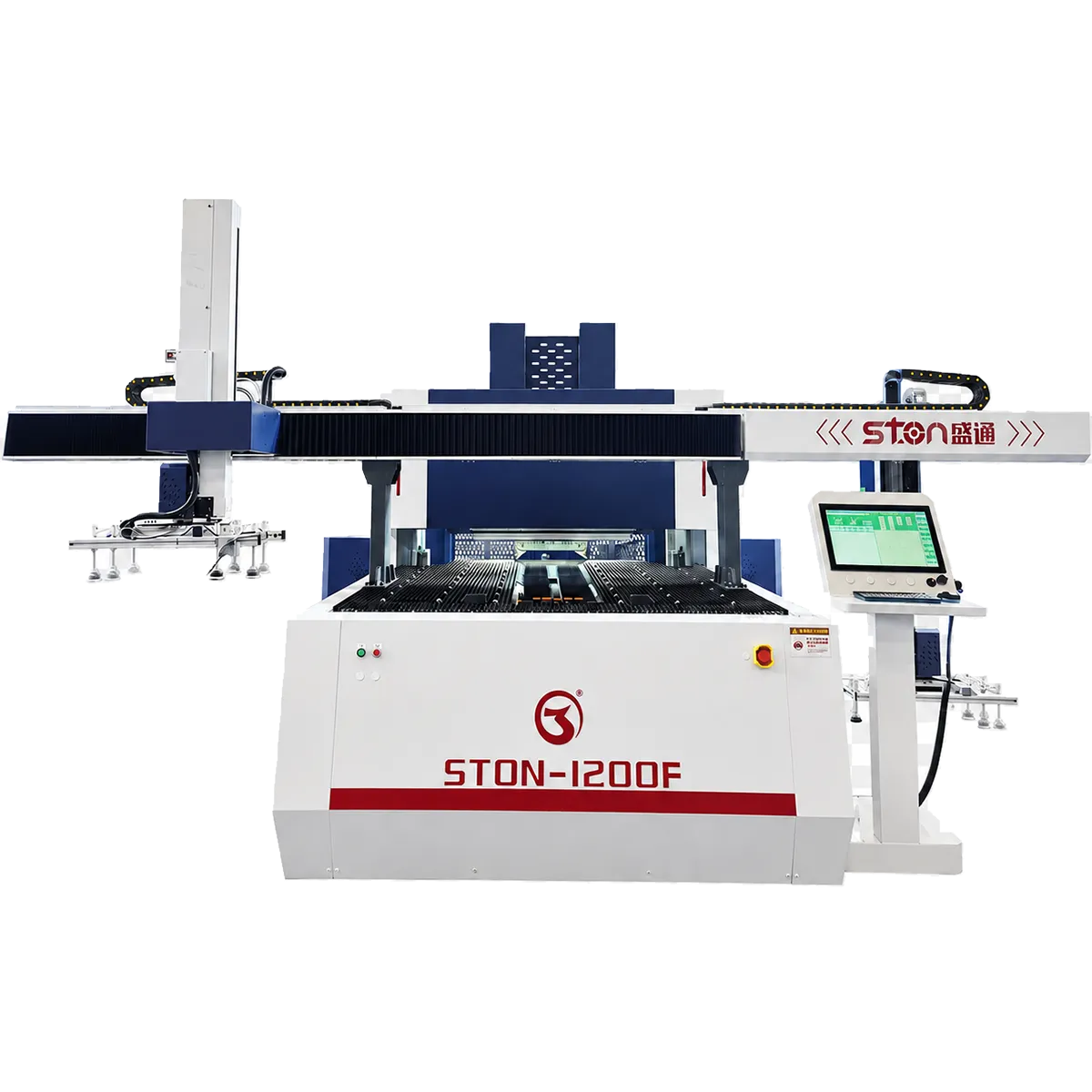
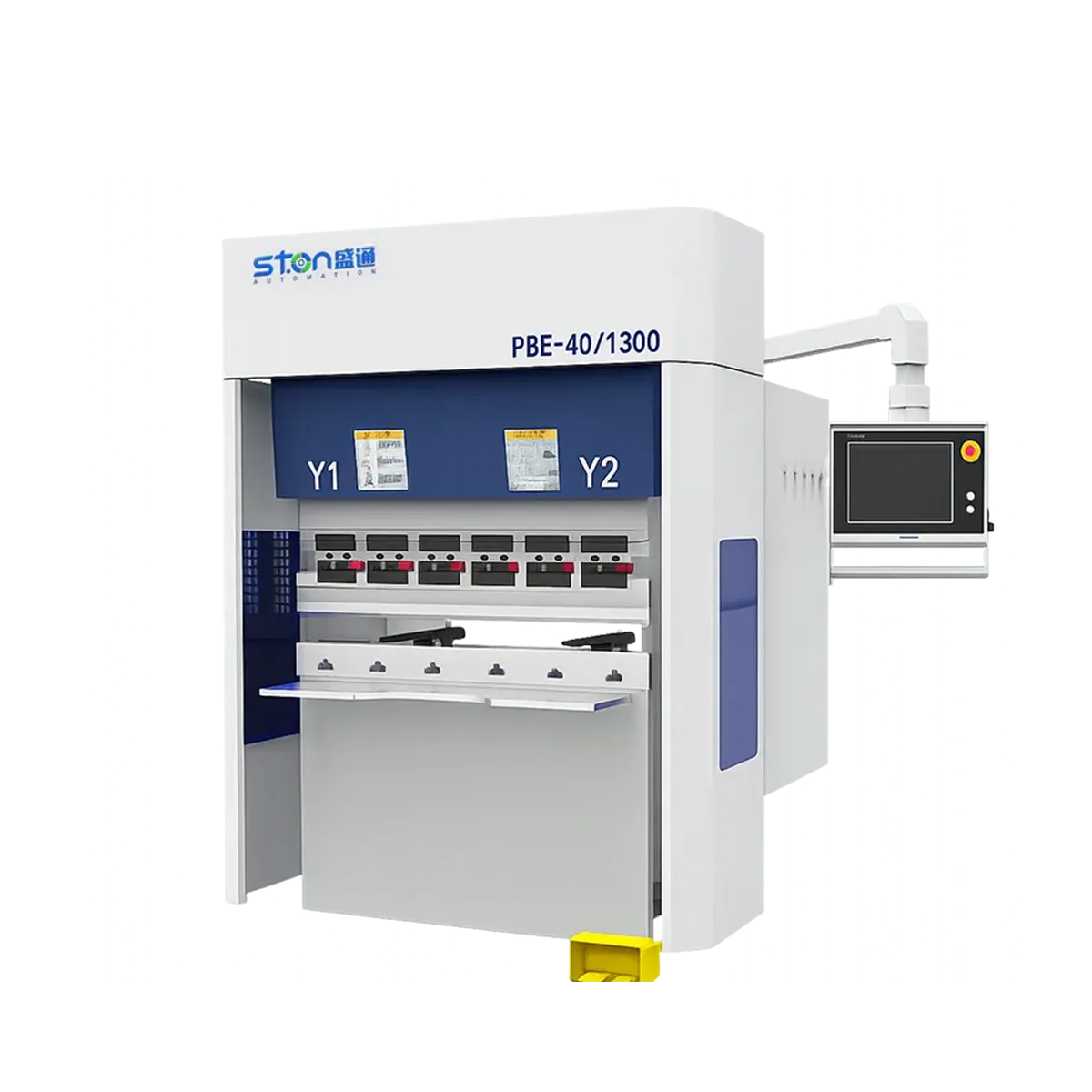
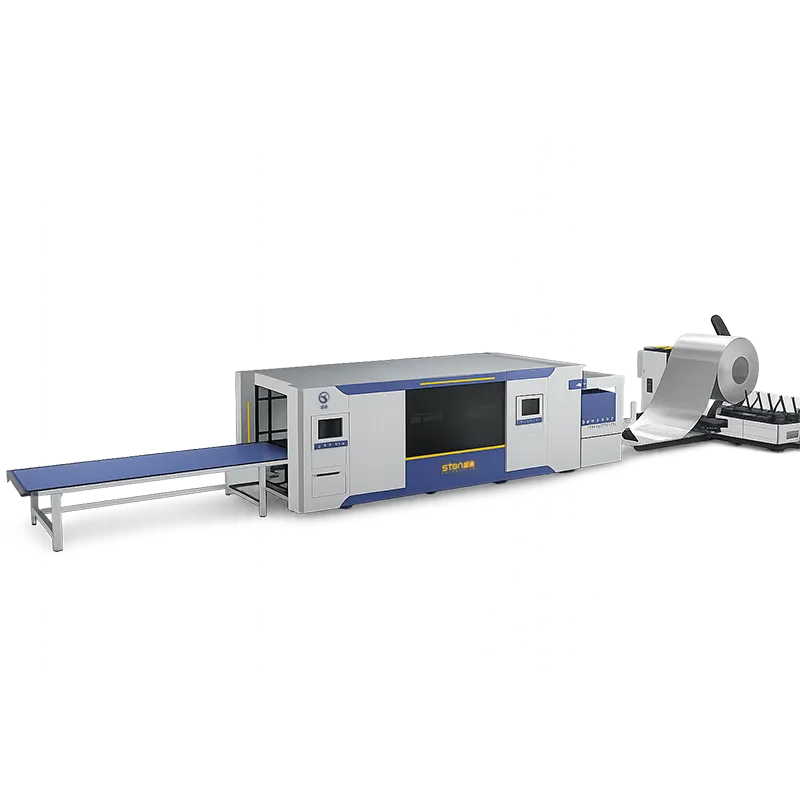
A panel bender is normally considered for repeated panel and box-part production where automatic handling and consistent multi-edge bending are important. A CNC press brake offers broader tooling and forming flexibility for many general fabrication tasks. If the goal is continuous production, the panel bender can be evaluated with an automatic loading and unloading system or as part of a customized sheet metal production line. The best route depends on product mix, batch size, labor plan, floor layout and upstream or downstream processes.
From Drawing Review to Sample Validation
For a reliable proposal, provide material type and grade, thickness, flat size, finished drawing, bend sequence, annual or shift output, surface protection requirements and existing factory layout. STON can review the data, select a candidate configuration and define which parts require sample testing. Sample validation should confirm the tooling plan, reachable bends, part handling, surface quality and expected production workflow before final acceptance criteria are agreed.
Manufacturing and Project Support
STON operates a self-owned 20,000 square meter factory and supports in-house manufacturing, configuration, installation planning, training, spare-parts preparation and after-sales communication. The exact scope, delivery schedule, acceptance method and service arrangement should be written into the project proposal for the destination market. Dealers can also request product-line matching and technical material for their target industries.
Request a configuration review: send 2D or 3D part drawings, material and thickness, maximum part size, target output, preferred loading method and available floor space. The team will use these inputs to recommend a model and identify any engineering checks required before quotation.
Pre-Purchase Review Checklist
Before issuing a purchase order, confirm the model and option list against approved part drawings, record the material grades and thickness range, identify the acceptance parts, and agree how bend quality and repeatability will be checked. The proposal should also show the machine footprint, loading path, utilities, operator access, guarding and service clearance. Confirm which tooling, software, training, documentation, spare parts, installation activities and warranty terms are included. For an automated cell, define who supplies each interface and how alarms or unfinished cycles will be recovered. This checklist gives the factory and supplier a common project boundary and prevents a general category specification from being treated as a guarantee for every part.