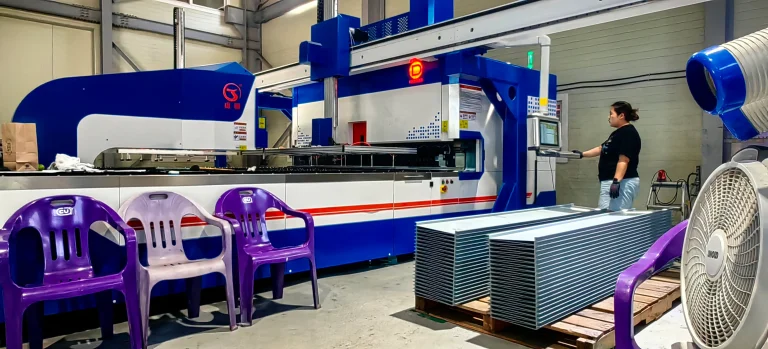
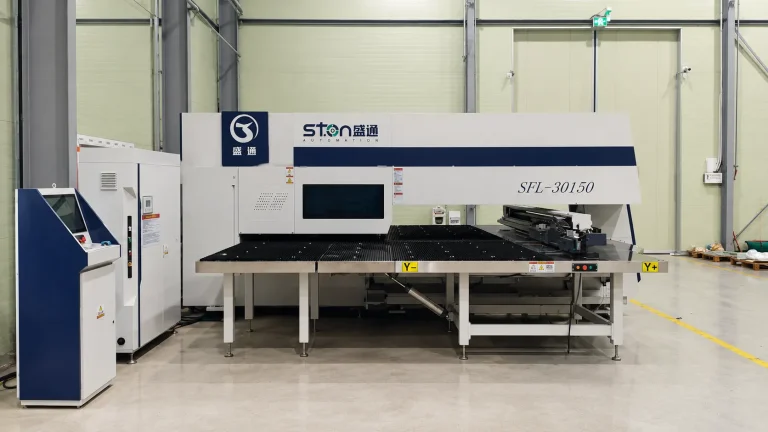
A State Grid cabinet manufacturer in Saudi Arabia selected three STON CNC Panel Benders for its sheet metal cabinet production.
The project applies CNC panel bending technology to the forming of cabinet panels and enclosure components. By installing three panel benders, the manufacturer established multiple bending workstations for its grid cabinet production requirements.
Country: Saudi Arabia
Industry: State Grid Cabinet Manufacturing
Equipment: 3 CNC Panel Benders
Main Process: CNC sheet metal panel bending
Application:Cabinet panels and enclosure components
Equipment: Supplier STON CNC
Sheet Metal Bending Requirements for State Grid Cabinets
State Grid cabinets are sheet metal enclosures used to house and protect electrical components. Their panels may contain door flanges, corner returns, mounting structures and cable-management profiles.
According to STON’s electrical cabinet manufacturing solution, electrical enclosure production requires controlled multi-angle bending so that doors, side panels and frame components can be assembled correctly.
Relevant production considerations include:
- Multi-angle enclosure profiles
- Door flange and corner-return forming
- Alignment between cabinet doors and frames
- Consistent panel dimensions
- Protection of sheet metal surfaces
- Repeatable bending across multiple cabinet components
These are general requirements identified by STON for electrical cabinet manufacturing.
The STON Solution
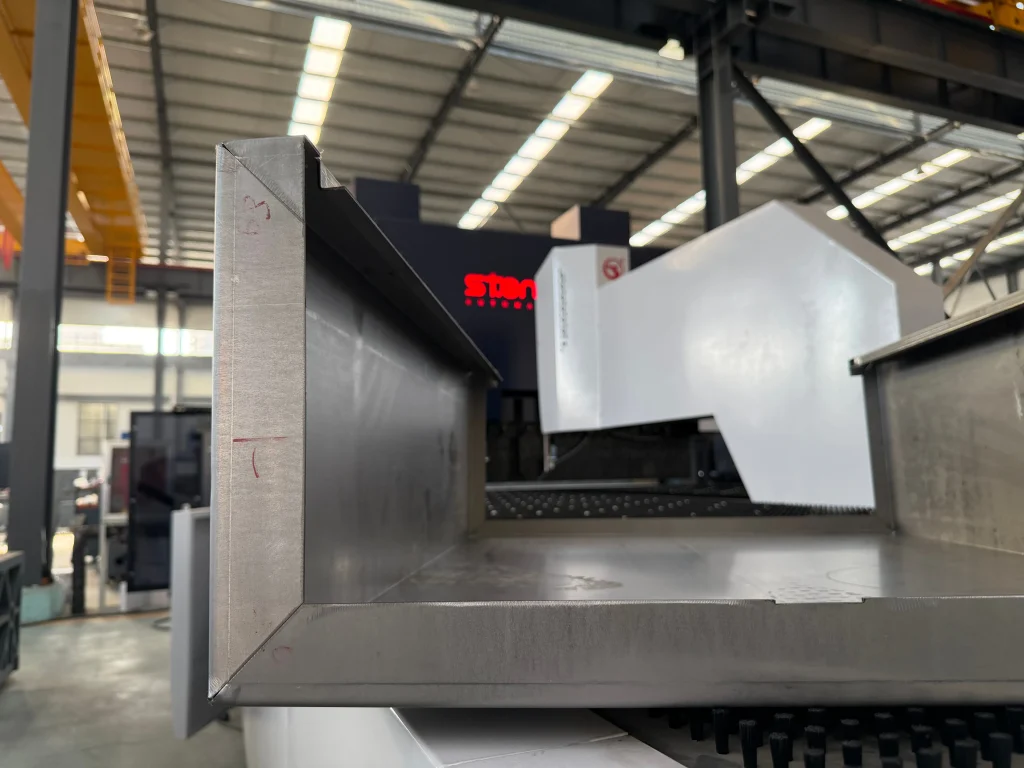
STON supplied three CNC Panel Benders for this State Grid cabinet manufacturing project.
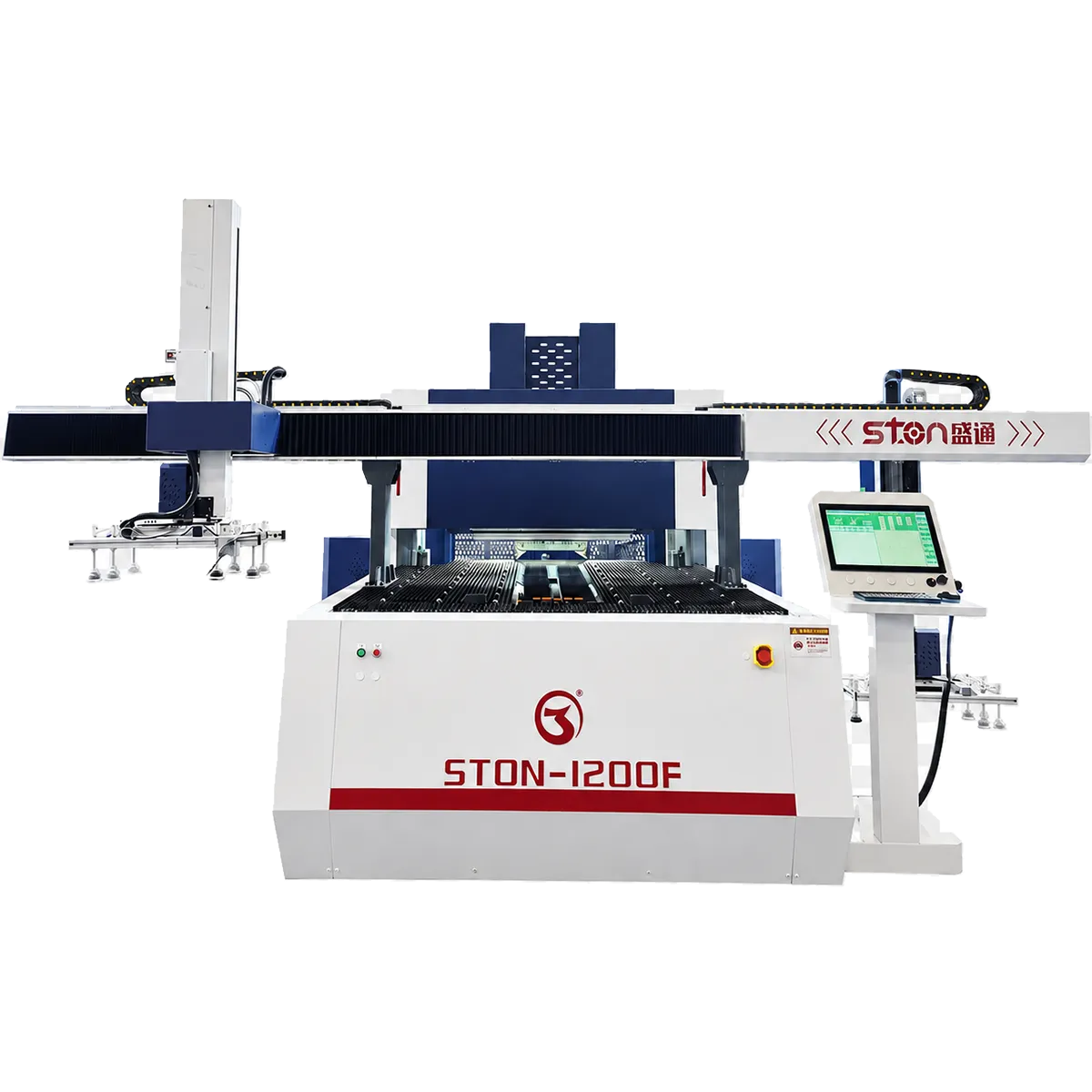
A CNC panel bender automatically controls the positioning and bending sequence of a sheet metal workpiece. It is particularly suitable for repeated cabinet and enclosure components that require several bends around the panel.
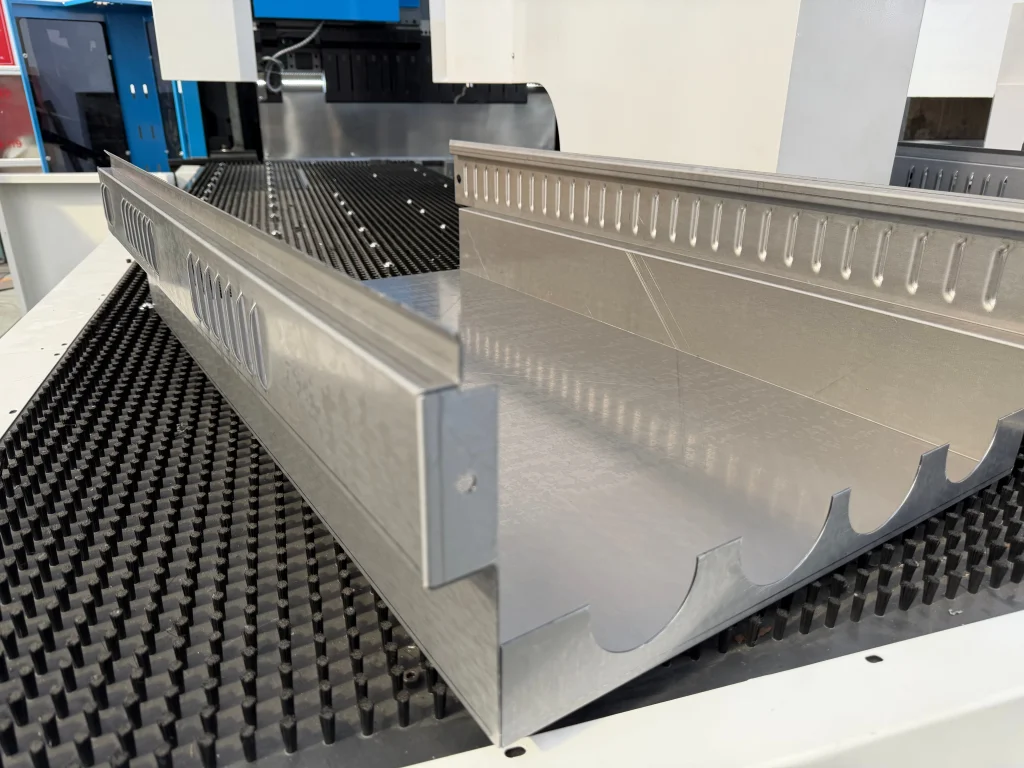
STON panel benders can form profiles such as:
- Door flanges
- Corner returns
- Cabinet side edges
- Multi-angle enclosure profiles
- Cable-management channels
- Positive and negative bends
The equipment uses programmed CNC operation to complete repeated bending sequences. This allows cabinet manufacturers to process different panel profiles according to the corresponding bending programs.
Why CNC Panel Benders Suit Cabinet Production?
Multi-angle panel forming
Electrical cabinet panels often require several bends on different sides of the workpiece. STON states that its CNC panel benders can form complex multi-angle enclosure profiles in a single clamping sequence without repeated manual repositioning.
Positive and negative bending
The equipment supports positive and negative bending. This allows different edge directions to be formed as part of a programmed sequence.
Repeatable CNC operation
Once the correct workpiece and bending program have been prepared, the machine executes the defined bending sequence under CNC control. This is suitable for repeated cabinet panel production.
Reduced manual repositioning
Automated panel manipulation reduces the need for operators to repeatedly rotate and reposition the workpiece between individual bends.
Surface-conscious processing
STON panel-bending solutions are designed to process materials such as cold-rolled steel, stainless steel, aluminum and galvanized sheet. Surface handling remains important for electrical cabinets that proceed to coating or assembly.
Three-Machine Project Configuration
The confirmed project includes three CNC panel benders. The supplied information does not identify whether all three machines use the same model or configuration.
A three-machine arrangement can provide multiple independent panel-bending workstations. In practical production planning, separate machines may be assigned different bending programs or workpiece groups. However, the actual division of production in this Saudi project has not been disclosed.
The verified project scope should therefore be stated simply as:
STON supplied three CNC Panel Benders for State Grid cabinet manufacturing in Saudi Arabia.
The following details remain undisclosed:
- Exact panel bender models
- Press-arm or suction-cup feeding configuration
- Individual bending lengths
- Sheet metal dimensions
- Material types and thicknesses
- CNC system configuration
- Automatic loading and unloading configuration
- Daily or annual production capacity
- Installation and commissioning schedule
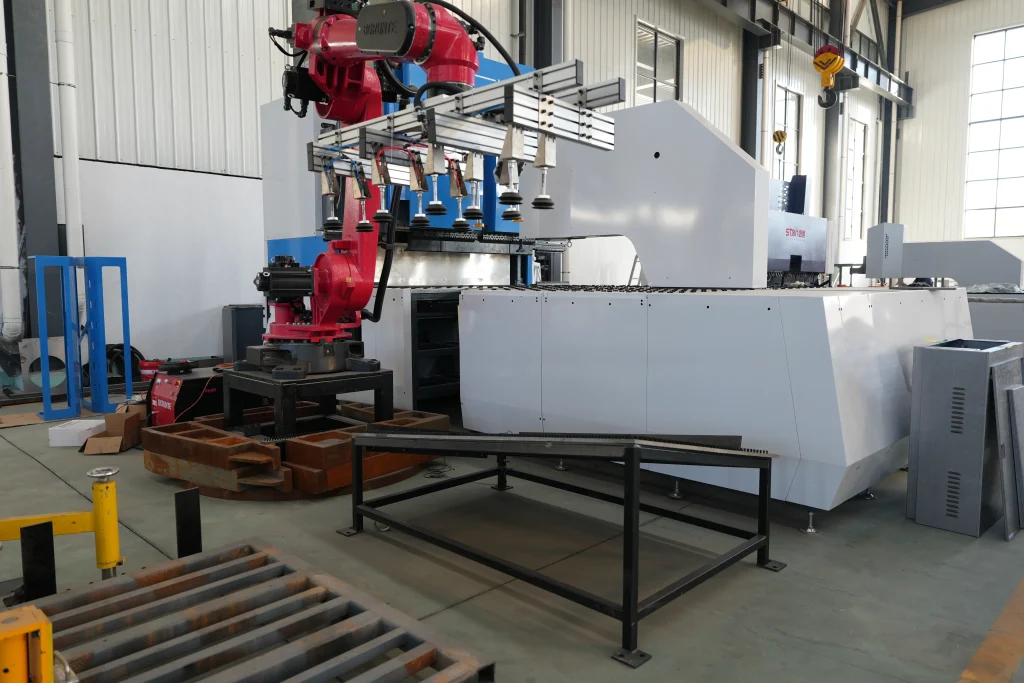
Published STON Panel Bender Range
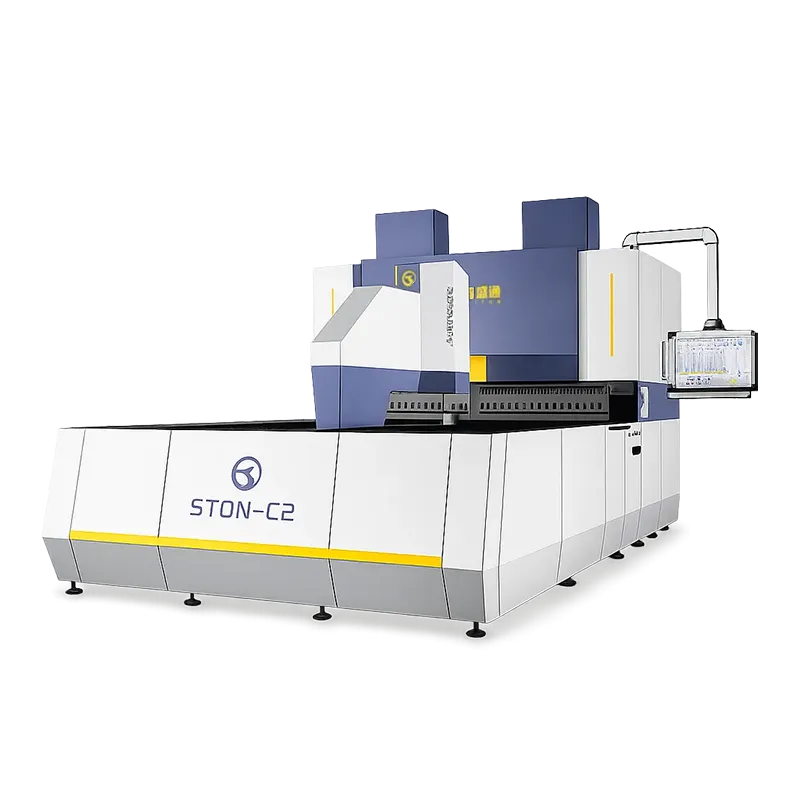
STON’s CNC panel bender product family includes press-arm and suction-cup feeding configurations.
| Configuration |
Published Product Information |
| Press-arm type |
Designed for stable handling of common cabinet parts and repeated panel production |
| Suction-cup type |
Designed for flexible panel movement and suction-based feeding |
| Press-arm model families |
A2, B2, C2, D2 and F2 |
| Suction-cup model families |
A1 and B1 |
| Published bending-length range |
1,000–4,100 mm, depending on model |
| Supported processes |
Positive bending and positive-plus-negative bending |
| Automation options |
Robotic loading, unloading and production-line integration |
The following published material limits apply to the broader STON panel bender range and should not be interpreted as the confirmed configuration of the three machines used in Saudi Arabia:
| Material |
Published Maximum Thickness |
| Stainless steel |
1.2 mm |
| Cold-rolled steel |
2.0 mm |
| Aluminum |
2.5 mm |
Final capacity depends on the selected model, material properties, workpiece dimensions and bending profile.
Cabinet Components Suitable for Panel Bending
Within an electrical cabinet manufacturing environment, CNC panel benders may be used for components such as:
- Cabinet doors
- Side panels
- Rear panels
- Top and bottom panels
- Internal partitions
- Equipment enclosures
- Switchgear panel components
This list describes the general applications presented in STON’s electrical cabinet solution. It does not confirm that every component listed was produced by the Saudi customer.
Application Value of the Three Panel Benders
Based on the published functions of STON panel benders, the three-machine configuration is intended to support:
- Programmed multi-edge panel bending
- Multiple CNC bending workstations
- Repeatable processing of cabinet components
- Reduced manual workpiece repositioning
- More organized allocation of different panel programs
- Future integration with automatic loading and unloading systems
- Production of different grid cabinet panel profiles
Actual output depends on the selected models, part geometry, material, thickness, bending sequence and factory production plan.
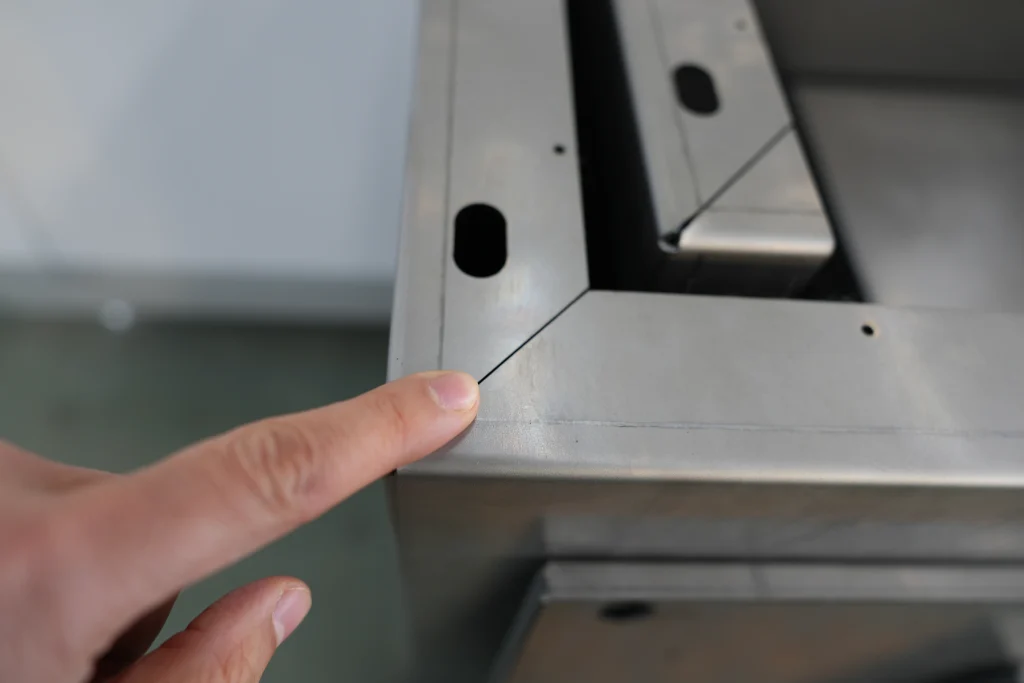
Equipment Manufacturing and Customization
STON CNC was established in 2006 and specializes in CNC sheet metal fabrication equipment and intelligent automation systems.
Its product portfolio includes:
- CNC panel benders
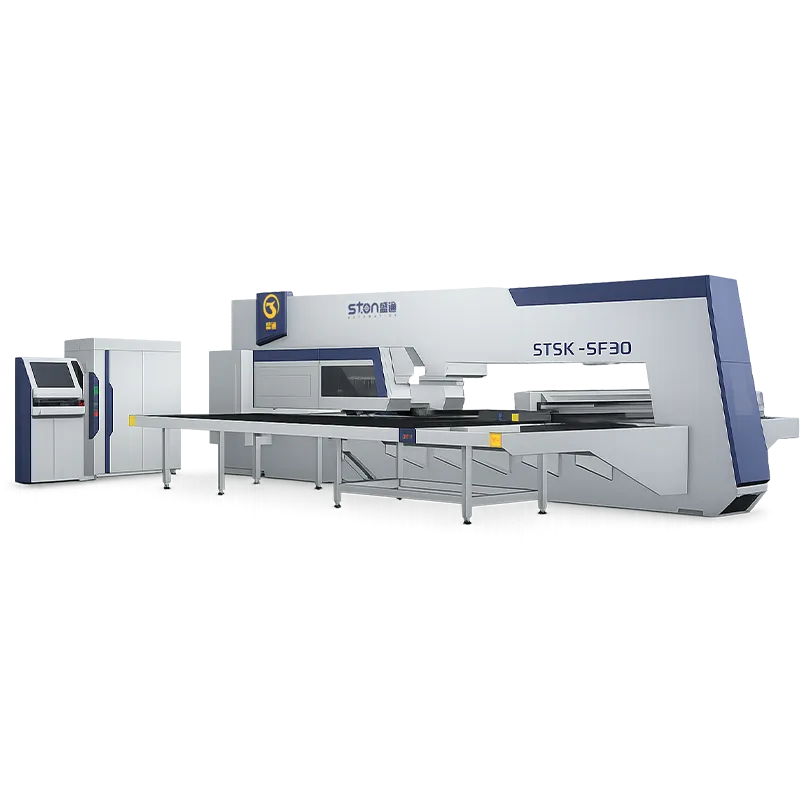
- CNC turret punching machines
- Laser-punch combination machines
- Flexible edge bending machines
- CNC press brakes
- Fiber laser cutting machines
- Automatic loading and unloading systems
- Customized sheet metal production lines
STON reports a 20,000㎡ self-owned manufacturing facility in Qingdao. The company provides standard machines and project-specific configurations based on workpiece size, sheet thickness, bending requirements and workshop layout.
For cabinet manufacturers that later require higher automation, STON panel benders can be connected with robotic, gantry or truss-type loading and unloading systems.
Conclusion
This Saudi Arabian project consists of three STON CNC Panel Benders for State Grid cabinet manufacturing.
The equipment is used for CNC bending of sheet metal cabinet and enclosure components. STON panel benders support programmed multi-angle forming, positive and negative bending, and reduced manual repositioning, making the product category suitable for repeated electrical cabinet panel production.
Because the project information only confirms the country, industry and equipment quantity, this case study does not claim any specific customer challenge, machine model, production capacity, labor reduction, efficiency increase or quality result.



 June 24, 2026