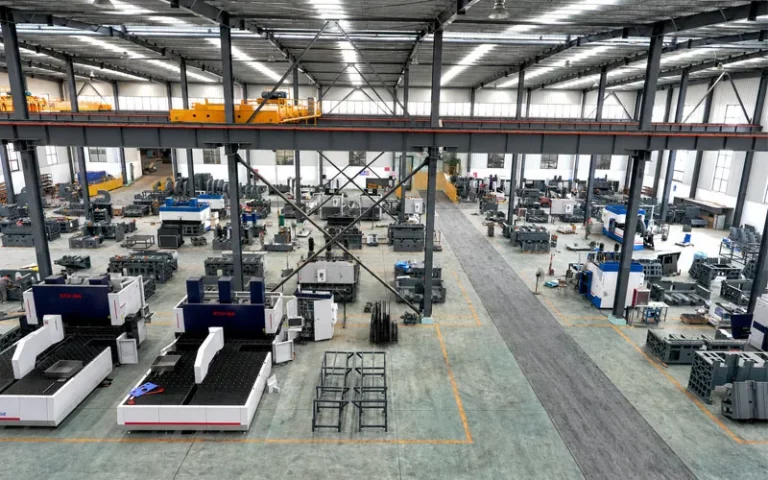
Factories lose time when every hole, slot, and formed feature depends on slow manual work. A missed punch can delay bending, assembly, and delivery. A CNC turret punch press machine helps turn repeated sheet metal work into a faster, cleaner, and more controlled process.
This article explains how turret punch presses work, when to choose a CNC turret punch, how to compare punch machines with laser cutting, and what buyers should check before investing in a new machine. It is written for sheet-metal job shops, cabinet factories, enclosure makers, HVAC plants, distributors, and automation partners.
Article Outline
- What Is a CNC Turret Punch Press Machine?
- How Do Turret Punches Work in Sheet Metal Production?
- Why Do Manufacturers Use Turret Punch Presses?
- What Parts Are Best for a CNC Turret Punch?
- Turret Punch Press vs Laser Cutting: Which Process Is Better?
- How Do Tool Selection and Tool Stations Affect Punch Quality?
- Mechanical CNC Turret Punch, Hydraulic, or Servo: Which Machine Should You Choose?
- Why Choose STON for CNC Turret Punching Solutions?
What Is a CNC Turret Punch Press Machine?
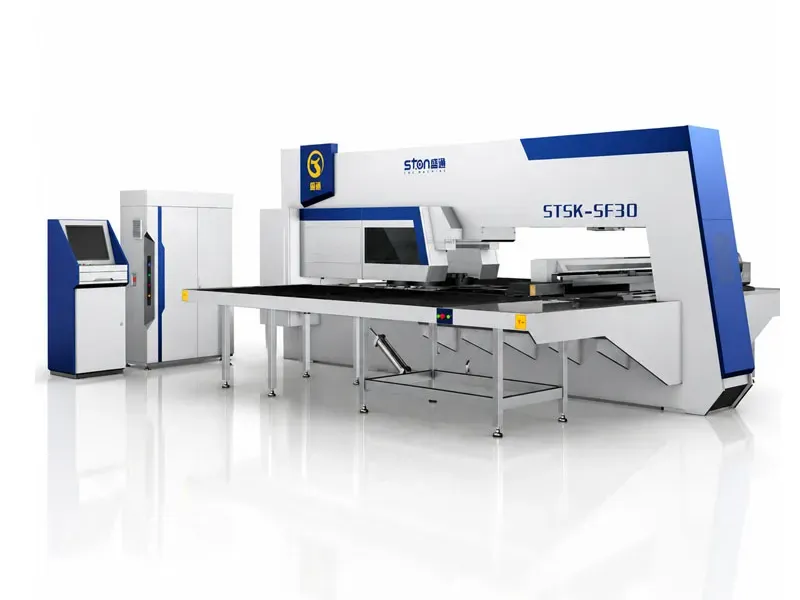
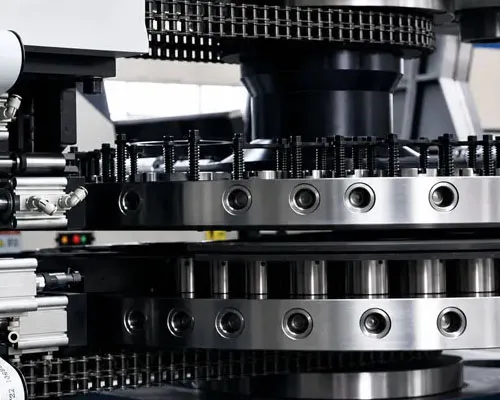
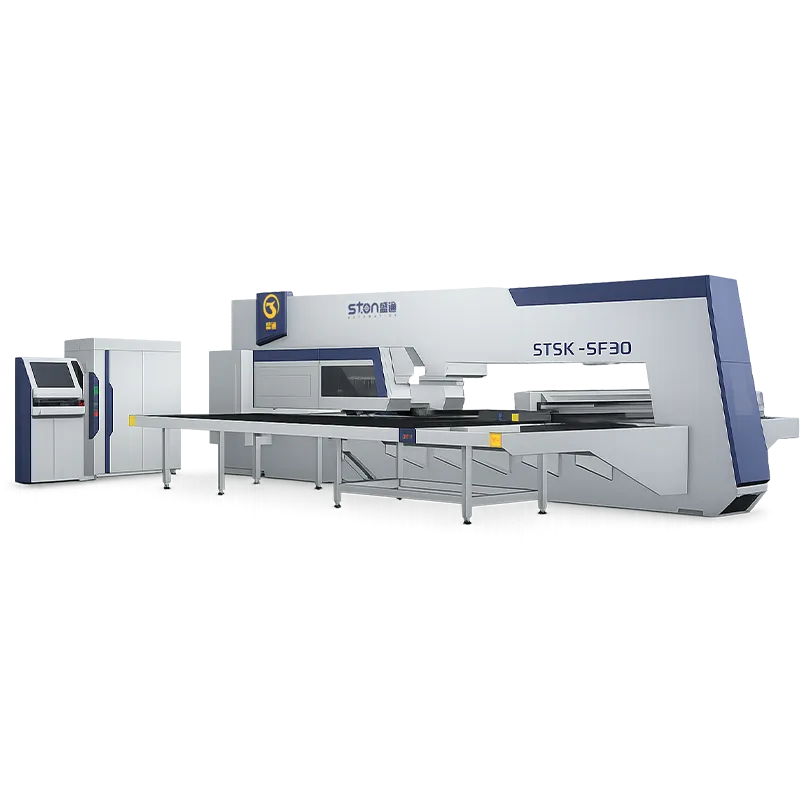
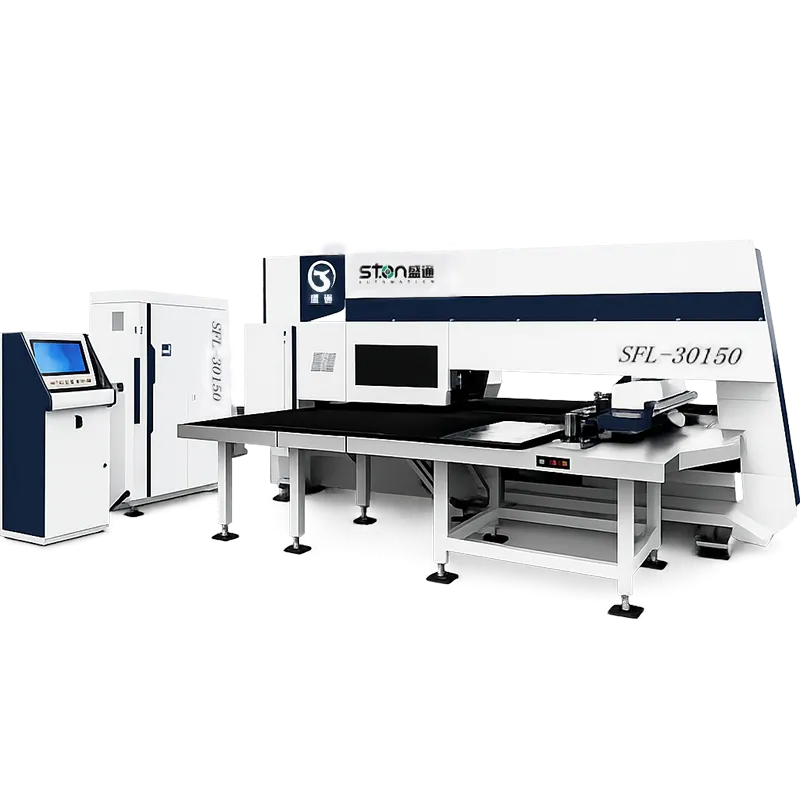
A CNC turret punch press machine is a sheet metal processing machine that uses a rotating turret, punch and die tooling, and computer numerical control to make holes, slots, forms, and repeated patterns in a metal sheet. The machine moves the workpiece into position, selects the correct tool, and completes each punch through a CNC program.
Unlike simple punch machines, turret punches can hold many tools in one tool turret. These tools may include round punches, square punches, slot tools, louver tools, emboss tools, and forming tools. This gives the factory more flexibility when processing cabinets, enclosures, panels, covers, and other sheet metal parts.
A CNC turret punch is especially useful when the part needs many repeated features. It can punch holes, trim edges, create a small stamp mark, or form a raised shape. For factories that make electrical cabinets, metal furniture, HVAC panels, or appliance parts, the machine can reduce manual work and improve repeatability.
How Do Turret Punches Work in Sheet Metal Production?
The working logic of turret punches is simple. First, the operator loads a sheet onto the machine table. Then the CNC system moves the sheet to the correct position. The rotating turret brings the selected tool under the punching head. The punch moves down, the die supports the sheet, and the feature is formed or cut.
The process usually follows this flow:
| Etapa |
Processo |
Purpose |
| 1 |
CAD drawing review |
Confirm geometry, holes, slots, and forms |
| 2 |
CNC program setup |
Arrange the punching sequence |
| 3 |
Sheet loading |
Place the blank or metal sheet on the table |
| 4 |
Tool selection |
Choose the correct punch and die |
| 5 |
Sheet positioning |
Move the sheet to each feature location |
| 6 |
Punch operation |
Complete hole punching, trimming, or forming |
| 7 |
Unloading |
Move finished panels to bending or assembly |
Good sheet positioning is very important. If the sheet shifts, the punch result changes. Good flatness also matters because poor sheet flatness can affect accuracy, burr quality, and downstream bending.
In modern turret punch presses, programmable controls help reduce operator guesswork. The machine follows the programme, controls tool changes, and repeats the same pattern across batches. That is why many factories use a CNC turret punch for stable sheet metal production.
Why Do Manufacturers Use Turret Punch Presses?
Manufacturers use turret punch presses because they offer a strong balance of speed, flexibility, and unit cost. A turret punch can process many repeated holes faster than many manual methods. It can also create holes and formed features without building a dedicated die set for every part.
For sheet metal fabrication, this matters. A cabinet door may need mounting holes, ventilation slots, cable openings, and hinge holes. A ventilation plate may need hundreds of repeated holes. A telecom enclosure may need both round holes and shaped openings. A CNC turret punch press can handle these punching tasks with high repeatability.
Key benefits include:
- Fast punch processing for repeated features
- Flexible tool setup for different parts
- Lower unit cost for repeated hole patterns
- Better control of punch quality and accuracy
- Support for automation, loading and unloading, and downstream bending
- Easier production planning for recurring OEM work
For STON customers, the biggest goal is not just to buy a machine. The goal is to build a stable production flow. A good punch process helps reduce rework, protects delivery schedules, and supports higher OEE.
What Parts Are Best for a CNC Turret Punch?
A CNC turret punch works best when a part contains repeated holes, slots, knockouts, louvers, or selected formed details. It is also useful when the factory produces many similar panels over time. The machine is ideal for products where complete punching accuracy matters before bending or assembly.
Typical products include:
| Product Type |
Common Punch Features |
| Electrical cabinet panels |
Mounting holes, cable openings, louvers |
| Filing cabinets |
Handle holes, lock holes, drawer panel holes |
| HVAC panels |
Ventilation holes, perforated patterns |
| Door and frame parts |
Hinge holes, lock holes, reinforcement features |
| Metal furniture |
Slots, fixing holes, bracket features |
| Kitchen equipment |
Stainless steel holes, forms, cover openings |
| EV charging enclosures |
Cable holes, cooling holes, mounting holes |
A CNC turret punching machine is not limited to one industry. It is used in industries such as cabinets, enclosures, HVAC, appliance production, laboratory equipment, metal racks, and power equipment. It is also useful for sheet metal job shops that handle many customer drawings.
When your product mix includes holes and formed features, turret punches can be more practical than cutting-only equipment. The right machine lets your team punch, form, and prepare panels for bending with fewer extra steps.
Turret Punch Press vs Laser Cutting: Which Process Is Better?
A turret punch press and laser cutting equipment are both useful, but they solve different problems. Laser cutting is better for complex contour shapes, free-form profiles, and parts that change design often. A punch machine is stronger when repeated holes and formed features dominate the part.
Here is a simple comparison:
| Processo |
Best For |
Main Advantage |
| Turret punch |
Repeated holes, forms, louvers, slots |
Fast feature processing and lower cost for repeated patterns |
| Laser cutting |
Complex contour, flexible shapes, fine profiles |
No punch tooling needed for changing outlines |
| Combination machine |
Punching plus contour cutting |
Better for mixed parts needing both processes |
A laser can cut a hole, but it cannot easily emboss, form a louver, or create a raised feature with a punch and die. A CNC turret punch can create these details when the correct tool is installed.
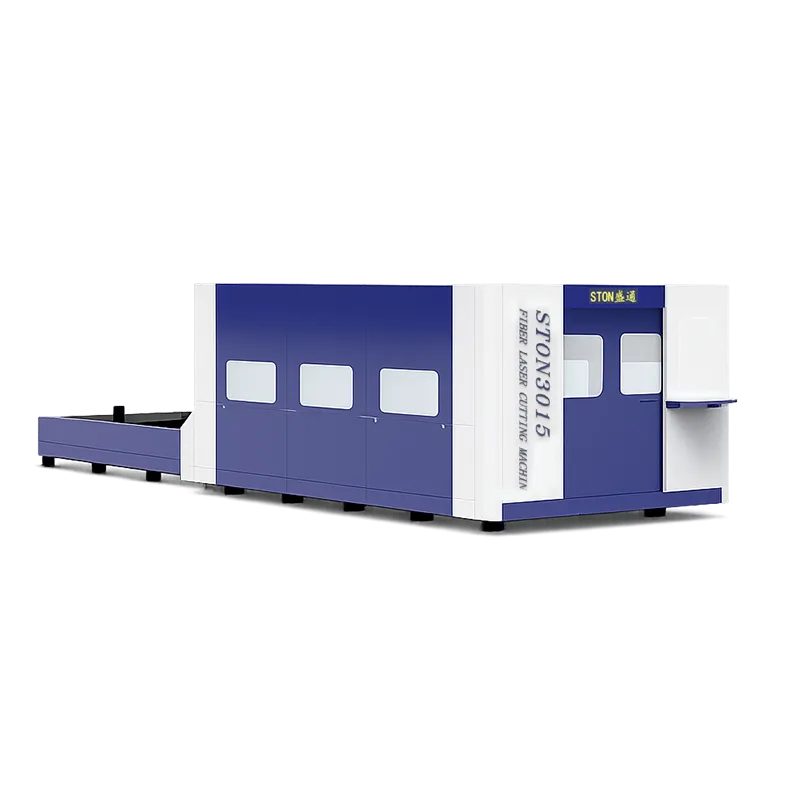
Many factories use both processes. For example, fiber laser cutting may create the outer contour, while turret punches handle repeated holes, formed shapes, and special features. STON can help buyers decide whether a standalone turret punch press, a laser machine, or a punch-laser combination machine fits their sheet metal production plan.
How Do Tool Selection and Tool Stations Affect Punch Quality?
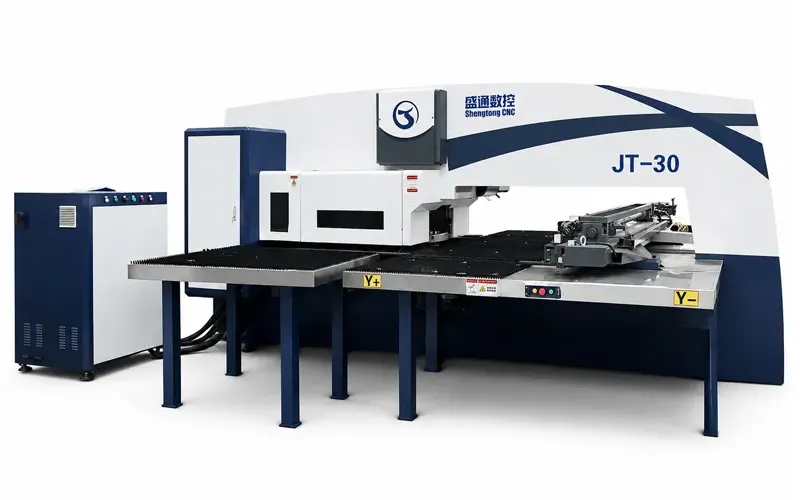
The tool is the heart of a punch machine. A good tool creates clean features. A worn tool creates burr, poor edges, and unstable results. Tool selection depends on material thickness, hole shape, feature type, press capacity, and product volume.
A turret may include many tool stations. The number of tool stations affects how many tools the machine can hold at once. More stations can reduce setup time, but only if the tooling plan is smart. A factory should not only ask how many tools the machine holds. It should ask which tools are needed for its real drawings.
Important tooling points include:
- Match tool clearance to material thickness
- Use the correct tool for small holes
- Plan forming tools before flat punch operations
- Reduce unnecessary tool changes
- Check punch and die wear regularly
- Keep the tool turret clean and aligned
The best turret punches combine correct tooling and programming. If the CNC program arranges the punching sequence well, the machine moves less, punches cleaner, and improves production rhythm.
Mechanical CNC Turret Punch, Hydraulic, or Servo: Which Machine Should You Choose?
Buyers often compare mechanical, hydraulic, and servo options. A mechanical CNC turret punch is often economical and suitable for standard punching work. A hydraulic machine offers controlled punching force for certain applications. A servo model, including servo-electric or servo drive systems, can support better energy control, fast response, and flexible operation.
| Machine Type |
General Strength |
Suitable Buyer |
| Mechanical |
Stable and economical |
Standard holes and cost-focused production |
| Hydraulic |
Strong force control |
Varied punching and forming needs |
| Servo |
Efficient, flexible, and accurate |
High-mix production and energy-focused factories |
A servo-electric punch can be useful when the factory wants more control over punching speed, hits per minute, and energy use. Servo machines can also fit factories that need better flexibility across different parts and materials.
The right choice depends on tonnage, maximum sheet size, maximum material thickness, sheet thickness range, punching force, turret rotation speed, and your required strokes per minute. Do not choose only by machine name. Choose by the parts you need to produce.
Why Choose STON for CNC Turret Punching Solutions?
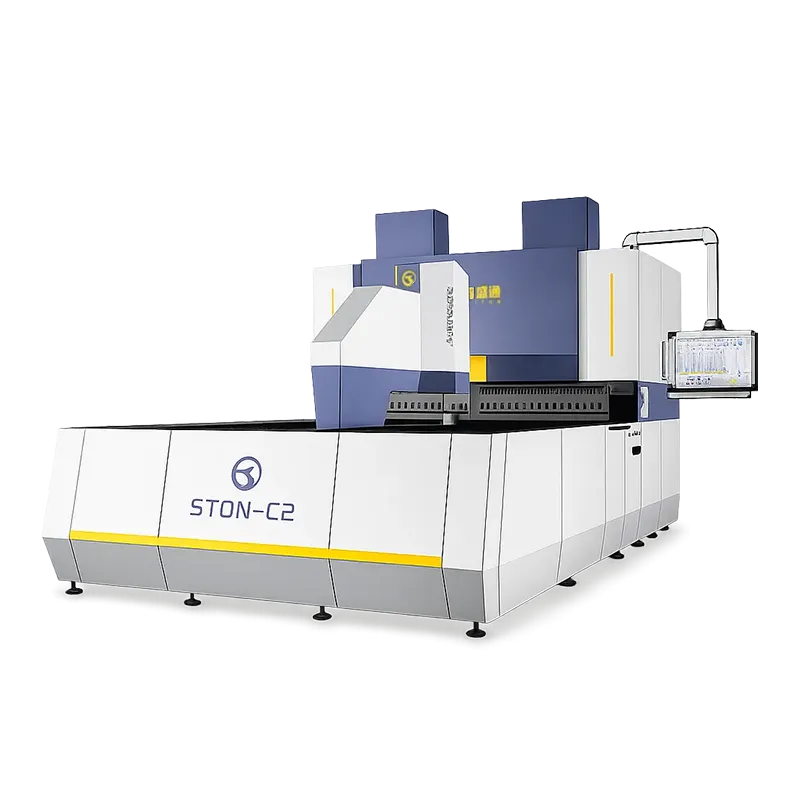
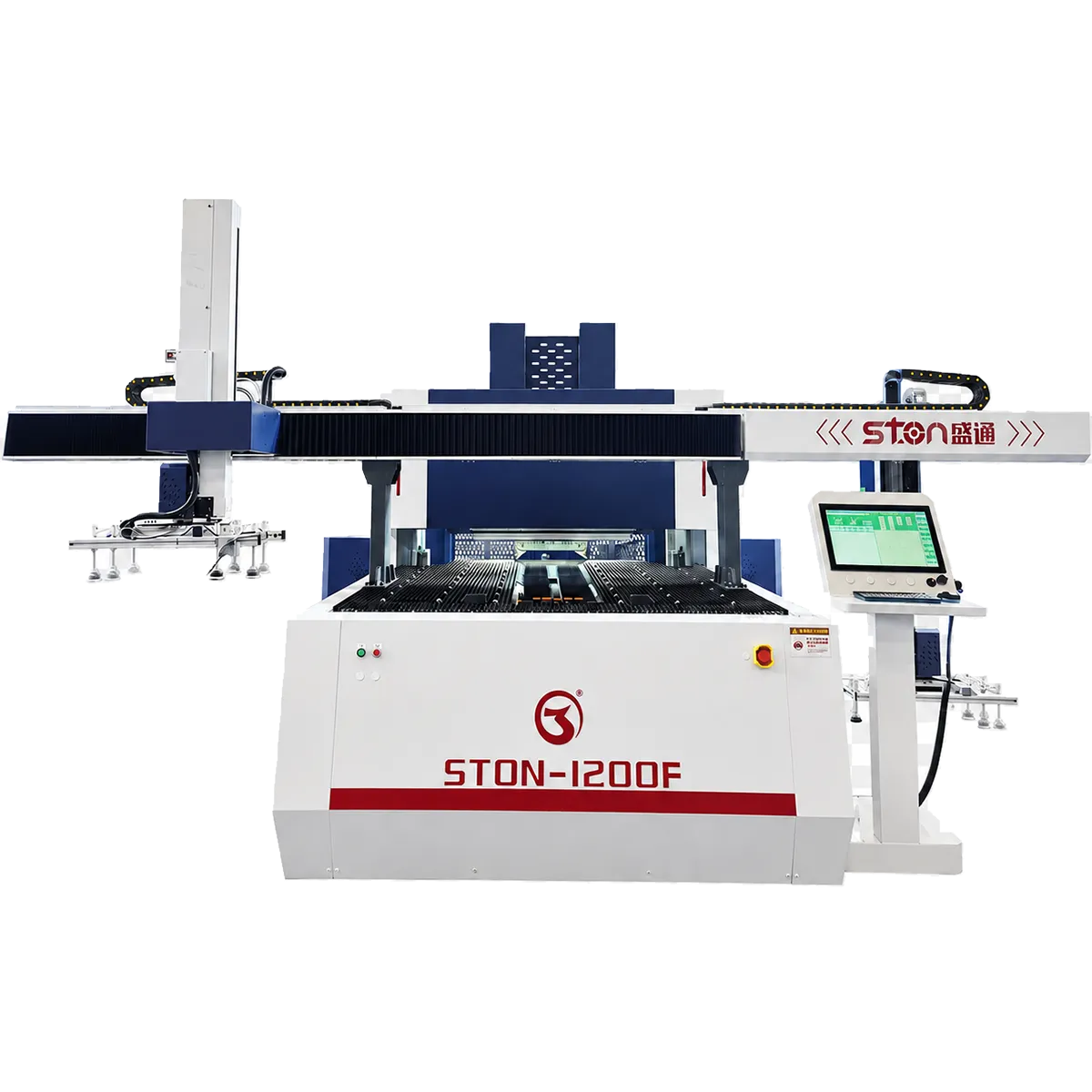
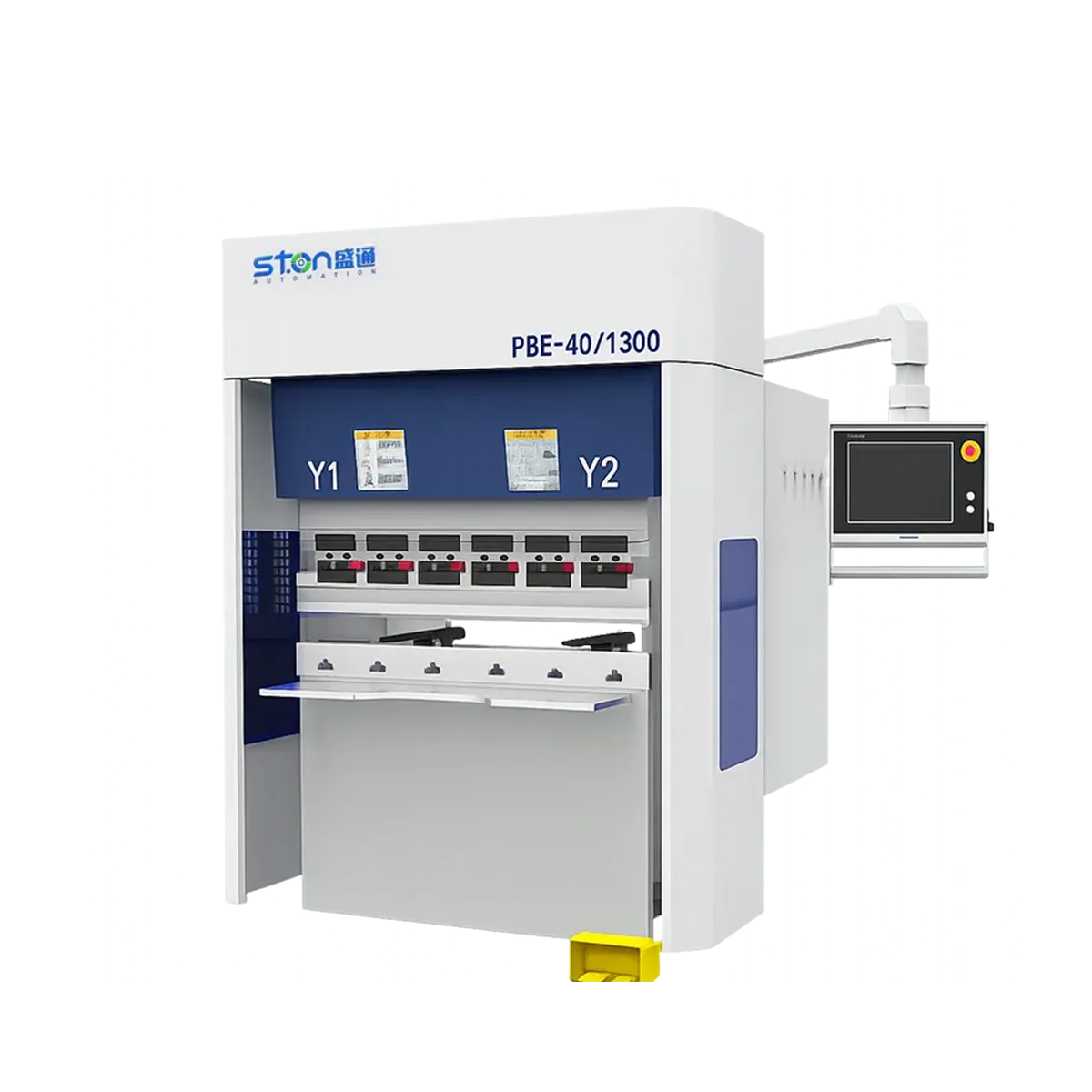
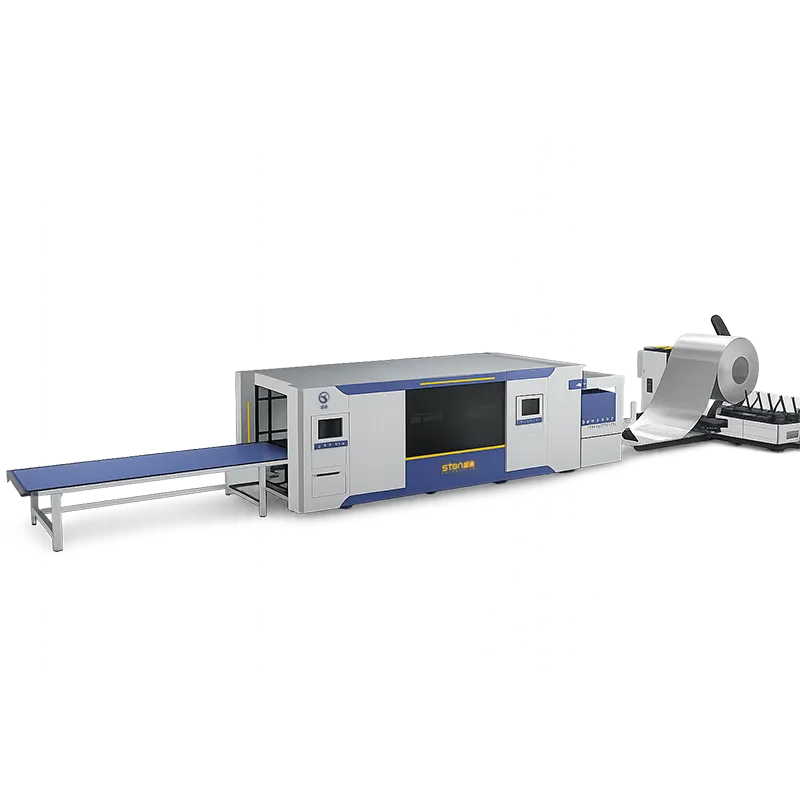
STON is a Sheet-Metal Automation & CNC Fabrication Equipment Manufacturer. We provide OEM/ODM and factory-direct solutions for global industrial customers. Our product range includes turret punch presses, CNC panel benders, press brakes, laser cutting units, flanging machines, automatic loading systems, and complete sheet metal automation lines.
For turret punch projects, we help customers review part drawings, hole details, material thickness, tooling strategy, punching solutions, and future automation needs. We also support commissioning, training, spare parts, and after-sales communication. This is important for factories that need uptime, stable accuracy, and lower total cost of ownership.
Our target customers include sheet-metal job shops, electrical and filing cabinet manufacturers, door and frame factories, HVAC ducting producers, appliance and kitchenware plants, telecom and power enclosure makers, laboratory equipment manufacturers, EV charging enclosure makers, metal furniture and racking plants, system integrators, distributors, importers, and industrial automation partners.
Practical Example: Cabinet Panel Punch Production
Imagine a factory making electrical cabinet panels. Each panel needs cable openings, mounting holes, ventilation holes, and lock positions. Manual layout takes time. Mistakes delay bending and assembly. A turret punch machine can run the same programme for every batch and improve repeatability.
The workflow may look like this:
CAD Drawing → CNC Program → Sheet Loading → Punching → Panel Inspection → Bending → Assembly
With a proper tool plan, the machine can punch holes, create louver features, and prepare the panel for bending. This supports cleaner sheet metal fabrication and a smoother production route.
The result is simple: fewer manual steps, more stable panels, better repeatability, and stronger control of sheet metal production.
Perguntas frequentes
1. What is a CNC turret punch press machine?
A CNC turret punch press machine is a sheet metal punching machine that uses a rotating turret, punch and die tooling, and CNC control to create holes, slots, louvers, emboss features, and formed shapes. It is widely used for cabinets, enclosures, HVAC panels, metal furniture, kitchen equipment, and OEM sheet metal parts.
2. What is the difference between a turret punch press and a CNC turret punching machine?
A turret punch press and a CNC turret punching machine often refer to the same type of equipment. Both use a turret with multiple tools to punch, form, trim, and process sheet metal. The term CNC turret punching machine highlights the CNC control system, while turret punch press focuses more on the punching equipment itself.
3. What products are suitable for turret punches?
Turret punches are suitable for parts with repeated holes, slots, ventilation openings, mounting holes, louvers, and formed features. Common products include electrical cabinet panels, filing cabinets, control enclosures, metal doors, HVAC ventilation plates, server racks, telecom enclosures, kitchen equipment panels, and metal furniture components.
4. Is a turret punch press better than laser cutting?
A turret punch press is better for repeated holes, louvers, emboss features, dimples, and formed sheet metal details. Laser cutting is better for complex contours, irregular profiles, and flexible cutting without punch tooling. Many factories use both processes depending on the part design, material thickness, production volume, and required features.
5. What materials can a CNC turret punch process?
A CNC turret punch can process many sheet metal materials, including cold-rolled steel, galvanized steel, stainless steel, aluminum, and pre-painted metal sheets. The suitable material thickness depends on the machine tonnage, tool design, punch force, and sheet metal application.
6. How do I choose the right turret punch machine?
To choose the right turret punch machine, you should review your sheet size, material thickness, hole patterns, forming needs, production volume, tool selection, automation requirements, and available workshop space. A reliable manufacturer should help match the machine configuration to your real drawings and production process.



 August 18, 2026