Precision Hexagonal Perforation with a 1 mm Minimum Web Width
Descripción general del proyecto
| Artículo |
Detalles |
| Industry |
Network and Server Cabinet Manufacturing |
| Application |
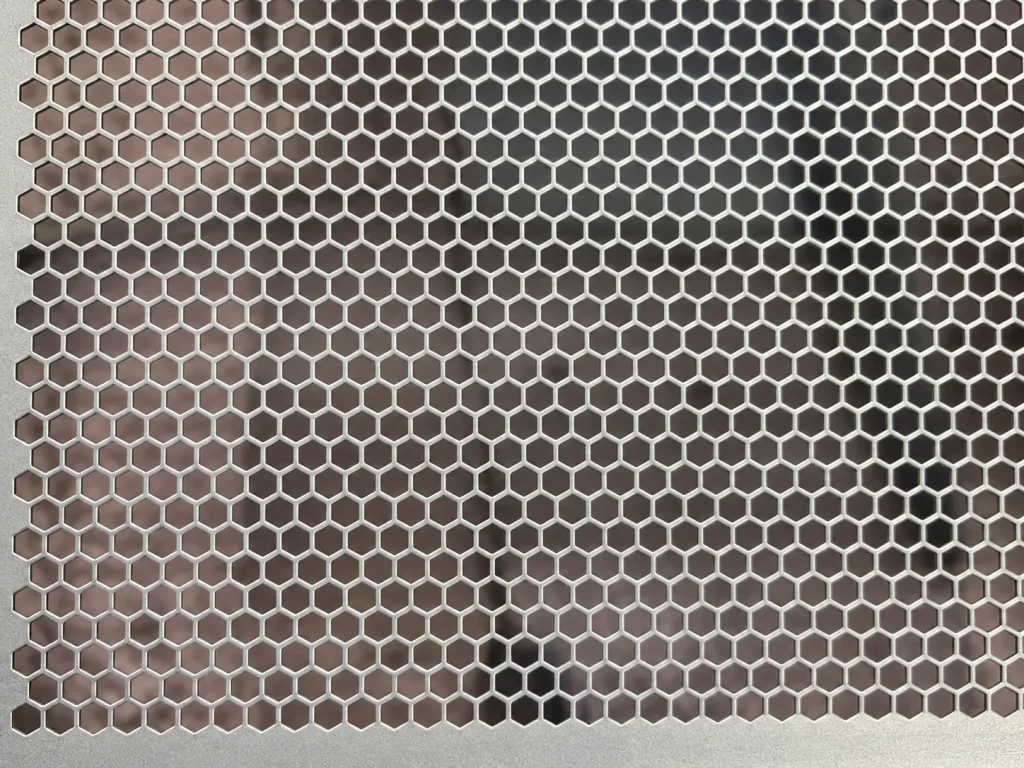
Hexagonal Honeycomb Ventilation Panels |
| Equipo |
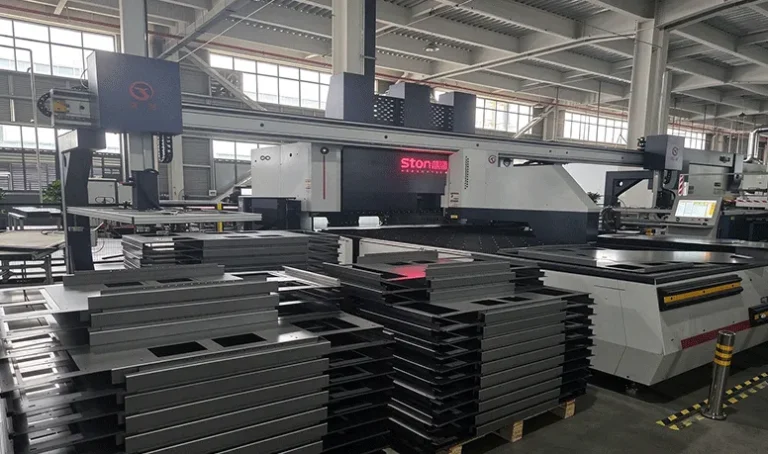
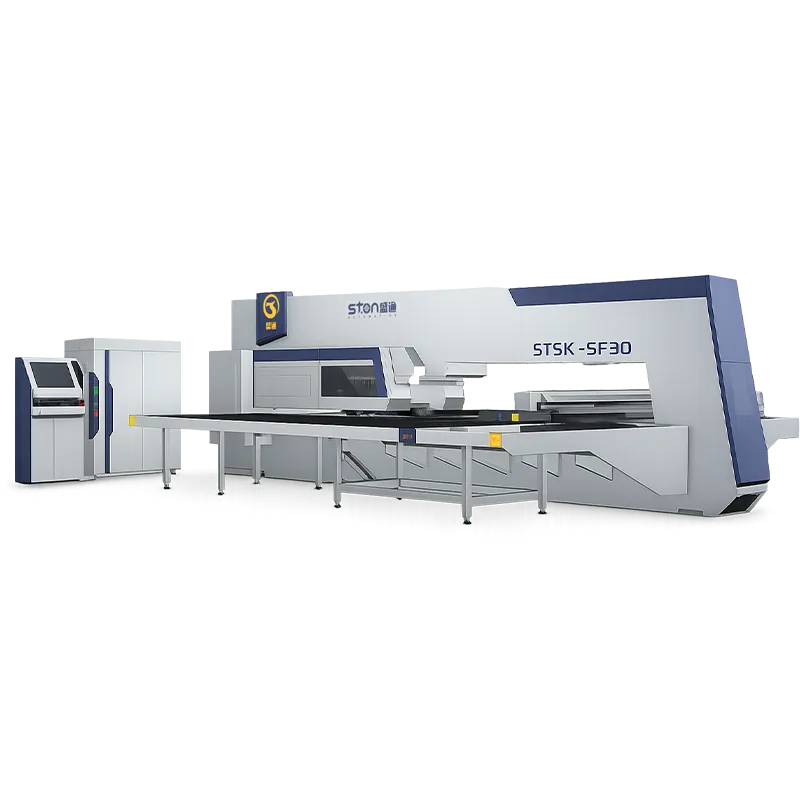
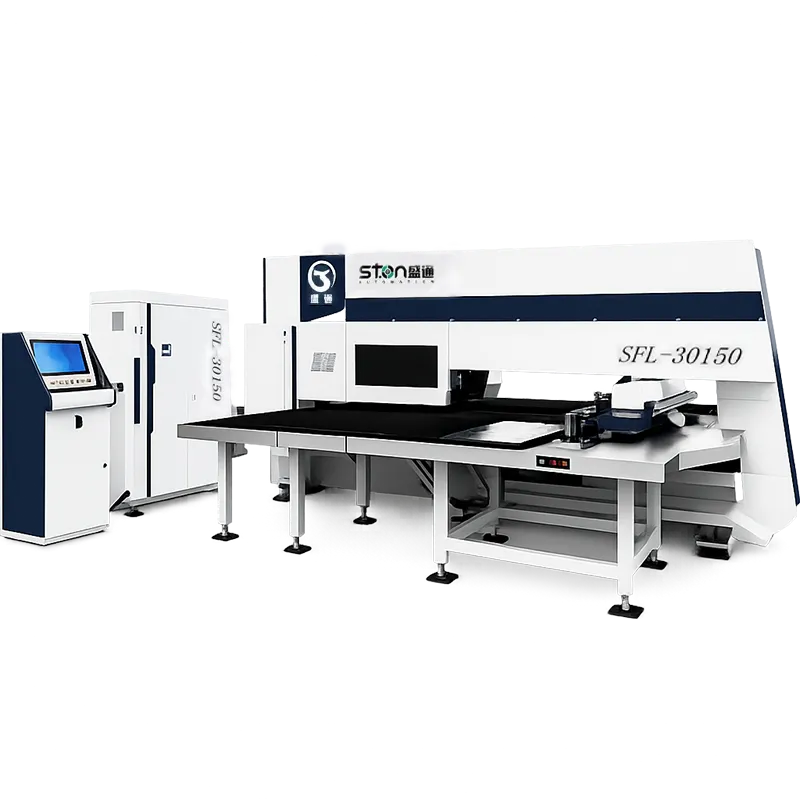
STON CNC Turret Punch Press |
| Proceso |
Precision Sheet Metal Punching |
| Key Requirement |
1 mm Minimum Web Width Between Adjacent Holes |
| Tooling |
Dedicated Hexagonal Punch and Die Set |
Customer Challenge: Dense Honeycomb Perforation
Network cabinets and server enclosures require ventilation panels that balance airflow, structural integrity, and a consistent appearance.
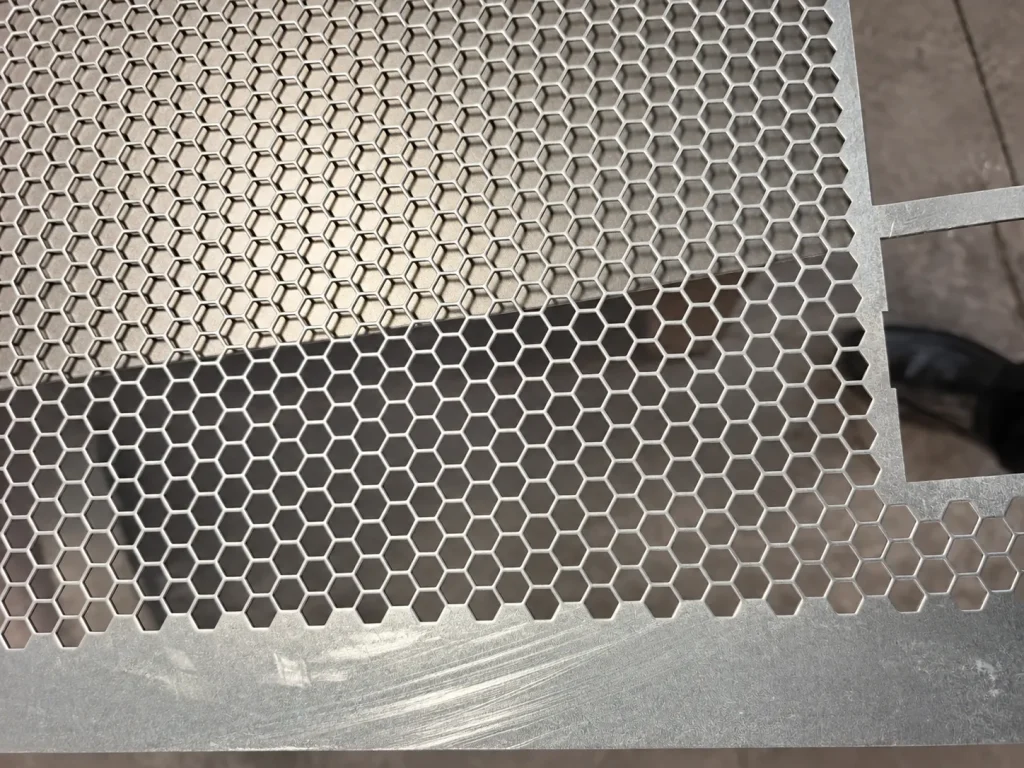
For this application, the customer required a dense hexagonal honeycomb pattern with only a 1 mm minimum web width between adjacent holes.
Such narrow spacing creates challenges during CNC punching. Repeated punching can introduce localized stress, potentially causing sheet distortion, hole deformation, burr formation, and inconsistent spacing.
Maintaining panel flatness is particularly important because the perforated sheets must fit into subsequent cabinet assembly processes.
STON Engineering Solution
STON applied a CNC turret punching approach using dedicated hexagonal punch and die tooling, controlled die clearance, and an optimized punching sequence.
The engineering approach focused on three areas:
1. Staggered Punching Sequence
A distributed, staggered punching sequence was used to help manage localized forming stress rather than processing all adjacent holes consecutively.
2. Dedicated Hexagonal Tooling
A matching hexagonal punch and die set was selected for the required hole geometry. Appropriate tool condition and die clearance are important for controlling punched-edge quality and burr formation.
3. Controlled Sheet Positioning
CNC-controlled sheet movement supports consistent positioning during repeated punching operations. Hole spacing and finished-panel dimensions should be checked against the approved drawing.
Together, these measures address the main process challenges associated with densely perforated cabinet panels.
Quality Requirements for the Finished Panels
The project specification focuses on a 1 mm minimum web width between neighboring hexagonal holes.
For production acceptance, the main inspection points should include:
- Minimum remaining web width and hole spacing.
- Hexagonal hole shape and punched-edge condition.
- Burr height and any tearing of narrow web sections.
- Overall panel flatness after punching.
- Suitability for subsequent finishing and cabinet assembly.
Actual acceptance limits should be established according to the customer’s drawing, material grade, sheet thickness, and inspection requirements.
Why Consider CNC Turret Punching for Honeycomb Patterns?
CNC turret punching is a practical option for repeated hole patterns when dedicated tooling can reproduce the required geometry.
Compared with laser cutting, punching may offer a productivity advantage in suitable high-volume applications with repeated hole shapes. However, the economic result depends on tooling costs, hole count, batch size, sheet material, and the required finish.
For dense honeycomb patterns, process planning is as important as the equipment itself.
Applications
This punching approach is relevant to manufacturers producing:
- Network cabinet ventilation panels
- Server rack doors and enclosure panels
- UPS cabinet doors
- Electrical cabinet ventilation covers
- Industrial equipment grilles
Suitability for carbon steel, galvanized steel, stainless steel, or aluminum should be confirmed for the required thickness and hole geometry.
Need a Precision Honeycomb Punching Solution?
STON provides CNC turret punching machines and tooling configuration support for perforated sheet metal components.
Comparta el plano del patrón de panal, el tipo de material, el espesor de la chapa, las dimensiones de los orificios, el ancho mínimo de los nervios y la cantidad de producción requerida.
Nuestro equipo de ingeniería puede evaluar el proceso de punzonado, los requisitos de utillaje y la configuración de máquina adecuada para su proyecto.
Contacte con STON para obtener una solución de punzonado personalizada:
https://stoncnc.com/contact-us/



 October 30, 2026