Many metal factories still lose time on slow hole punching, repeated manual positioning, and unstable part accuracy. These small delays grow into higher labor costs and late orders. A mechanical CNC turret punch press machine helps solve this by making sheet metal punching faster, cleaner, and easier to control.
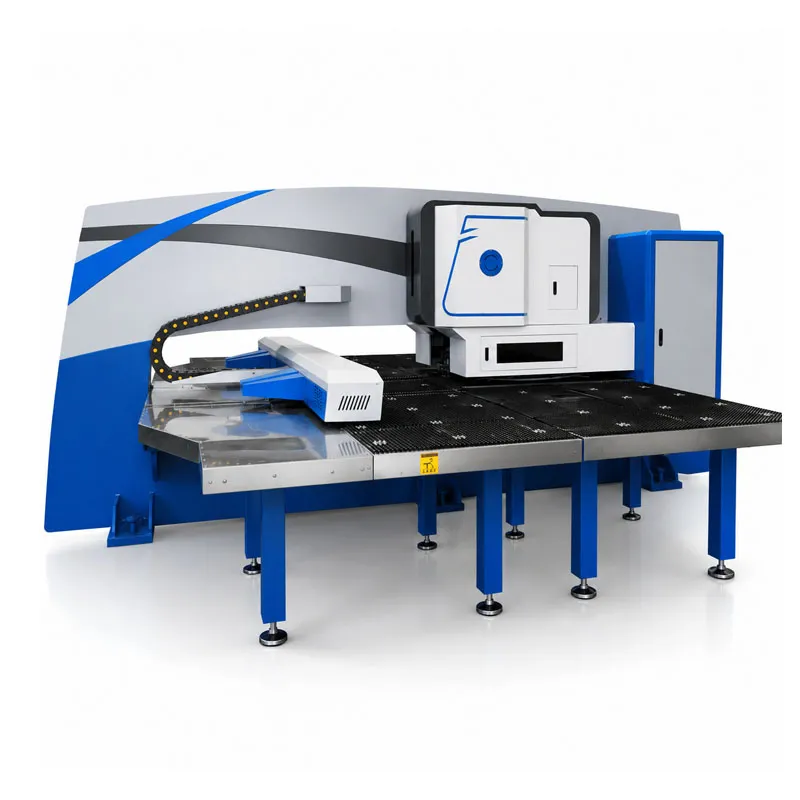
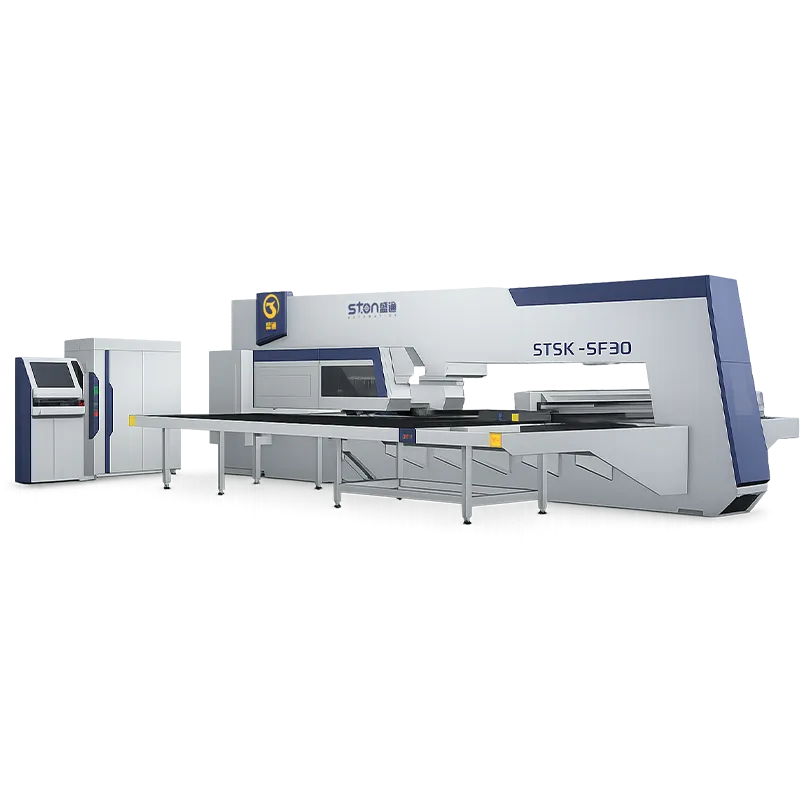
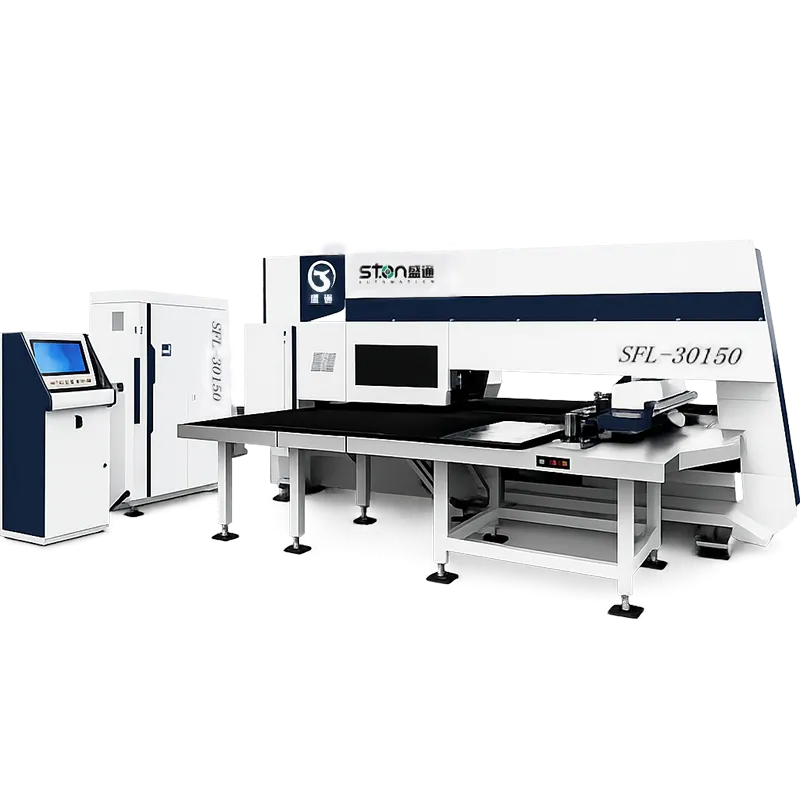
A mechanical CNC turret punch press machine is a CNC-controlled punch machine used to punch holes, slots, forms, and shapes in sheet metal. It uses a rotating turret that holds multiple tools, allowing fast tool changes, stable sheet positioning, and efficient processing for cabinets, panels, enclosures, appliances, and metal fabrication parts.
What Is a Mechanical CNC Turret Punch Press Machine?
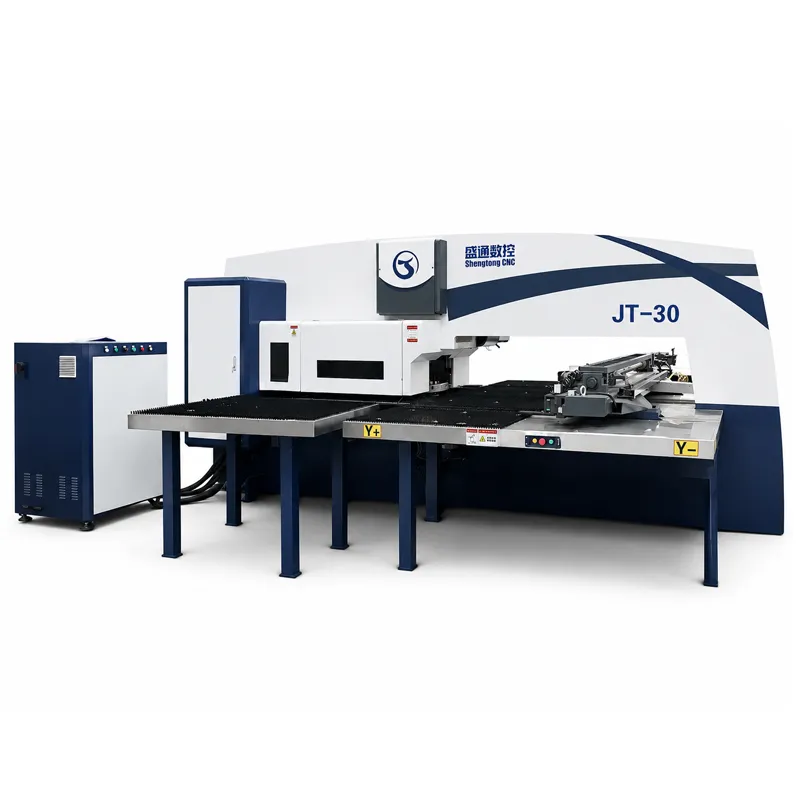
A mechanical CNC turret punch press machine is a sheet metal processing machine used for punching holes, slots, louvers, embossing, and many other shapes. It combines a mechanical press structure with CNC control. The machine moves the metal sheet into position, selects the right tool from the turret, and completes each punch according to the processing program.
The word “turret” means the machine has a rotating tool holder. This rotating turret holds multiple tools, so the machine can switch from one punch shape to another without stopping for manual tool changes. That is why a CNC turret punch press is useful for parts with many hole types, shapes and sizes.
In simple terms, this punch machine is built for fast and repeatable sheet metal work. It helps factories make electrical cabinets, control panels, HVAC parts, appliance shells, metal furniture parts, and machinery covers. Compared with manual punching, a CNC turret punch machine gives better precision, faster production, and more stable workpiece processing.
How Does a CNC Turret Punch Machine Work?
A CNC turret punch machine works by moving a metal sheet under the punching head. The CNC system controls sheet movement on the X and Y axes. When the sheet reaches the correct position, the press drives the punch tool down through the metal sheet and into the die. This creates a clean hole or form.
The turret can rotate to bring the correct tool into position. A thick turret may hold many tools for round holes, square holes, slots, special forms, and other punching operations. In one production cycle, the machine can punch holes, create ventilation patterns, stamp marks, and process different shapes without changing the whole setup.
A basic workflow looks like this:
CAD Drawing
↓
Programming Software
↓
Processing Program
↓
CNC System
↓
Sheet Positioning
↓
Tool Selection
↓
Punching
↓
Finished Workpiece
This workflow makes the turret punch press machine useful for batch production and mixed part production. Once the program is ready, the operator can run the job with less manual measuring and fewer errors.
Why Choose a Mechanical Type Turret Punch Press Instead of Hydraulic or Servo?
A mechanical type turret punch press uses a mechanical power system to drive the punching action. It is often chosen for its simple structure, stable punching force, and good cost-performance ratio. For many factories, especially those processing standard sheet metal parts, mechanical punching offers strong value.
A hydraulic turret punch press uses hydraulic oil to generate punching force. It can provide smooth pressure control and strong force for some applications. However, hydraulic systems also require oil maintenance, seals, pumps, and temperature control. A servo turret punch uses a servo motor to control punching action. It may offer high precision, energy savings, and flexible control, but the initial cost is usually higher.
What Materials and Thickness Ranges Can a Turret Punch Machine Process?
A turret punch machine is mainly used for sheet metal. Common materials include carbon steel, stainless steel, aluminum, galvanized sheet, and some coated metal plates. The actual thickness depends on machine tonnage, tool design, material strength, and punching shape.
For example, punching a large round hole in thick stainless steel needs more force than punching a small hole in thin carbon steel. The punch size, die clearance, material strength, and hole diameter all affect the result. This is why buyers should share real part drawings before choosing a punch machine.
How Do Turret Tools, Punching Head, and Tool Selection Improve Production?
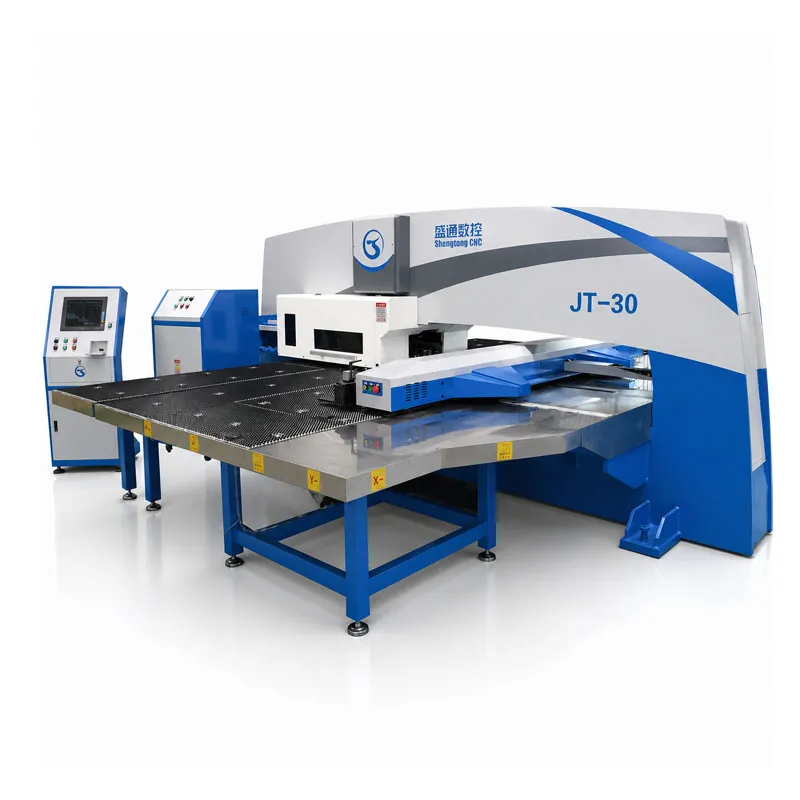
The tool system is the heart of a CNC turret punch press. The machine tool may look strong from the outside, but the real production value comes from the punching tools inside the turret. A good tool setup helps the machine punch fast, reduce burrs, improve accuracy, and extend tool life.
The rotating turret holds multiple tools. These tools may include round punches, square punches, rectangle punches, slot tools, louver tools, forming tools, and marking tools. Because the turret holds multiple tools, the machine can process many features in one setup. This reduces tool changes and saves operator time.
Key tool-related points include:
- Punch and die clearance for each material thickness
- Tool coating and hardness for long life
- Punching head stability
- Tool alignment
- Automatic lubrication or concentrated lubricating device
- Tool sharpening plan
- Proper programming order
A strong tool system can improve service life and reduce downtime. It can also protect the accuracy of the machine. In high-speed production, small tool problems can quickly become big quality problems. That is why professional training and proper tool maintenance matter.
How Does CNC Control Improve Hole Punching Accuracy and Throughput?
CNC control improves accuracy because the machine follows programmed coordinates instead of manual marking. The CNC system controls sheet positioning, tool selection, and punching order. This gives better repeatability from the first part to the last part.
Modern systems may use a servo feeding mechanism, ball screw, linear guide rail, and digital AC servo motor to move the sheet smoothly. A Siemens control system or similar industrial control platform may be used depending on machine configuration. These electric components and pneumatic components help the machine run with stable speed and accuracy.
A simple productivity chart:
Manual Layout
↓
Manual Punching
↓
More Measuring
↓
More Error Risk
CNC Program
↓
Automatic Positioning
↓
Fast Punching
↓
Stable Output
For production managers, the value is clear. The machine can improve throughput, reduce operator workload, and keep part dimensions more stable. In high-volume production, even small time savings per part can become large savings over a month.
Mechanical CNC Turret Punch Press vs. Laser Processing: Which Is Better?
A mechanical CNC turret punching machine and a laser cutting machine are both useful, but they solve different problems. A turret punch is usually better for repeated holes, standard shapes, forming, and some marking work. Laser processing is better for complex outer contours, curves, and jobs that change often.
For metal factories, the question is not always “Which machine is better?” The better question is: “Which cutting solution fits my parts?” If your parts have many repeated holes, a punch machine may give faster and cheaper processing. If your parts have complex curves, a professional laser cutting machine may give better flexibility and cutting performance.
Some production lines may use both punching and laser processing. The system may automatically sense the laser cutting position to open precise cuts after punching, depending on the machine design and automation plan. In other cases, factories may use separate punching and laser machines for different work.
As an industrial laser equipment manufacturer, HWlEiC Laser helps buyers think through this choice carefully. For many metal sheet applications, laser processing is the best path. For repeated holes and forms, punching still has strong value. The right answer comes from your drawings.
How Can HWlEiC Laser Support Metal Processing and Production Line Upgrades?
HWlEiC Laser focuses on industrial laser equipment manufacturing and intelligent manufacturing solutions. Our core market is global metal processing and manufacturing. We support ultra-large-format sheet cutting, metal sheet cutting, tube cutting, sheet-and-tube integrated cutting, laser welding, automated welding, and desktop engraving equipment.
Although a turret punch machine is a key part of many sheet metal workshops, many factories today also need laser cutting, welding, and automation upgrades. This is where HWlEiC Laser can bring value. We help buyers compare different processing routes and select equipment based on actual material, thickness, part shape, and output goals.
Our typical overseas customers include:
- Sheet metal processing factories
- Metal product manufacturers
- Automotive and auto parts companies
- Heavy industry and equipment manufacturers
- Industrial buyers
- Project-based customers
- Automation integrators
- Production-line upgrade teams
For example, a factory may use a CNC turret punch press for repeated holes and choose a fiber laser cutting system for complex contours. Another factory may replace some punching work with laser cutting to reduce tool cost. A third factory may need tube laser cutting and automated welding after sheet metal cutting. HWlEiC Laser helps buyers review these choices with a practical, production-first mindset.
How Should Buyers Choose Between Punching, Laser Cutting, and Automation?
Buyers should start with parts, not machines. Look at your drawings first. Count the holes. Check the shape. Review the material and thickness. Then check your daily production target. This simple method helps avoid wrong equipment decisions.
A practical decision path:
Many repeated holes?
↓
Consider CNC turret punching
Many complex profiles?
↓
Consider fiber laser cutting
Need both sheet and tube processing?
↓
Consider sheet-and-tube integrated laser cutting
Need lower labor costs?
↓
Consider loading, unloading, welding, and automation
For factories planning long-term growth, automation should be part of the discussion from the beginning. Even if you start with one machine, your layout should leave room for future upgrades. A smart factory grows step by step.
HWlEiC Laser can support this planning with quotation service, catalog support, technical consultation, and project-based equipment recommendations.
FAQs About CNC Turret Punch Machines
What is a mechanical CNC turret punch press machine?
A mechanical CNC turret punch press machine is a CNC-controlled punch machine used to punch holes, slots, forms, and patterns in sheet metal. It uses a rotating turret to hold multiple tools and a mechanical press system to complete the punching action.
What is the difference between a mechanical, hydraulic, and servo turret punch press?
A mechanical turret punch press uses a mechanical power system and is often cost-effective for standard punching. A hydraulic press uses hydraulic oil and can provide smooth force control. A servo turret punch uses a servo motor for flexible, energy-saving, and precise control.
What materials can a CNC turret punch machine process?
A CNC turret punch machine can process carbon steel, stainless steel, aluminum, galvanized sheet, and other metal plates. The exact material and thickness depend on machine tonnage, tool size, material strength, and die clearance.
Is a turret punch press better than laser cutting?
A turret punch press is often better for repeated holes, forms, and standard shapes. Laser cutting is better for complex contours and flexible designs. Many factories use both technologies for different part needs.
What affects punch press price?
Punch press price depends on machine frame, tonnage, turret capacity, CNC system, feeding system, tool package, lubrication system, automation level, and supplier service. Buyers should compare total value, not only the initial price.
Can HWlEiC Laser help me choose between punching and laser cutting?
Yes. HWlEiC Laser can review your material, thickness, drawings, production goals, and automation needs. Based on your actual project, we can help you evaluate whether laser cutting, sheet-and-tube cutting, laser welding, or automation equipment is the better upgrade path.



 11 de junho de 2026