Muitos compradores comparam máquinas a laser, mas ainda se sentem inseguros. Uma escolha errada pode desperdiçar dinheiro, diminuir a produção e prejudicar a qualidade do corte. A máquina de corte a laser certa resolve esse problema ao considerar o seu material, a espessura, a área de trabalho, a potência do laser e o objetivo real da produção.
A laser cutting machine uses a focused laser beam to cut materials with high precision and speed. For industrial sheet metal, a fiber laser cutter is usually the best choice for metal cutting. CO2 laser and diode laser machines are more common for acrylic, wood, engraving, craft work, and small business use.
O que é uma máquina de corte a laser?
A máquina de corte a laser is a machine that uses a focused laser beam as a tool for cutting. The laser heats, melts, burns, or vaporizes the material along a programmed path. In simple words, the laser becomes a sharp, clean, contact-free cutter. It can cut metal, acrylic, wood, leather, paper, and other materials, depending on the laser type.
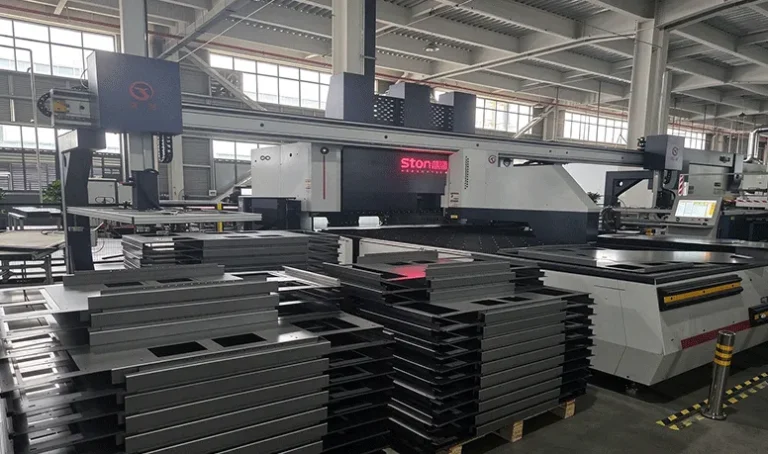
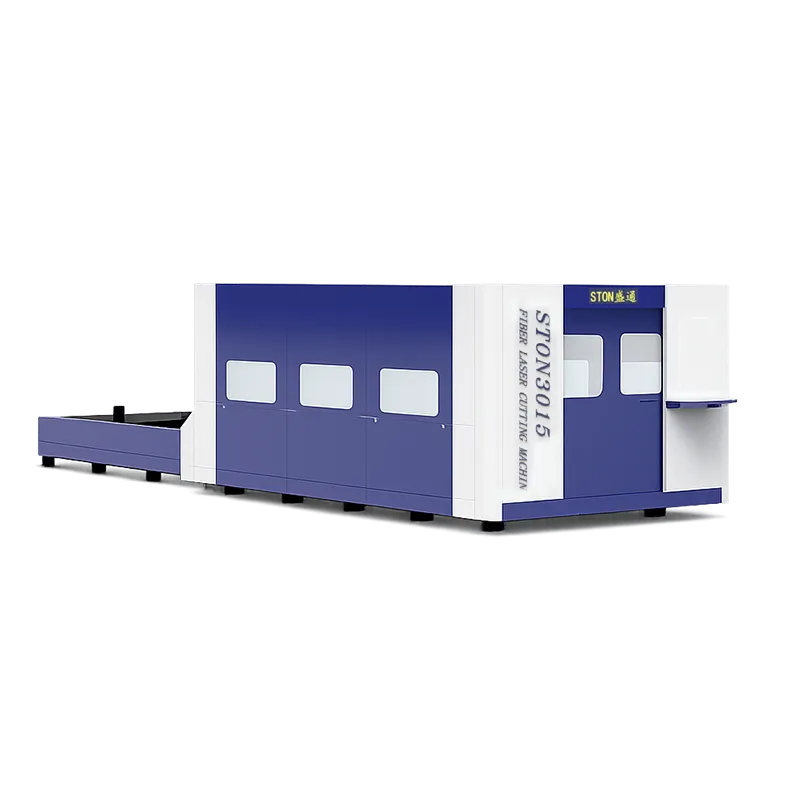
Em fábricas industriais, uma máquina de corte a laser é frequentemente usada na fabricação de chapas metálicas. Ela pode processar aço, aço inoxidável, alumínio, chapas galvanizadas e outros tipos de chapas metálicas. A máquina segue instruções CNC, portanto pode produzir formas repetíveis com alta precisão. Isso a torna útil para quadros elétricos, peças de HVAC, painéis de eletrodomésticos, móveis metálicos, coberturas de máquinas e peças personalizadas de chapa metálica.
There are also small laser engraver machines for home users, craft laser users, and small business workshops. A laser cutter and engraver may cut wood, engrave signs, mark logos, or process acrylic gifts. However, these machines are very different from an industrial fiber laser cutting machine. A hobbyist may need a desktop laser, while a factory needs a powerful machine built for stable production.
How Does a Laser Cutter Work?
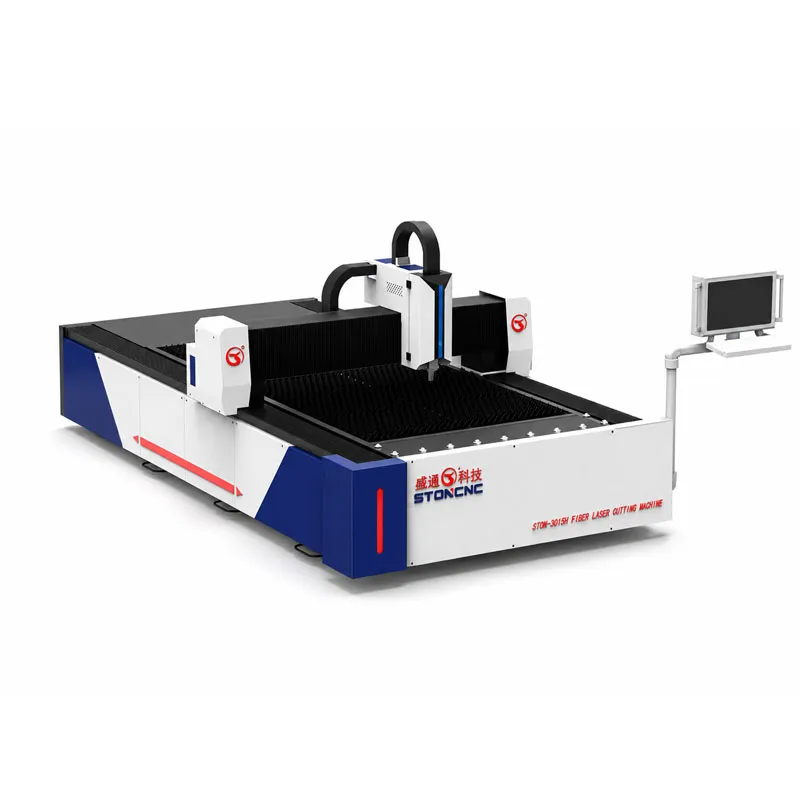
A laser cutter works by focusing laser energy into a small point. This focused laser beam creates heat at the cutting area. The machine moves the laser head along a programmed path, and the material separates along that path. The cutting process is fast, clean, and repeatable when the settings are correct.
A CNC laser system usually includes the machine frame, laser source, cutting head, control system, drive system, worktable, gas system, cooling system, and safety enclosure. For metal cutting, assist gas such as oxygen, nitrogen, or air helps remove molten material from the cut. This improves cutting quality and keeps the edge cleaner.
Fiber Laser, CO2 Laser, or Diode Laser: Which Laser Type Fits Your Material?
A primeira grande escolha é o tipo de laser. O laser de fibra é a opção mais comum para o corte industrial de chapas metálicas. Ele é eficiente no corte de metais, especialmente aço-carbono, aço inoxidável, alumínio, aço galvanizado, latão e cobre. Muitos sistemas de corte de metais a laser utilizam fontes de laser de fibra porque oferecem desempenho de alta velocidade e baixa necessidade de manutenção em aplicações industriais.
O laser de CO2 é amplamente utilizado em materiais não metálicos, como acrílico, madeira, couro, tecido, papel e alguns plásticos. Um cortador a laser de CO2 também pode processar determinados materiais revestidos e realizar trabalhos de gravação. Muitos usuários de máquinas de gravação a laser escolhem o CO2 porque ele funciona bem em acrílico e madeira. É comum na fabricação de sinalização, amostras de embalagens e artigos de decoração, bem como em trabalhos leves de oficina.
Um laser de diodo é frequentemente usado em pequenas máquinas a laser de mesa. Uma máquina de corte a laser de diodo costuma ser menos potente do que um laser de fibra industrial ou uma máquina CO2 de grande porte. Ela pode gravar madeira, couro, metal revestido e alguns tipos de acrílico colorido, mas não é a escolha certa para o corte industrial de metais. Produtos como o Glowforge Aura mostram como os sistemas a laser de diodo são usados no mercado de artesanato e no segmento de consumo, e não na produção de chapas metálicas pesadas.
O que uma máquina de corte a laser pode cortar e gravar?
A máquina de corte a laser can cut and engrave a variety of materials, but the answer depends on the laser type. Fiber laser machines are best for metal. CO2 laser machines are best for many non-metal materials. Diode laser machines are best for lighter engraving and craft use.
Para os clientes industriais da STON, a principal necessidade costuma ser o corte de chapas metálicas. Isso significa que o comprador busca uma qualidade de corte estável em aço, aço inoxidável, alumínio e chapas galvanizadas. Esses materiais são usados em gabinetes elétricos, proteções de máquinas, painéis para sistemas de climatização, carcaças de eletrodomésticos, peças de elevadores e móveis metálicos.
How Much Laser Power Do You Need for Cutting Metal?
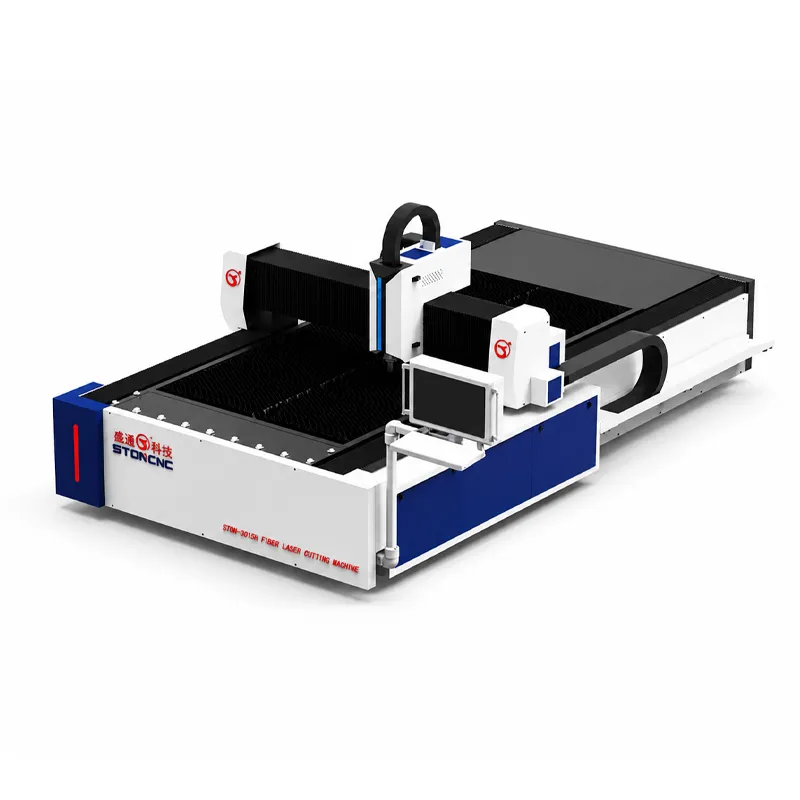
A potência do laser afeta a capacidade de corte, a velocidade de corte e a espessura de corte. Um laser de maior potência pode cortar materiais mais espessos e, muitas vezes, cortar chapas finas mais rapidamente. Mas o melhor laser nem sempre é o mais potente. A potência de saída adequada depende dos seus materiais, do design das peças, da produção diária e do orçamento.
For example, a factory cutting thin stainless steel panels may not need the same laser power as a company cutting thick carbon steel plates. A less powerful laser may work well for thin sheets, while a high-powered laser is better for thicker metal and high-volume production. The key is to match power for cutting with the real job.
When buying a laser for industrial use, prepare this information first:
- Main material type
- Common sheet thickness
- Maximum cutting thickness
- Sheet size
- Tempo diário de corte
- Required cutting speed
- Accuracy needs
- Requisitos de qualidade das bordas
- Gas supply plan
- Budget and price bracket
Um bom fornecedor não perguntará apenas: “Quantos watts você deseja?”. Ele perguntará o que você corta, com que frequência corta e qual qualidade de peça você precisa. Na STON, preferimos analisar toda a necessidade de produção antes de recomendar uma máquina de corte a laser.
How Do Work Area, CNC Control, and Laser Software Affect Production?
The work area decides the largest sheet size the laser machine can process. Common industrial sheet sizes include 3000 × 1500 mm, 4000 × 2000 mm, and larger custom formats. If your factory uses standard metal sheets, a standard platform may be enough. If you process large panels, you may need a larger table.
CNC control affects speed and accuracy. A CNC laser cutter uses programmed paths to control the laser head, cutting speed, gas timing, piercing, and movement. Good CNC control helps the machine cut complex shapes and repeat parts with high precision. This is important for cabinet panels, HVAC parts, appliance parts, and precision sheet metal components.
O software do laser também é importante. Um bom software para laser ajuda a criar trajetórias de corte, organizar as peças, reduzir o desperdício e gerenciar a produção. O nesting é especialmente útil. Ele posiciona as peças na chapa de forma inteligente, permitindo que a fábrica utilize o material com mais eficiência.
Um fluxo de trabalho simples é assim:
Drawing File
↓
Laser Software
↓
Nesting Plan
↓
CNC Cutting Path
↓
Corte a laser
↓
Part Sorting
↓
Bending / Welding / Assembly
Se o software for fácil de usar, os trabalhadores aprenderão mais rápido. Se a máquina for estável, a produção se tornará mais fluida. Se o percurso de corte for otimizado, a fábrica economizará tempo e material.
Um cortador a laser de mesa ou um laser de fibra industrial é melhor para a sua empresa?
A desktop laser is usually better for small products, light engraving, school labs, home users, or a small business making gifts, labels, signs, or craft items. It can be easy to use and friendly for beginners. Some desktop laser and portable laser products are designed for simple setup and small workspaces.
An industrial fiber laser is better for factories that need metal cutting every day. It has a stronger frame, higher cutting power, larger work area, better motion systems, and stronger production ability. It is designed for metal sheet processing, not just engraving and cutting small items.
How Can a Laser Cutting Machine Improve Sheet Metal Productivity?
A máquina de corte a laser improves productivity by cutting parts faster, reducing tool changes, and allowing quick design changes. Traditional cutting methods may need molds or manual setup. A CNC laser can change jobs by changing the program. That helps factories handle small batches, custom parts, and urgent orders.
For sheet metal manufacturers, speed and accuracy both matter. The machine must cut fast, but it must also keep part dimensions stable. Good precision and speed reduce rework. High precision helps bending, welding, and assembly go smoothly later.
A typical improvement path looks like this:
Manual Cutting
↓
CNC Laser Cutting
↓
Automatic Loading and Unloading
↓
Laser + Bending Integration
↓
Smart Sheet Metal Production Line
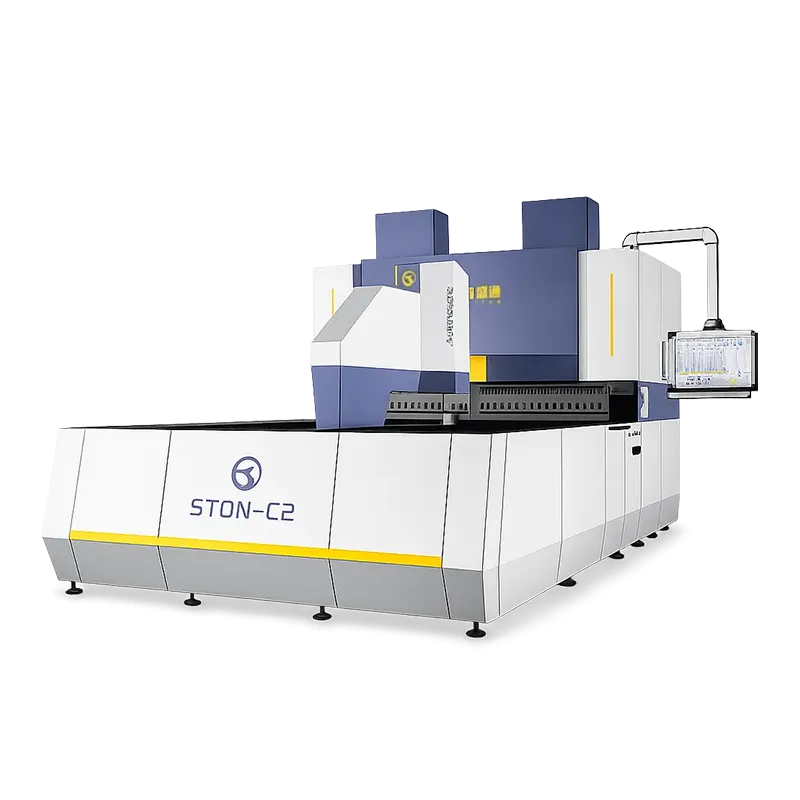
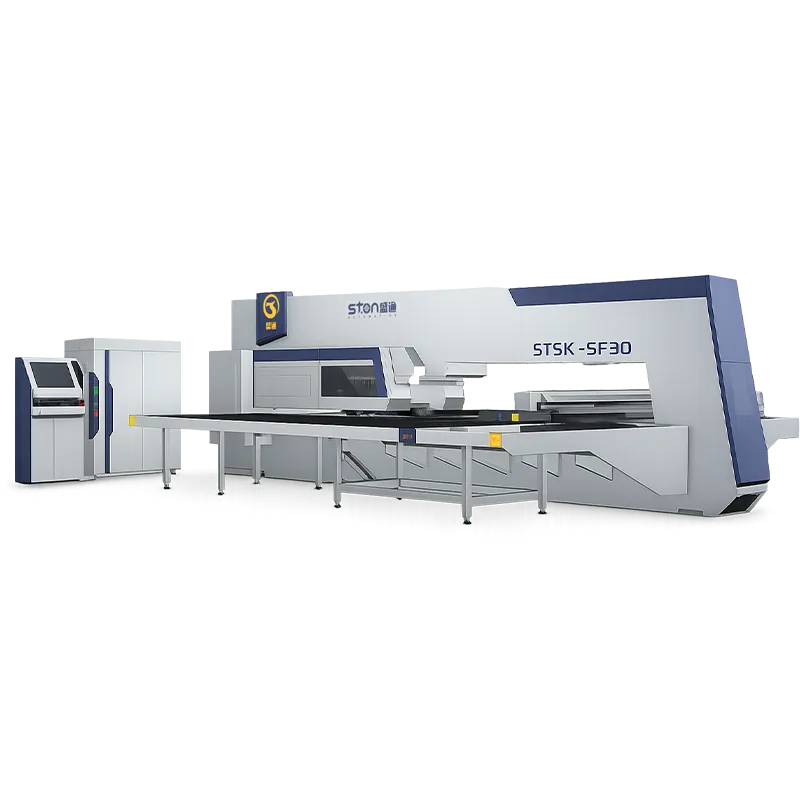
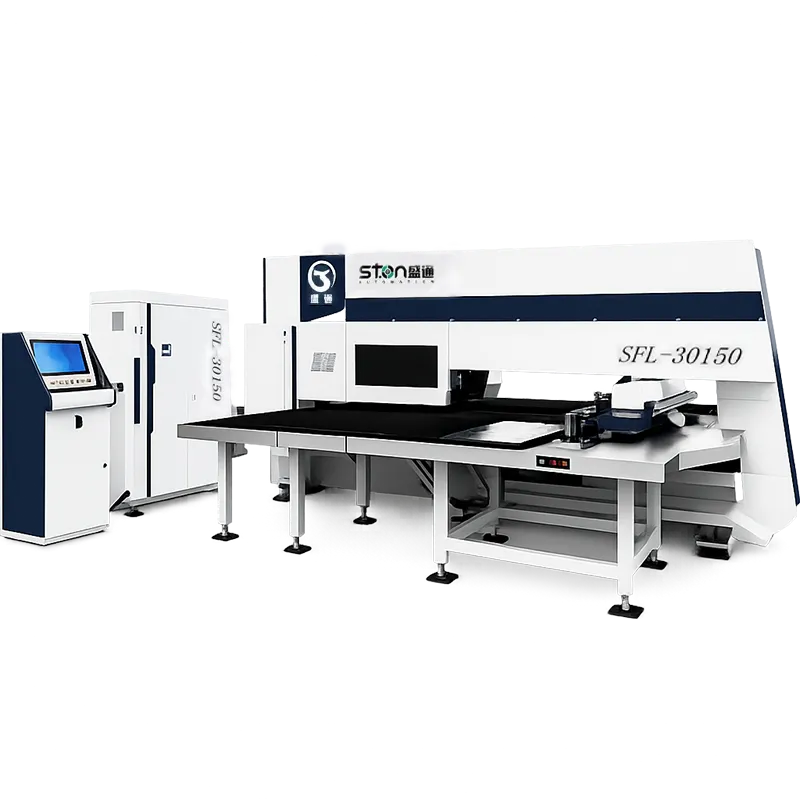
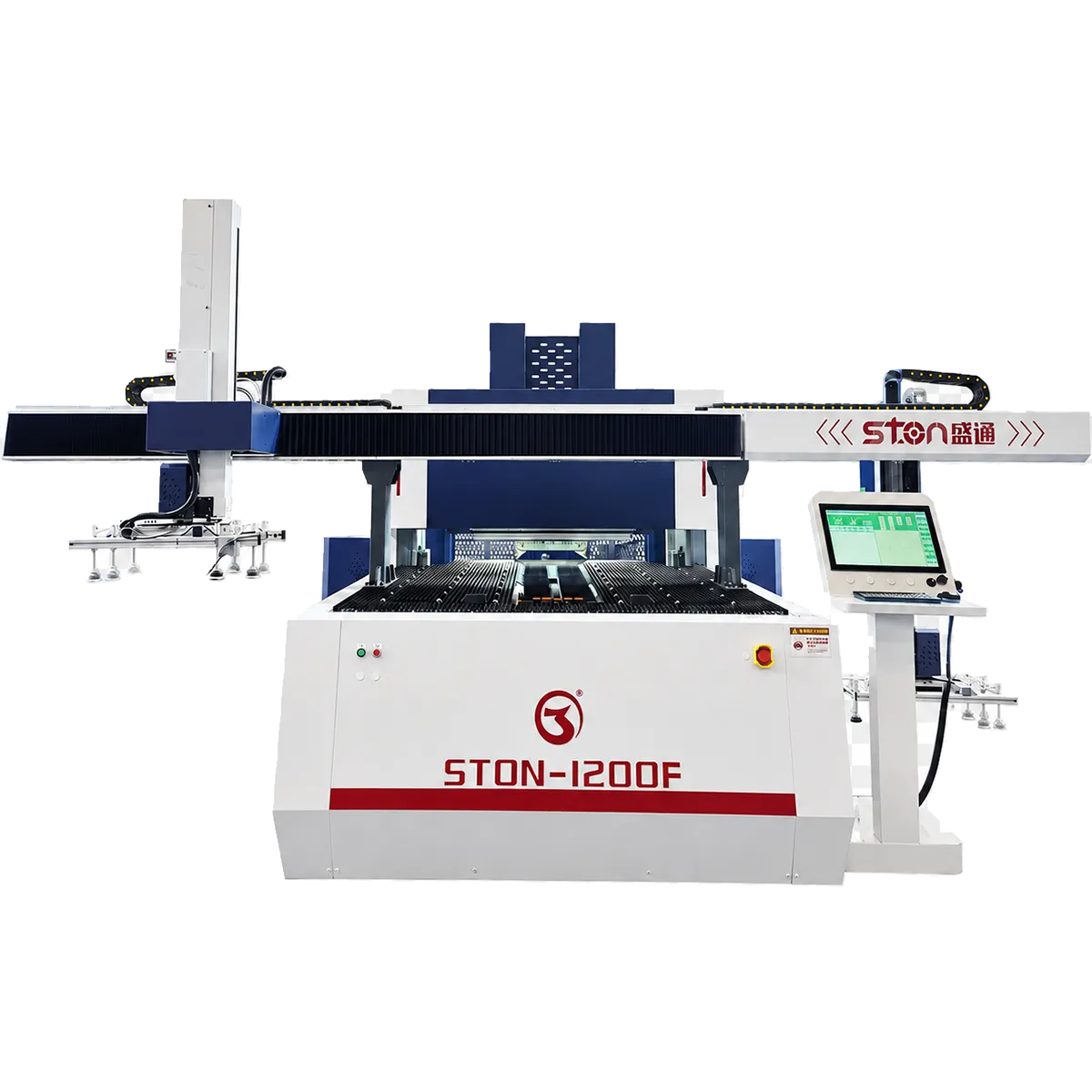
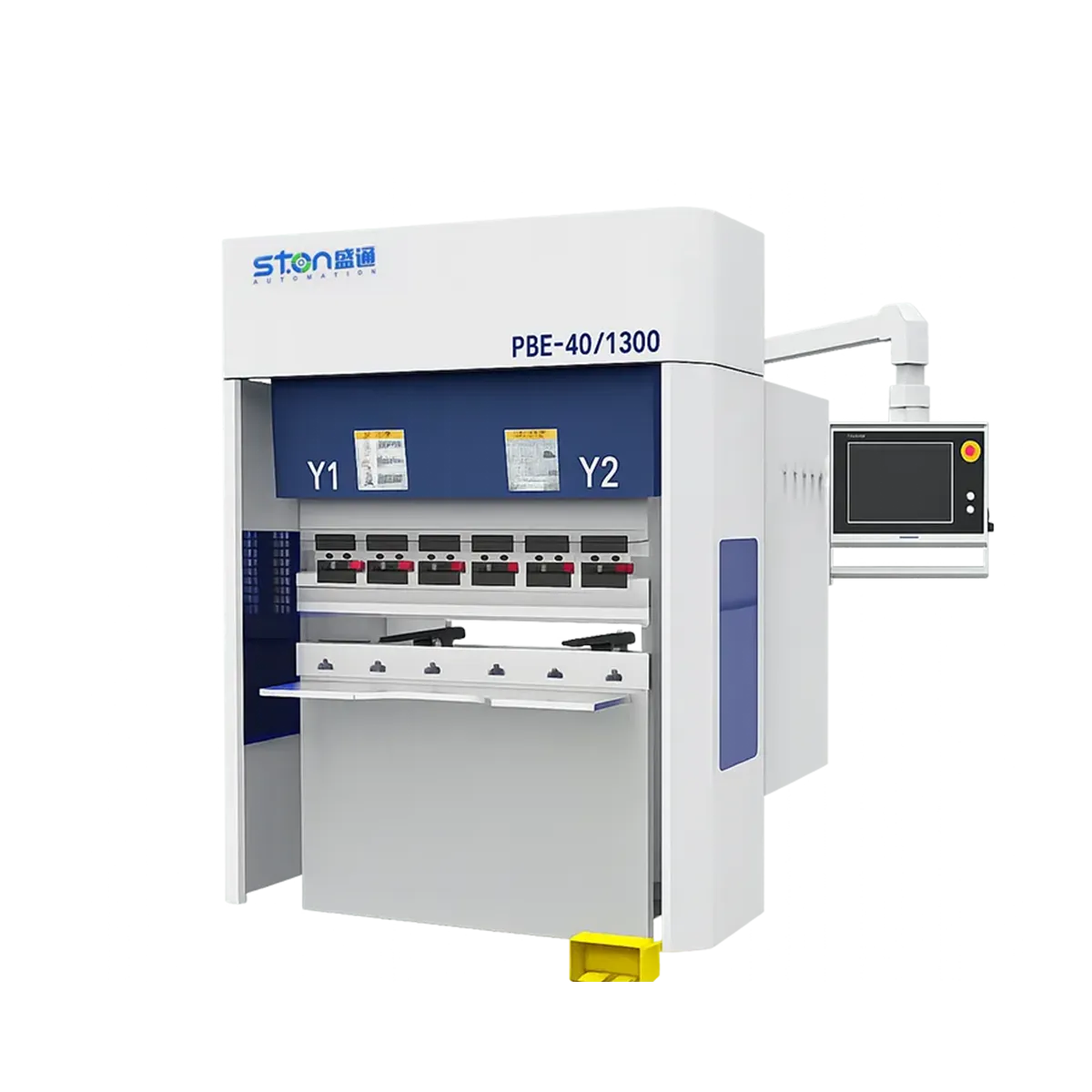
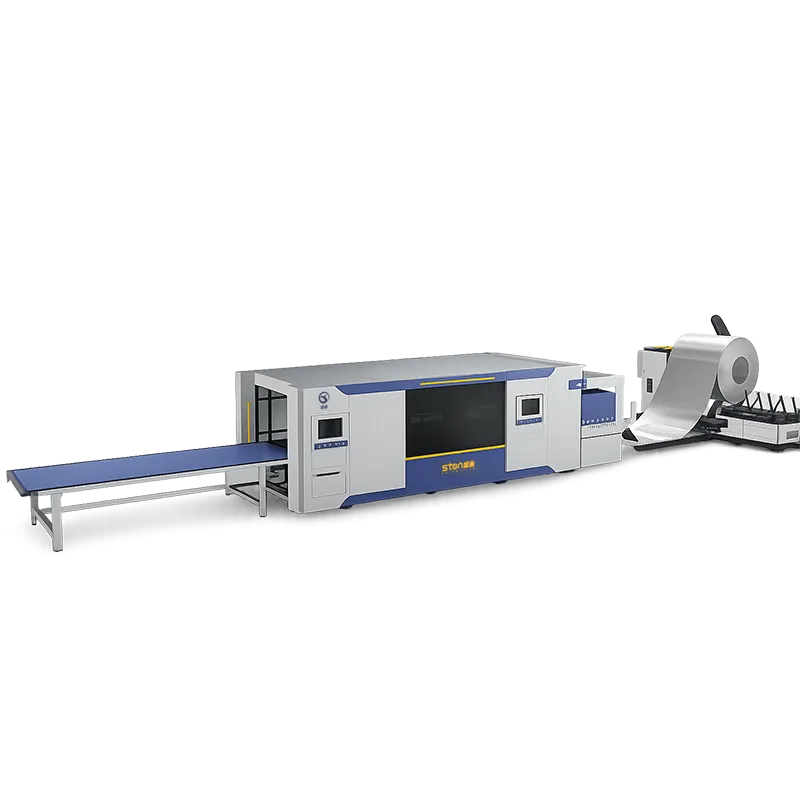
STON supports this upgrade path. We provide laser cutting units, panel benders, turret punch presses, press brakes, and automated production lines. So if a factory wants to start with one laser machine and later build a smarter shop floor, we can help plan the next step.
Why Choose STON as Your CNC Sheet Metal Machinery Partner?
STON is a China-based CNC sheet metal machinery manufacturer. We provide panel benders, turret punch presses, press brakes, laser cutting units, and automated production lines. Our goal is simple: help global manufacturers improve processing efficiency, reduce labor costs, and build smarter factories.
Many customers come to us because they do not want isolated machines. They want a practical production solution. A laser machine may cut the part, but the part still needs bending, punching, sorting, loading, unloading, and assembly. STON can support this wider sheet metal process.
Our main overseas customers include:
- Sheet metal fabricators
- Electrical cabinet factories
- HVAC manufacturers
- Appliance producers
- Metal furniture makers
- Machinery distributors
- Smart factory project buyers
For example, a cabinet factory may start with a fiber laser cutting machine. Later, it may add a CNC press brake, panel bender, or automatic loading and unloading system. A distributor may need reliable machinery for local customers. An appliance producer may need stable cutting quality and high-speed production.
STON can review your drawings, material thickness, production goals, factory layout, and automation plan. Then we help you choose a suitable machine configuration. This saves time and helps reduce buying risk.
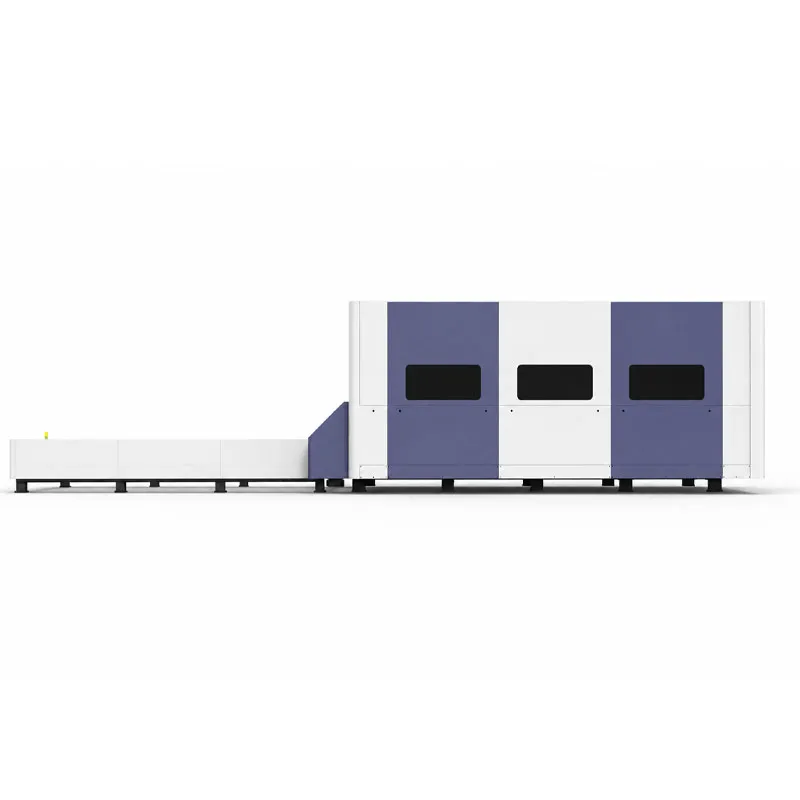
How Can a Laser Cutting Machine Fit Into a Smart Factory?
A laser cutting machine can become the first step toward smart sheet metal production. When connected with software, loading systems, bending equipment, and production planning, it becomes more than a cutting tool. It becomes part of a factory flow.
A smart workflow may include:
Order Data
↓
CAD/CAM Programming
↓
Nesting
↓
Automatic Sheet Loading
↓
Corte a laser
↓
Part Sorting
↓
Panel Bending / Press Brake Bending
↓
Assembly
This kind of system helps reduce manual handling. It also helps improve delivery time. Workers can manage more jobs with fewer repeated tasks. Managers can control production more clearly.
For global manufacturers, labor costs and delivery pressure keep rising. A well-planned laser system can help the factory stay competitive. When combined with STON’s other CNC sheet metal machinery, it can support a cleaner, smarter, and more scalable factory.
FAQs About Laser Cutting Machines
What is a laser cutting machine used for?
A máquina de corte a laser is used to cut materials with a focused laser beam. Industrial fiber laser machines are mainly used for sheet metal cutting, while CO2 laser and diode laser machines are often used for acrylic, wood, leather, paper, engraving, and craft work.
What is the best laser cutter for metal?
For metal cutting, a fiber laser cutter is usually the best laser choice. It offers strong cutting speed, high precision, and stable performance for carbon steel, stainless steel, aluminum, and galvanized sheet.
Can a laser cutter engrave as well as cut?
Yes, many laser machines can cut and engrave. A laser engraver is often used for marking logos, text, patterns, and surface designs. However, the result depends on the laser type, material, laser power, and software settings.
Is a CO2 laser good for acrylic?
Yes. A CO2 laser is commonly used to cut and engrave acrylic. It gives clean edges and good engraving results when the machine settings, exhaust, and air assist are properly configured.
Is a diode laser suitable for industrial sheet metal cutting?
No. A diode laser is usually better for light engraving, craft laser work, and hobby use. Industrial sheet metal cutting normally requires a fiber laser or another high-powered laser system.
What should I check before buying a laser cutting machine?
You should check material type, cutting thickness, laser power, work area, software, machine frame, cutting head, control system, safety design, service support, and future automation needs.
Can STON provide a complete sheet metal production solution?
Yes. STON provides laser cutting units, panel benders, turret punch presses, press brakes, and automated production lines. We can help buyers plan a more complete CNC sheet metal automation solution.



 8 de junho de 2026