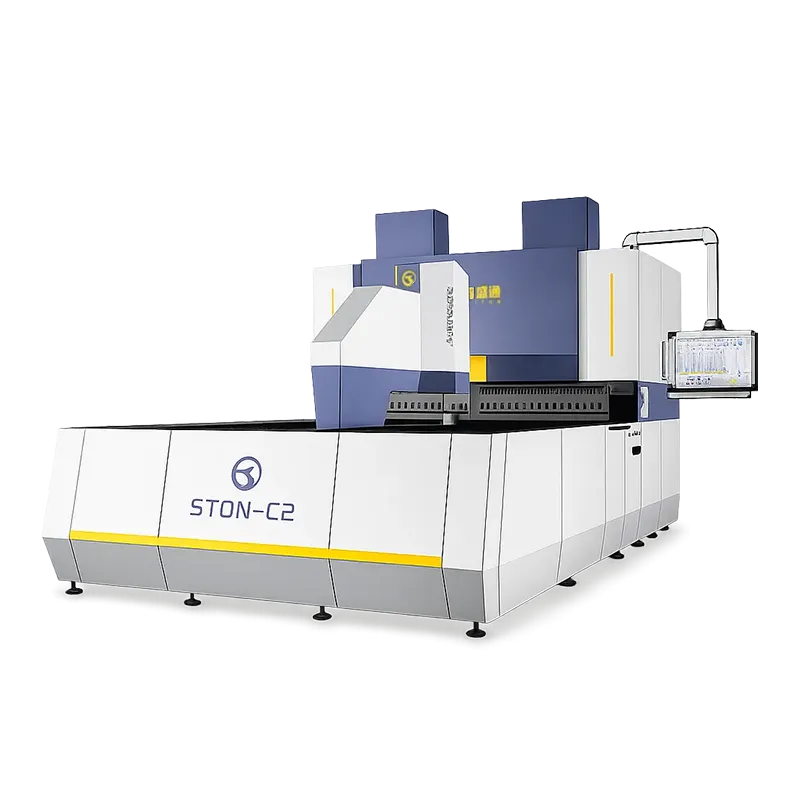
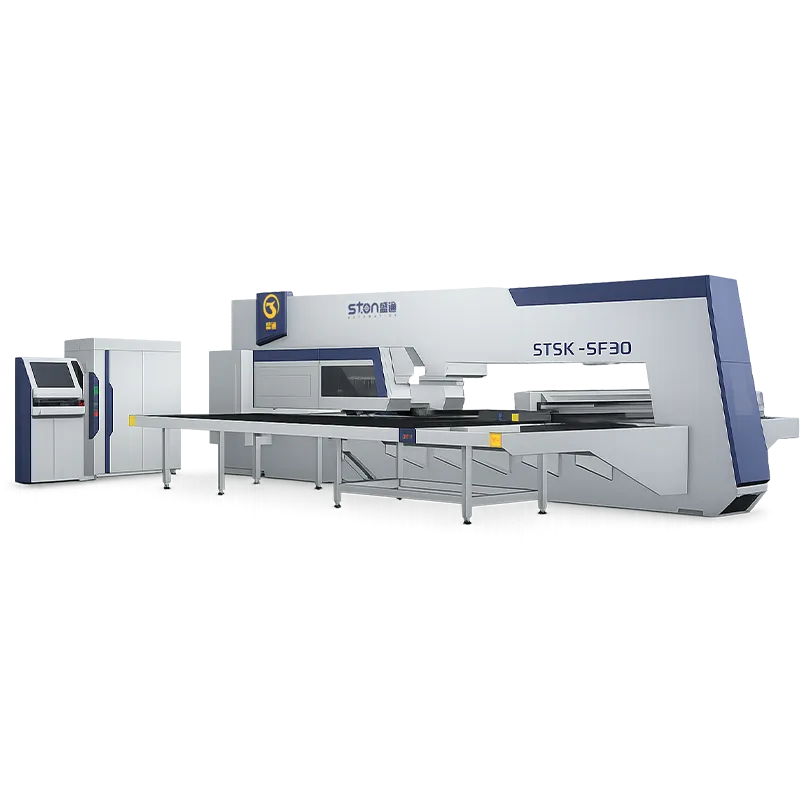
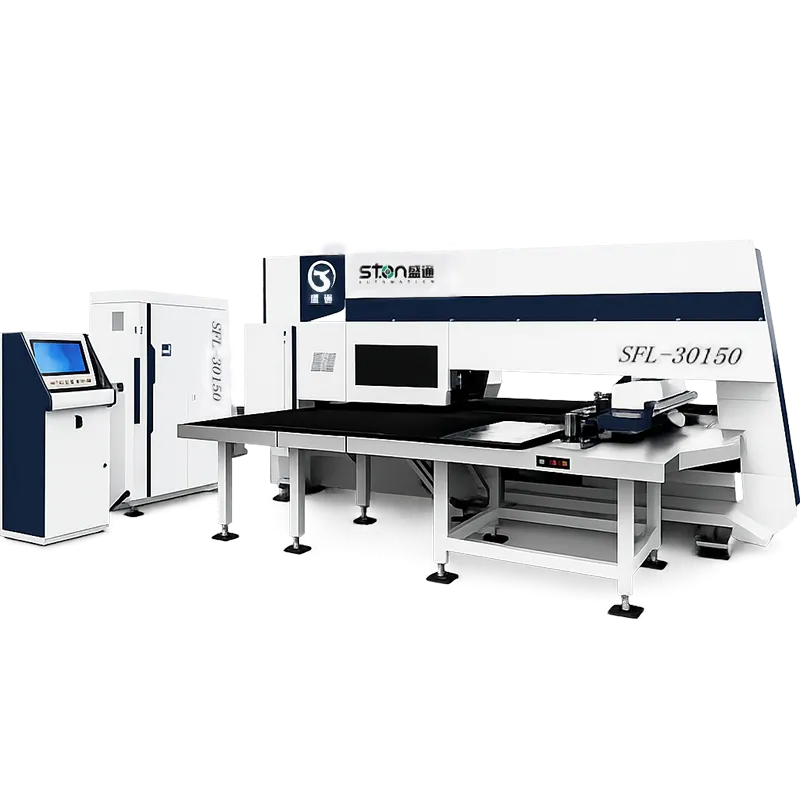
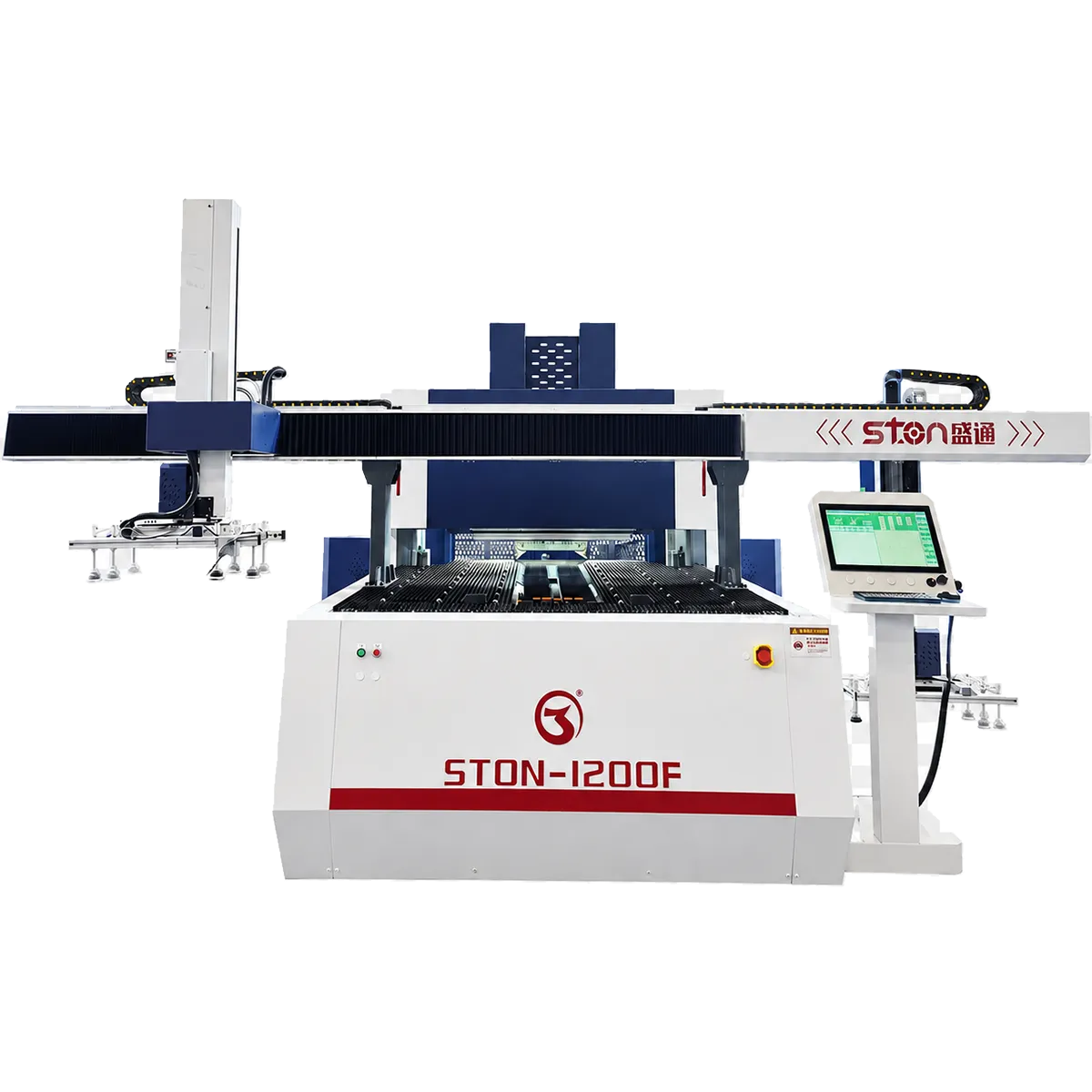
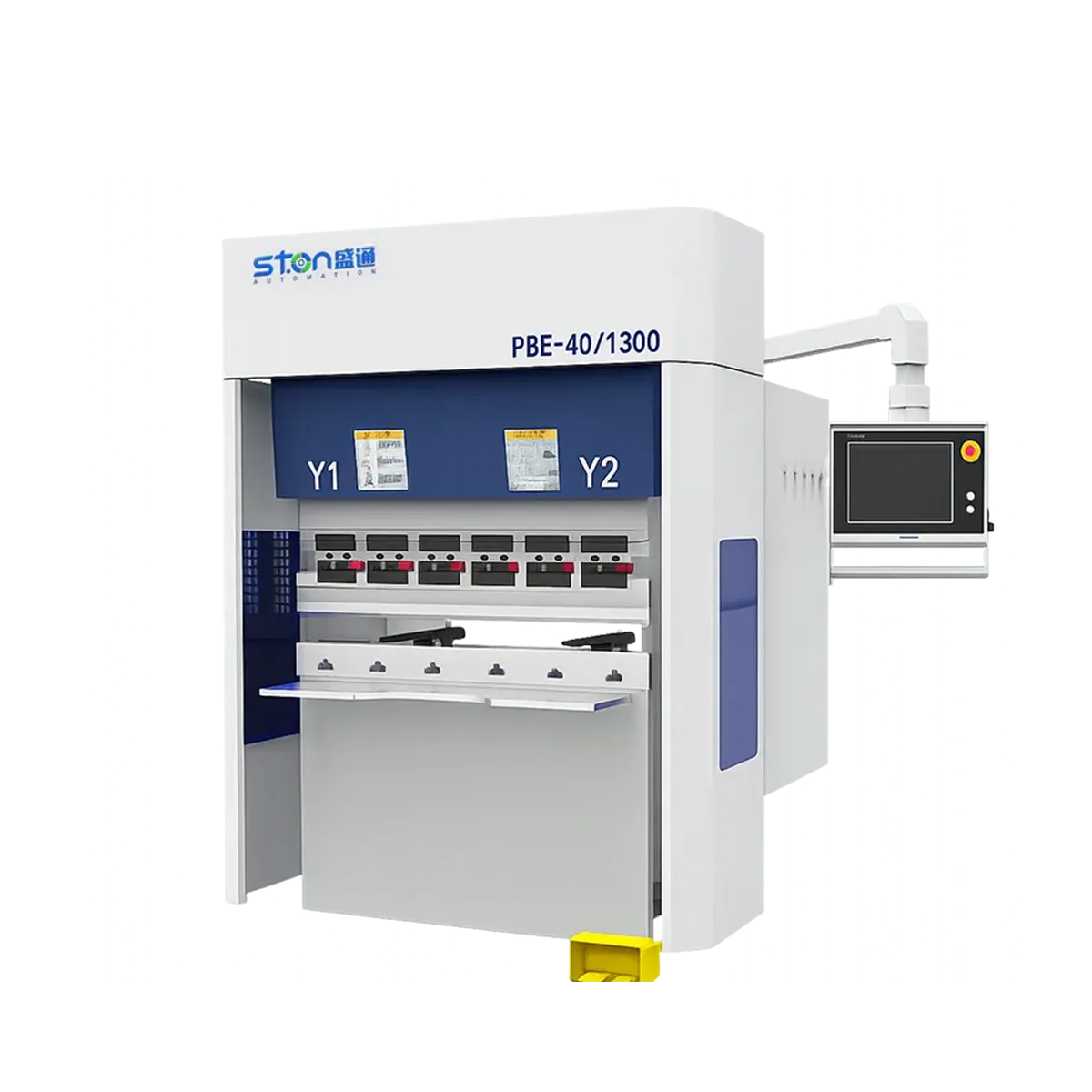
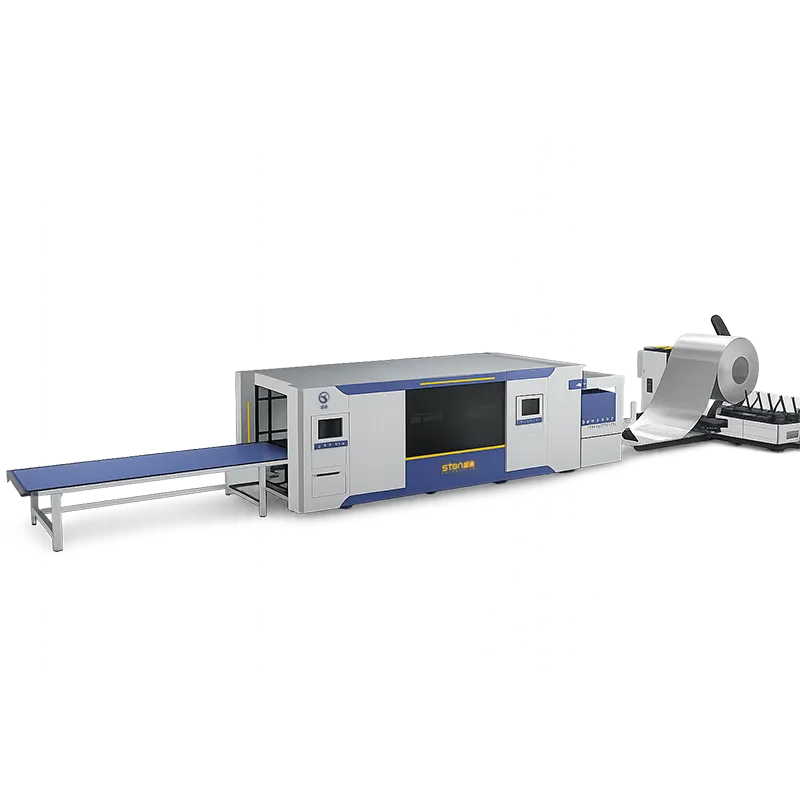
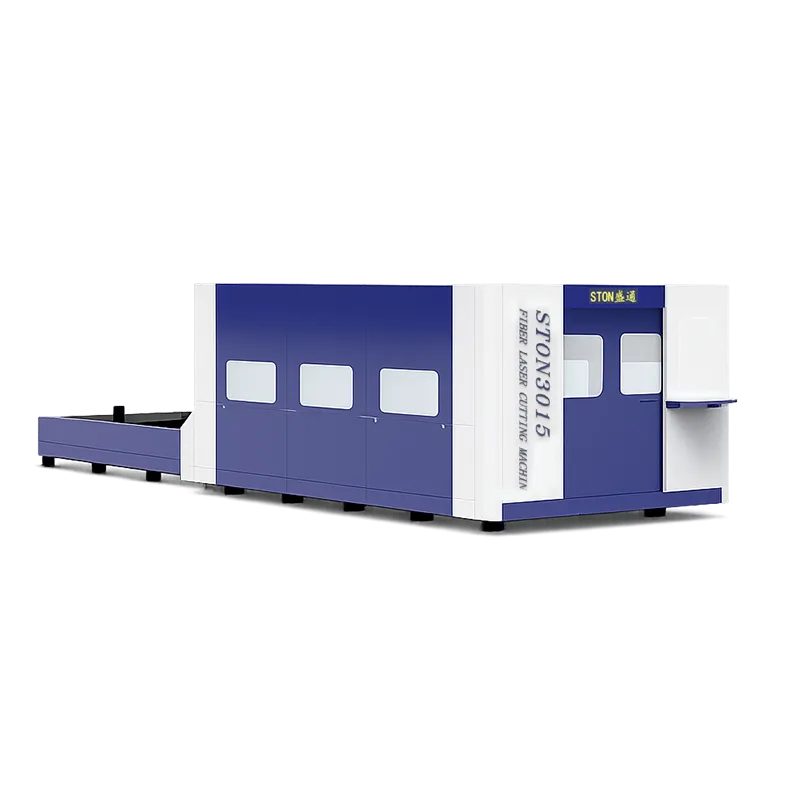
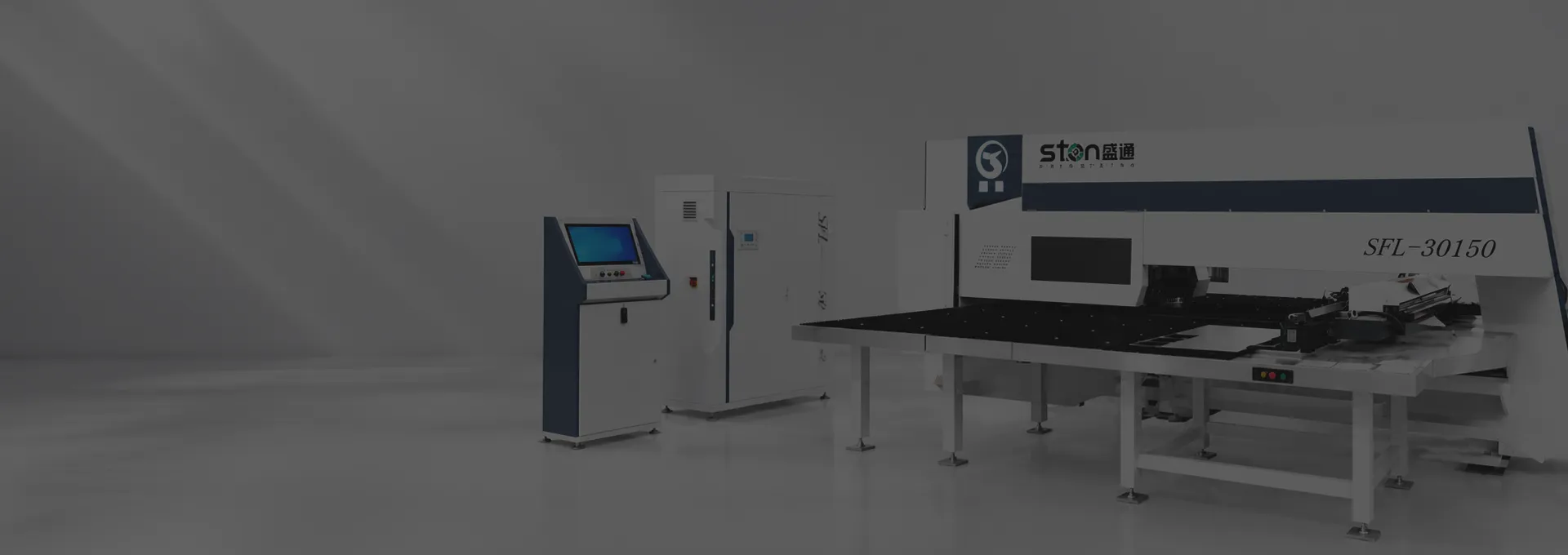
Combine Punching, Forming and Flexible Laser Cutting
A laser punch combination machine is designed for sheet metal factories that need repeated holes or formed features together with flexible outer contours. CNC punching can handle hole patterns and selected forming operations, while fiber laser cutting can complete contours and variable shapes. Bringing the processes into one coordinated workflow can reduce intermediate transfer, but the value depends on the actual part family, production volume and process routing.
How the Two Processes Divide the Work
- Punching: repeated holes, standard shapes and forming operations supported by the selected tooling.
- Fiber laser cutting: flexible profiles, contour changes and blank separation without a dedicated punch tool for every outline.
- Integrated handling: optional loading, unloading and stacking modules that connect the combined process with the next operation.
Tooling, laser power, material, thickness and edge expectations must be checked for the proposed model. Statements about speed, burr level or productivity should be based on an agreed sample and process plan rather than a general marketing figure.
When a Combination Machine Makes Sense
Consider a combination system when parts regularly need both forming and complex contours, when high-mix orders create frequent routing between separate machines, or when reducing work-in-process transfer is a priority. A standalone CNC turret punching machine may be more direct for form-intensive, high-hole-count parts. A standalone fiber laser cutter may be more suitable when contour cutting dominates and forming is not required.
Typical Automated Workflow
A project can be planned as sheet loading, punching and forming, fiber laser contour cutting, unloading or stacking, and then bending. Optional automation points include sheet separation, positioning, part sorting and transfer to a panel bender or other downstream equipment. The interface must be designed around the real material flow, stack condition, part geometry and factory space.
Applications and Project Inputs
Relevant parts include electrical cabinet panels, enclosure components, door panels and other mixed sheet metal products containing many holes, forms and variable outlines. For configuration review, provide drawings, material and thickness, annual or shift output, required formed features, contour quality expectations, preferred loading method and current layout. STON can use this information to define a candidate process, automation boundary and sample-validation plan.
Delivery, Training and Acceptance
STON supports in-house manufacturing, configuration, installation planning, training, spare-parts preparation and after-sales communication. Acceptance should identify the agreed parts, tools, laser settings, handling sequence and quality checks. For continuous production, also review a dedicated loading and unloading system and the downstream line connection.
Tooling, Laser Process and Maintenance Planning
A combination machine requires both punch-tool and laser-process planning. Review recurring hole shapes, forms and contour families before finalizing turret stations and laser power. The process plan should address clamp zones, sheet utilization, part support, assist gas, nozzle and optic care, slag or burr expectations and removal of finished parts. The quotation should identify included tools, holders, cutting consumables, programming support and the sample parts used to establish settings.
Factory Acceptance and Production Handover
Factory acceptance testing should cover the complete route rather than checking punching and laser cutting separately. Use agreed materials to verify hole and form dimensions, contour quality, part release, transfer sequence, alarms and repeat-cycle stability. When automation is included, test sheet separation, positioning, stacking and recovery from a stopped cycle. The handover plan should also confirm guarding, utilities, software backups, preventive maintenance, operator and maintenance training, spare parts and responsibility for each upstream or downstream interface. These items give the buyer a measurable production baseline without relying on an unsupported universal speed claim.
Capacity Planning and Commercial Comparison
Before comparing quotations, separate the demand that truly needs punching, forming and laser cutting from parts that could stay on a simpler machine. Estimate the share of each process, expected changeovers, tool demand, material mix and downstream capacity. A combination machine can only improve the whole factory when unloading, bending and inspection can accept its output. The commercial scope should separate the base system, laser source, turret tools, assist-gas equipment, extraction, automation, software, installation, training and spare parts.
Ask suppliers to evaluate the same representative drawings and state the conditions behind cycle estimates. Confirm utilities, floor loading, safety standards, documentation language, software licenses, remote-access policy, warranty boundary and responsibilities for connected equipment. This creates a comparable proposal and prevents the attraction of an all-in-one process from hiding tooling, service or integration costs.