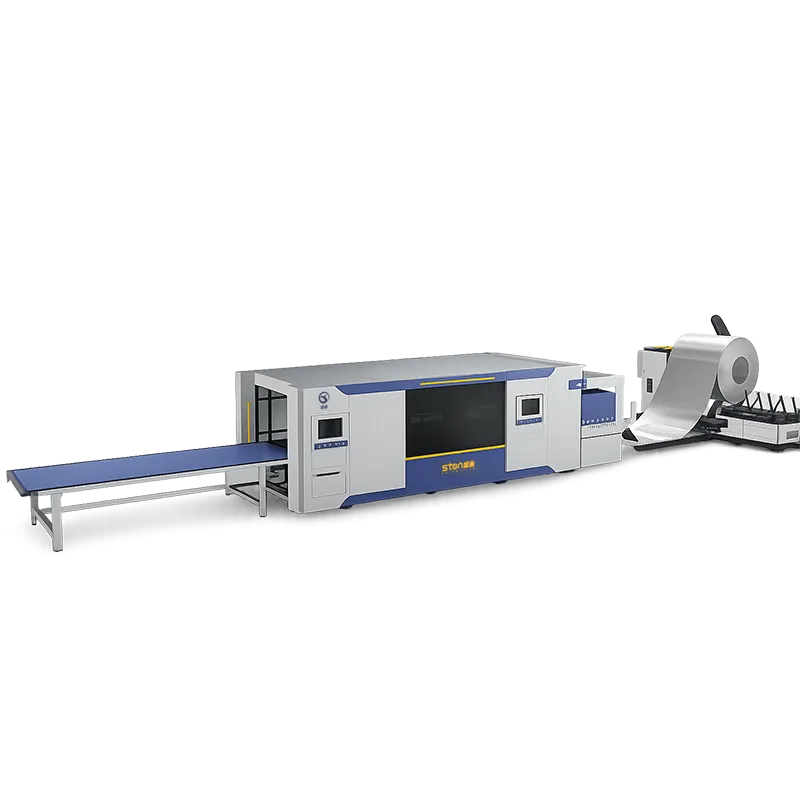
Ein coil-gespeistes Laserschneidsystem wickelt das Band ab, richtet es, führt es zu und schneidet es in einer durchgängigen Anlage per Laser, anstatt vorgeschnittene Tafeln zu laden. STON‘Die Anlage verarbeitet 0,5–2,0 mm starkes Material und Coils mit einer Breite von 200–1500 mm und einem Gewicht von bis zu 10 t bei 0–12 m/min. Nachfolgend finden Sie die vollständigen veröffentlichten Kennzahlen und die Ausbeuteberechnung.
Was sich in der Anlage befindet, Modul für Modul
Die Linie ist eine Kette, und jedes Modul darin begrenzt das nachfolgende:
- Abwickler — wickelt das Bandcoil ab und hält synchron mit der Richtmaschine einen Materialpuffer aufrecht. Gehäuse und Sockel sind geschweißte Konstruktionen, die einer Wärmealterungsbehandlung unterzogen wurden.
- Richtmaschine — beseitigt den Coil-Set und Restspannungen, sodass das Band dem Laser plan zugeführt wird. Die Richtrollen bestehen aus 40Cr; die Lager der Arbeitsrollen sind als Pendel- oder Nadellager ausgeführt. Die Rollenkonfiguration wird passend zu Ihrem Dickenbereich und dem angestrebten Ebenheitsgrad festgelegt und ist nicht unveränderlich vorgegeben.
- Servovorschub — hochpräziser geschliffener Zahnstangenantrieb mit Servosteuerung, der die Position auch bei hoher Geschwindigkeit hält, sodass der Schneidkopf gegen einen bekannten Bezugspunkt arbeitet.
- Faserlaser-Schneideinheit — wählbare Leistung im Bereich von 1–6 kW, mit einer Prozessparameter-Datenbank in der CNC-Steuerung und Echtzeit-Anpassung der Parameter während des Schneidvorgangs.
- Wasserkühlung — zwei Kreisläufe zur unabhängigen Kühlung von zwei Kernbereichen, mit digitaler Temperaturanzeige des Kühlaggregats und automatischem Start/Stopp gemäß Sollwert.
- Hydraulik- und Pneumatikstation — eine integrierte Pumpenstation zur Versorgung der Zylinder, mit Druckbegrenzungsventilen, Manometern, Regelventilen, Rückschlagventilen und Magnetventilen.
- Entladen / Stapeln – auf die Zuschnittgröße und den nachgelagerten Prozess abgestimmt.
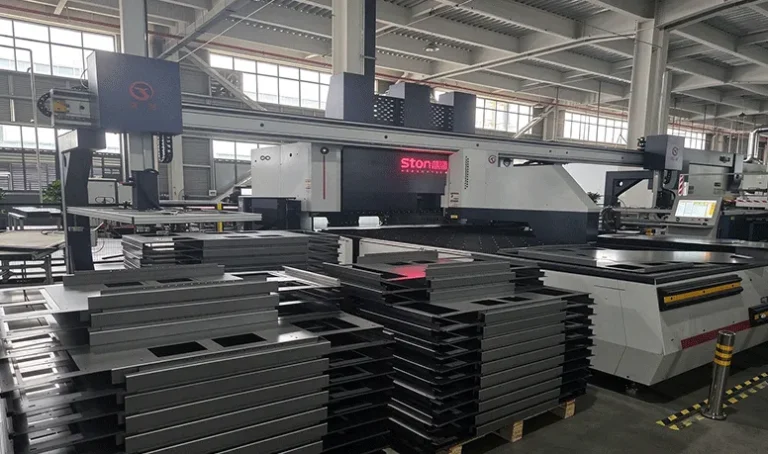
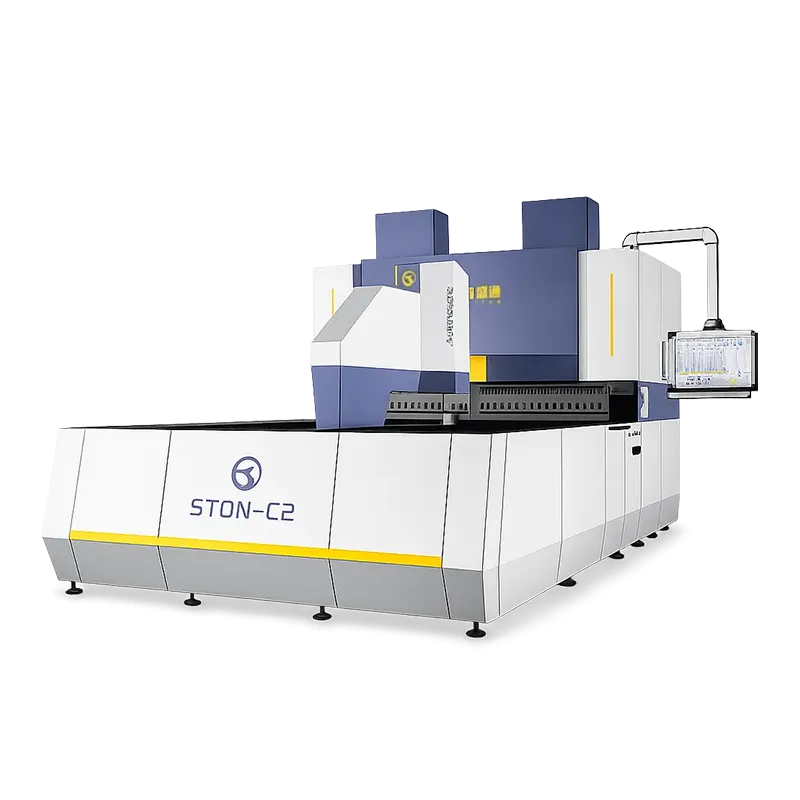
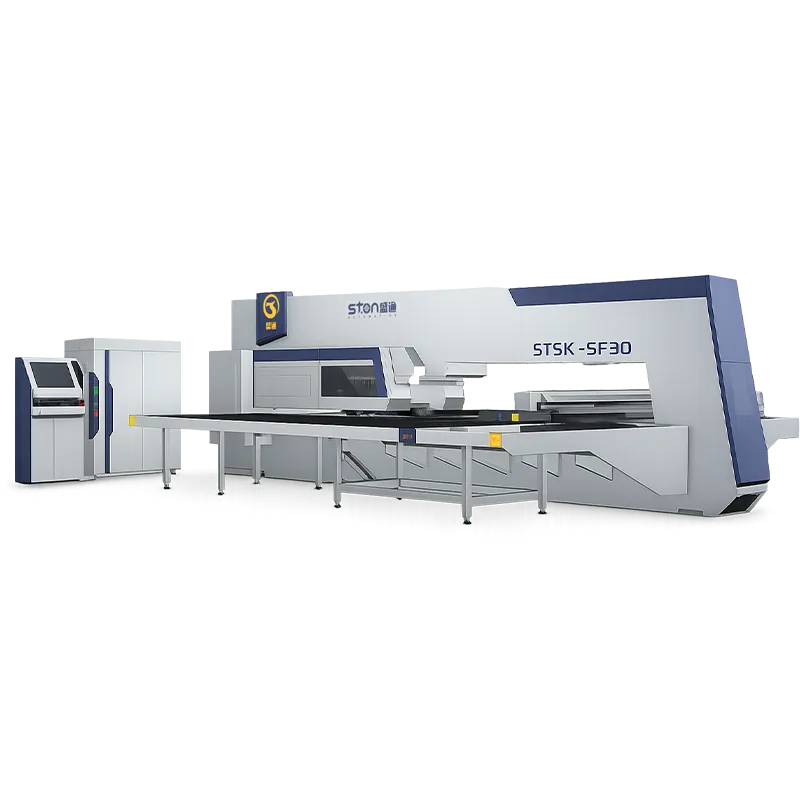
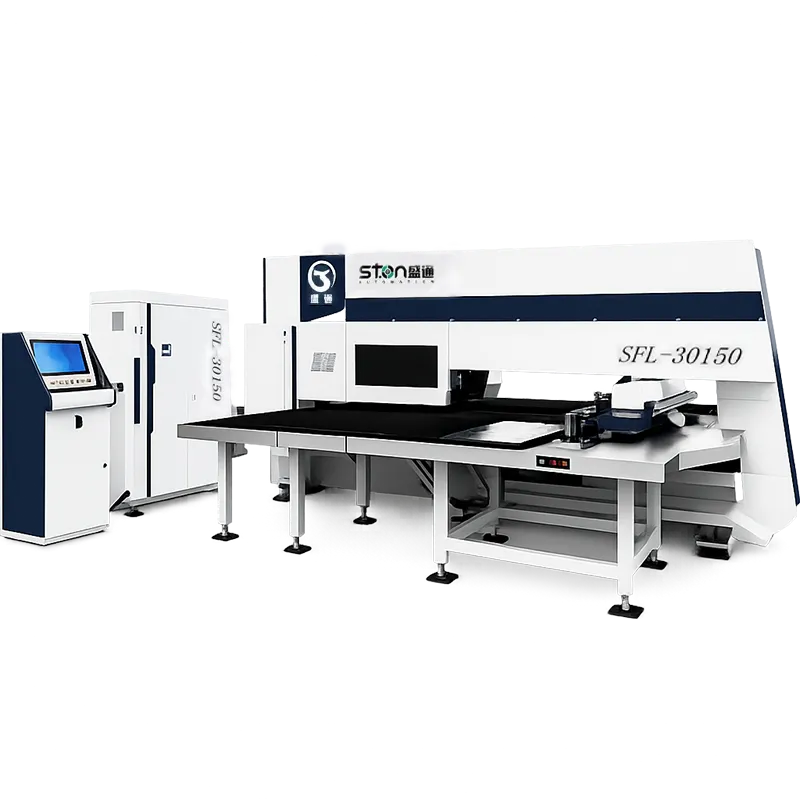
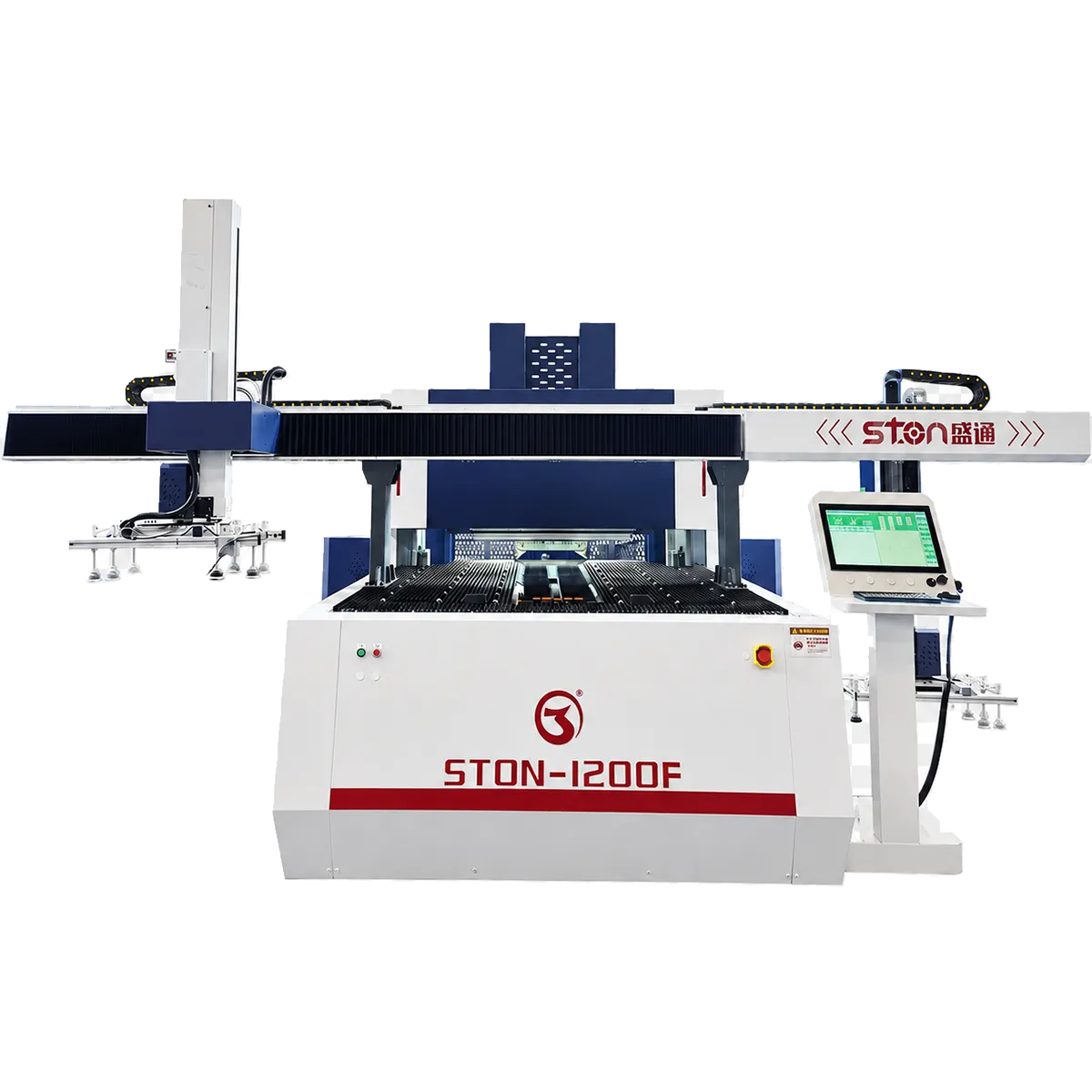
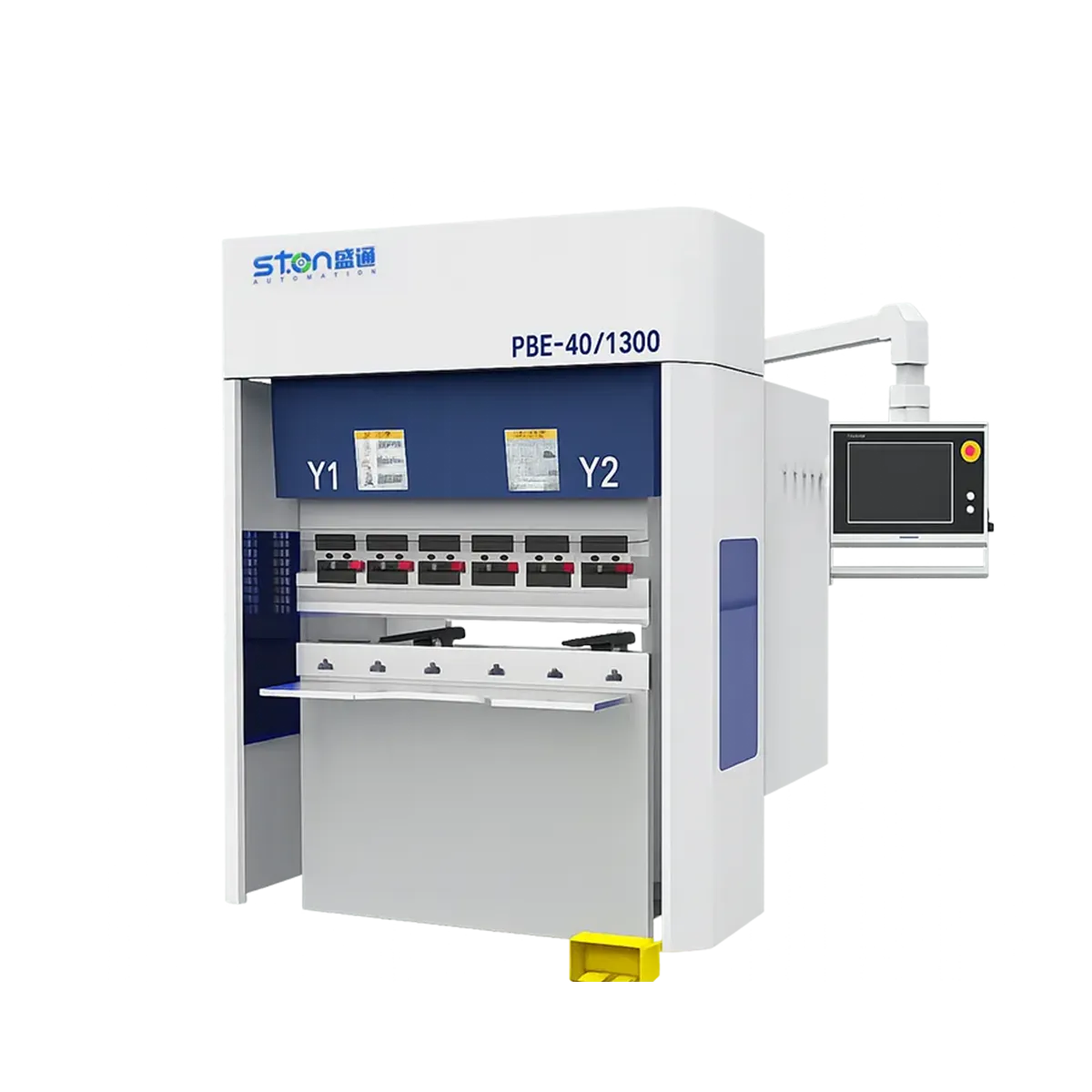
Wird die Linie nach dem Ausschneiden der Platinen fortgeführt, transportiert dasselbe Steuerungssystem das Band weiter zum CNC-Revolverstanzen, Paneelbiegen und – in der umfassendsten Konfiguration – zu einer Roboterschweißstation. Das ist für die spätere ROI-Betrachtung von Bedeutung: Die Materialeinsparung greift vom ersten Tag an, die Arbeitskosteneinsparung jedoch erst dann, wenn die Platine zwischen den Stationen nicht mehr manuell gehandhabt wird.

Coilgeometrie, die Ihr Lieferant erfüllen muss
Vor der Frage nach der Maschine stellt sich die Frage der Beschaffung. Eine coilgespeiste Linie ist nur so flexibel wie die Breiten, auf die Ihr Stahllieferant das Material für Sie aufschneiden kann. Coils, die auf eine bestimmte Breite geschnitten werden, haben in der Regel eine längere Lieferzeit als standardmäßig zugeschnittene Bleche.
Vier Punkte, die mit dem Stahlwerk oder Servicecenter zu klären sind:
- Verfügbare Spaltbandbreiten und die jeweilige Mindestbestellmenge – der Ausnutzungsgewinn im nächsten Abschnitt hängt fast vollständig davon ab.
- Innendurchmesser, der innerhalb des Spanndornbereichs liegen muss (Ø 470–630 mm / Ø 508–630 mm, je nach Ausführung).
- Außendurchmesser im Hinblick auf den Bereich von Ø1000–1600 mm und Gewicht im Hinblick auf die Obergrenze von ≤10 t.
- Ölfilm und Oberflächenbeschaffenheit, da eine starke Beölung sowohl das Richtverhalten als auch die Schnittqualität bei dünnem verzinktem Material verändert.
Eine rechnerische Prüfung, die sich vor der Entscheidung lohnt: Ein 10-t-Coil aus 1,0 mm dickem Material mit einer Breite von 1250 mm enthält etwa 1.019 m Band (1,25 m × 1,0 mm × 7,85 g/cm³ ≈ 9,81 kg pro laufendem Meter). Anhand dieser Zahl lässt sich ermitteln, wie oft ein Bediener und ein Kran benötigt werden – und genau das ist die tatsächliche Grundlage für die Personalplanung, nicht die Angabe zur Liniengeschwindigkeit.
Die Ausbeuteberechnung: zwei Verschachtelungsszenarien, eine Tabelle
Dies ist der Abschnitt, den Wettbewerber auslassen – und der einzige, der entscheidet, ob sich die Investition rechnet.
Die Materialausnutzung bei einem Tafellaser wird durch das Tafelformat begrenzt. Bei einer Coil-Anlage wird sie durch die Bandbreite begrenzt, wobei die Länge praktisch unbegrenzt ist. Wie groß der Vorteil ausfällt, hängt daher von einer Sache ab: wie schlecht sich Ihre Teile auf einer Standardtafel verschachteln lassen.
Den folgenden Berechnungen liegen diese Annahmen zugrunde (ersetzen Sie sie durch Ihre eigenen Werte – es handelt sich um Beispielrechnungen, nicht um gemessene Betriebsdaten): 10 mm Randabstand, 5 mm Steg zwischen den Teilen, Standardblech 1250 × 2500 mm, 1,0 mm verzinktes Material mit 7,85 kg/m², Materialkosten von 1.200 USD/Tonne, 200.000 Teile pro Jahr.
| Vergleichspunkt |
Szenario A: Teile lassen sich gut verschachteln (400 × 300 mm) |
Szenario B: Ungünstige Anordnung der Teile (460 × 340 mm) |
| Blechzufuhr: Teile pro Blech mit den Maßen 1250 × 2500 mm |
24 (3 nebeneinander × 8 untereinander) |
14 (2 nebeneinander × 7 untereinander) |
| Materialausnutzung bei Blechzufuhr |
92.2% |
70.1% |
| Ausgewählte Coilbreite |
1250 mm |
950 mm (passend längsgeteilt) |
| Coil-gespeistes Layout |
3 nebeneinander, 305 mm Teilung |
2 nebeneinander, 345 mm Teilungsabstand |
| Materialausnutzung bei Coil-Zuführung |
94.4% |
95.4% |
| Eingangsmaterial pro Teil |
0.1302 → 0.1271 m² |
0,2230 → 0,1639 m² |
| Materialeinsparung pro Teil |
0,024 kg |
0,464 kg |
| Jährliche Materialeinsparung bei 200.000 Teilen |
≈ 5.900 USD |
≈ 111.000 USD |
Nineteen times the return, same machine, same year, different part geometry. Scenario A does not justify a coil line on material savings alone; it has to be justified on labour, handling damage and throughput. Scenario B pays for a substantial part of the line inside two to three years on scrap reduction by itself.
Two further line items belong in your model, and I am not going to invent numbers for either. Coil stock is normally bought at a lower price per tonne than cut-to-length sheet — get both quotations from your own supplier rather than accepting an industry average. And coil occupies less floor area per tonne than palletised sheet, which is worth costing if your warehouse is the constraint.

How this compares with standalone sheet-fed cutting cells
Against the general category of standalone sheet-fed laser cells that most fabrication plants already operate, the coil line trades flexibility for yield and continuity. The sheet-fed cell wins on material and thickness variety and on independent failure. The coil line wins on utilisation for a repeating part family, on the elimination of sheet handling between store and machine, and on unattended running between coil changes.
Against die-based blanking presses, the comparison is different again: no die design, purchase or maintenance cost, and part geometry changes are a programming task rather than a tooling project. The trade is cycle time on very high-volume, single-geometry runs, where a press still wins.
Because the line is fully enclosed and interlocked, the safety case is built to CE requirements under Machinery Directive 2006/42/EC, with risk assessment following EN ISO 12100 — the documentation an EU importer will ask for before the line is energised, so raise it during technical clarification rather than at shipment.
What it costs, and why there’s no list price
STON does not publish a price range for this line, and I am not going to invent one. Quotation is required, because the price of a coil fed laser cutting system is not a model number — it is a configuration.
The variables that move it most:
- Laser power selected within the 1–6 kW range
- Coil width and weight class, which size the uncoiler, leveler and coil car
- Single- versus dual-head cutting, and single versus dual uncoiling
- Leveler roll configuration against your thickness and flatness target
- Whether the line stops at blanking or continues into turret punching, panel bending and welding
- Unloading and stacking design, which follows blank size and weight
- Destination-specific electrical, safety and documentation requirements
Send part drawings, material and thickness range, annual volume and a plant layout, and the configuration comes back defined rather than approximated.
Site and utility requirements before the crate arrives
Confirm these against your building, not against the brochure: three-phase 400 V ±5% at 50 Hz ±2%; compressed air at 0.5–0.6 MPa delivering 0.6 m³/min; running height +800 mm; crane capacity above 10 T; and a clear floor run sized to the configuration, which grows substantially once punching and bending are added inline.
An eight-step evaluation sequence
- Pull your five highest-volume part footprints and calculate nested utilisation on your current sheet format, using your real edge margin and web values.
- Recalculate the same parts against two or three candidate coil widths.
- Get quotations from your steel supplier for both coil at those widths and cut-to-length sheet, per tonne.
- Check every part in the family against the 0.5–2.0 mm envelope, and against 1.5 mm if any of it is stainless.
- Verify crane capacity and confirm your coil ID and OD sit inside the mandrel range.
- Measure available floor run and confirm +800 mm working height against downstream equipment.
- Confirm power and compressed air supply against the figures above.
- Send a sample coil for trial cutting and measure diagonal accuracy on the returned blanks before signing.
Häufig gestellte Fragen
Q: What thickness range can a coil fed laser cutting system handle?
A: STON‘s line runs 0.5–2.0 mm on cold-rolled and galvanized sheet, with stainless steel capped at 1.5 mm. Anything above 2.0 mm needs a different machine class.
Q: How much material does coil feeding actually save versus sheet cutting?
A: It depends entirely on how your parts nest into a standard sheet. On a part that already nests well, expect a small gain of two to three percentage points. On a part that nests badly into 1250 × 2500 mm, the gain can exceed twenty points, because coil width can be slit to the part and length is continuous. Run the calculation on your own drawings before budgeting.
Q: Does the 0–12 m/min line speed mean I get 12 metres of finished parts per minute?
A: No. That figure is the leveler’s strip transport rate. Actual output is set by cutting time per band, which depends on cut length, part complexity and laser power. Ask for a cycle time quoted against your specific part.
Q: What coil dimensions does the line accept?
A: Coil weight up to 10 T, outer diameter Ø1000–1600 mm, and inner diameter Ø470–630 mm per our company profile or Ø508–630 mm per the line datasheet. Confirm the exact mandrel range for your build during technical clarification.
Q: Can the line continue into bending, or is it blanking only?
A: Both configurations exist. The line can be built as uncoiling-leveling-laser cutting only, or extended through CNC turret punching with automatic loading and unloading, automatic panel bending with angle compensation, and a robot welding station, all under one control system with process interconnection and data traceability.
Q: How much does a coil fed laser cutting system cost?
A: There is no list price, because laser power, coil width class, leveler configuration, head count and downstream integration each move the figure materially. STON quotes against part drawings, material and thickness range, annual volume and plant layout.



 6. August 2026