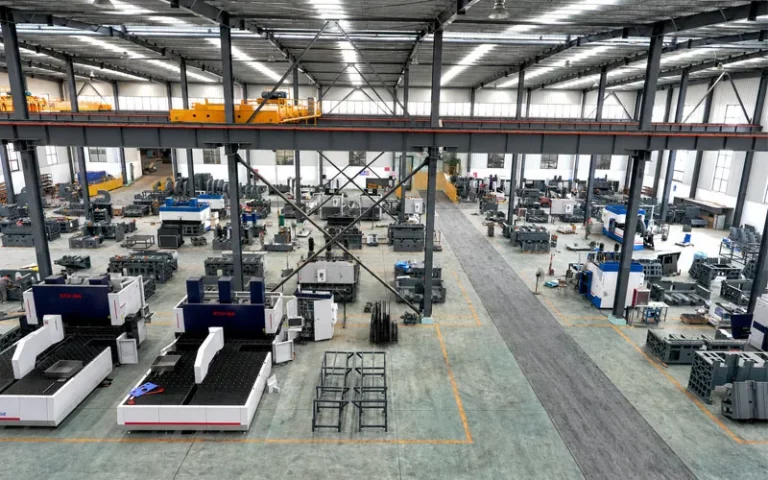
Manual sheet metal bending can slow production, increase labor costs, and create unstable bend quality. When orders grow, these problems become serious. A panel bender helps factories bend sheet metal faster, reduce operator dependence, and build a more automated production flow.
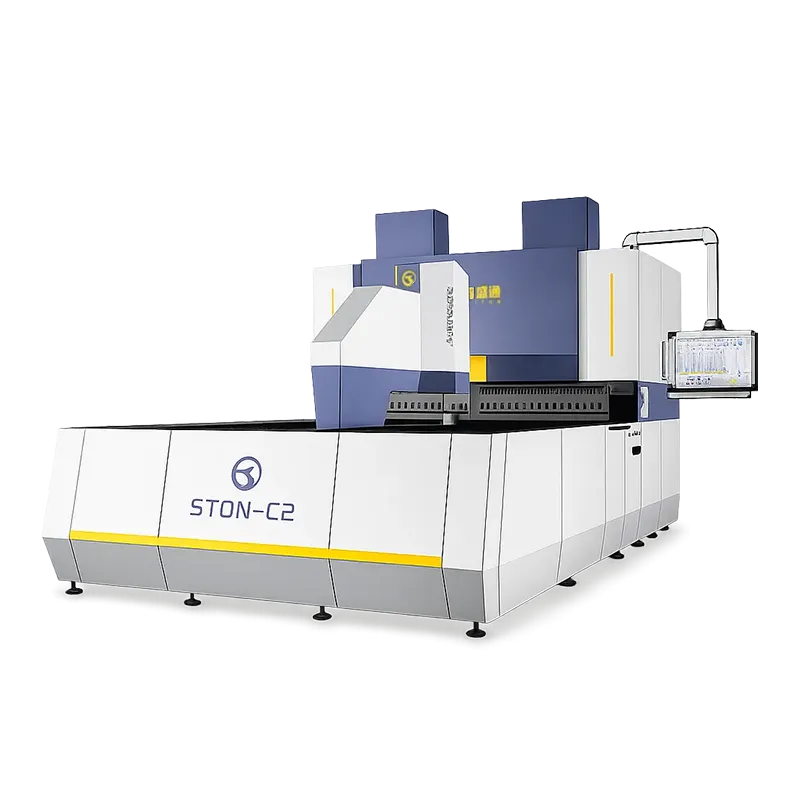
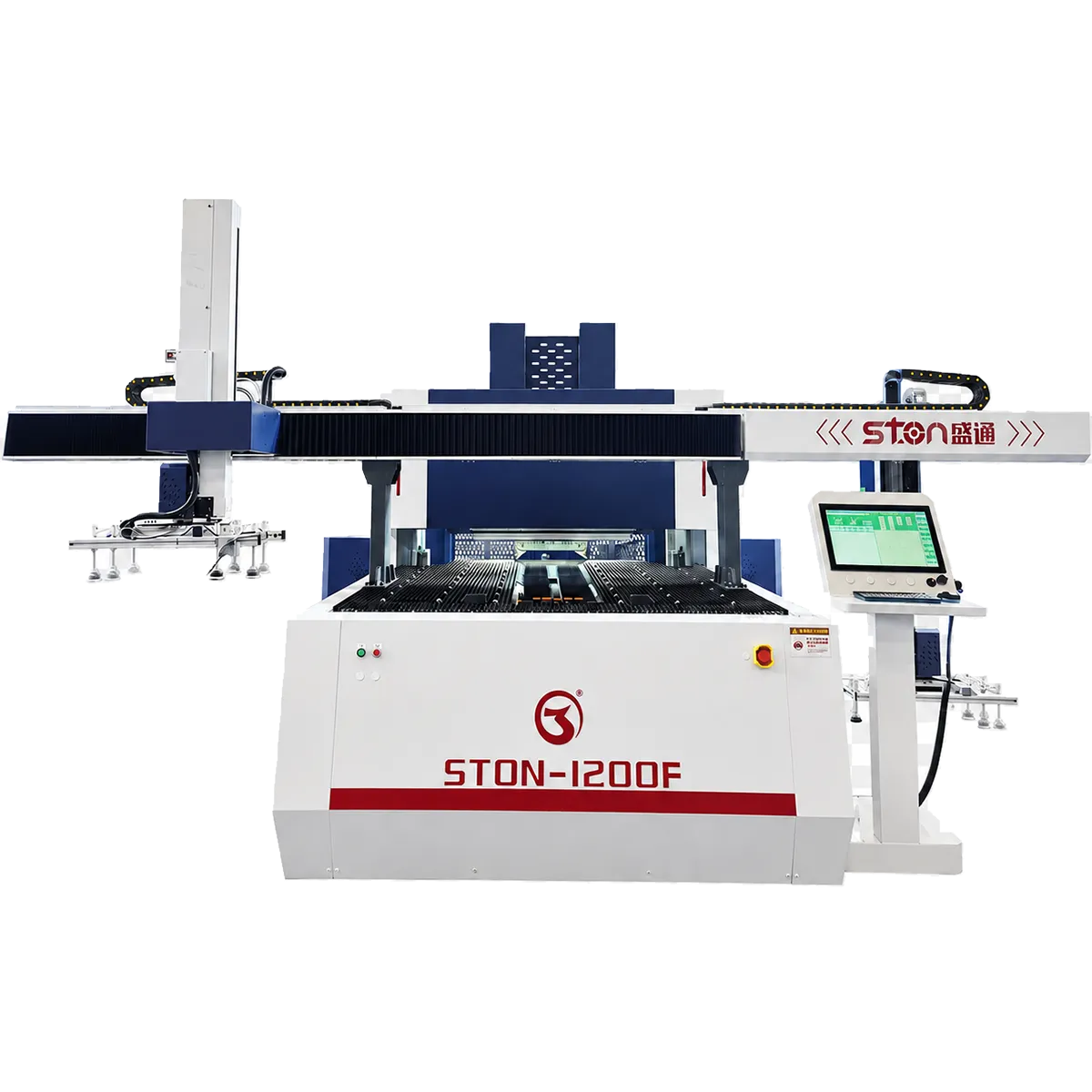
A panel bender is an automated sheet metal bending machine that clamps a metal sheet and uses CNC-controlled bending tools or blades to bend edges, flanges, boxes, and panels. It improves bending efficiency by reducing setup time, improving precision, lowering labor costs, and making repeated panel bending faster and more consistent.
Что такое панелегибочный станок?
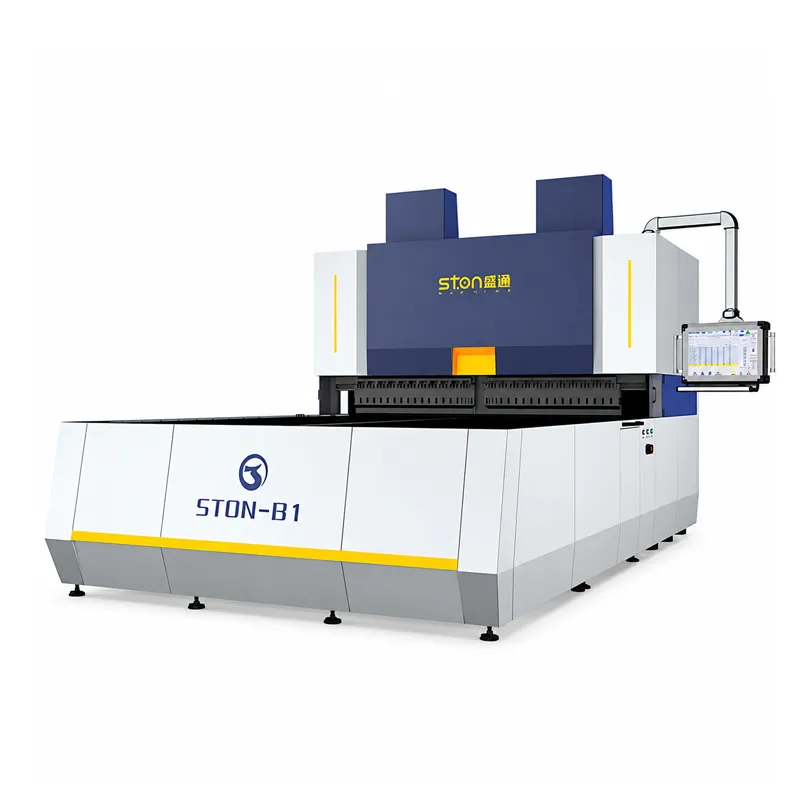
A панелегибочный станок is a CNC sheet metal bending machine designed to bend flat metal panels into precise shapes. It is commonly used to produce cabinet doors, metal panels, drawers, shelves, covers, HVAC parts, door panels, and industrial enclosures. Instead of relying mainly on manual positioning, the machine uses CNC control to manage the bend sequence, tool movement, and workpiece position.
In simple terms, a panel bender helps a factory bend sheet metal with more speed and consistency. The machine clamps the sheet, positions the part, and uses a bending blade or bending tool to form the required angle. This makes it useful for factories that produce many repeated sheet metal parts every day.
For B2B manufacturers, the value is clear. A panel bender can help reduce labor costs, shorten setup time, improve bending precision, and support automated sheet metal bending. This is why it is widely used by electrical cabinet factories, switchgear manufacturers, metal furniture producers, door manufacturers, kitchen equipment factories, HVAC manufacturers, and new energy enclosure producers.
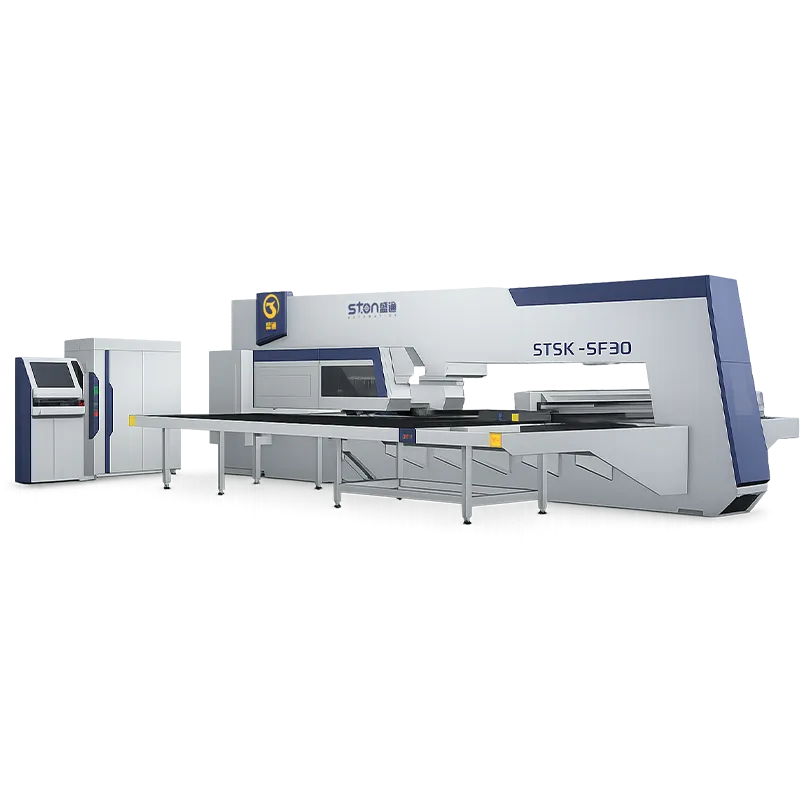
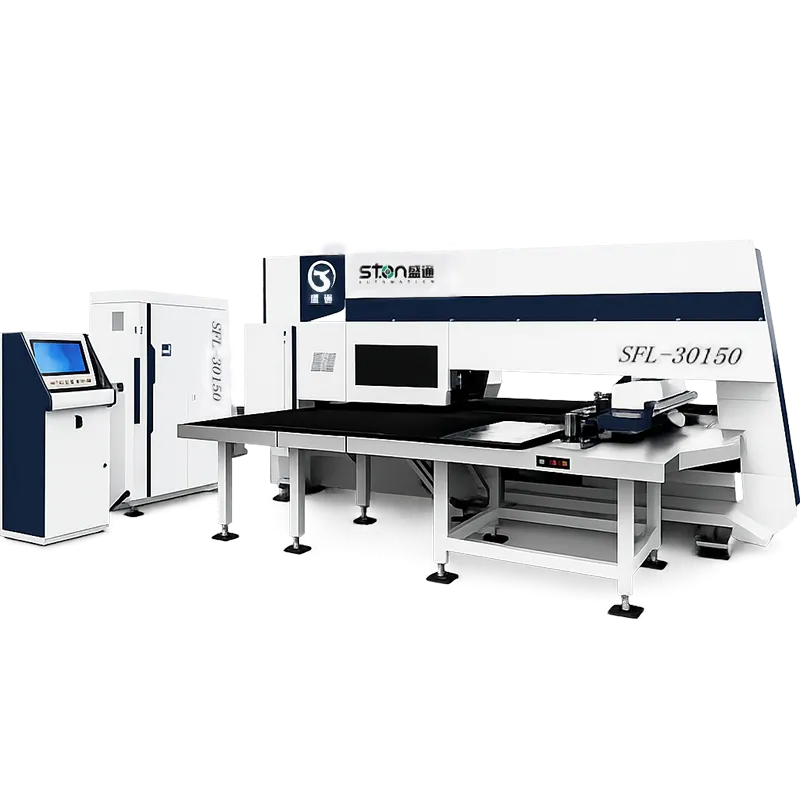
At STON CNC, we see the panel bender not only as a single bending machine, but also as a key part of a smarter sheet metal production system. It can connect with laser cutting machines, turret punching machines, press brakes, automatic loading and unloading systems, and customized production lines.
How Does a Panel Bender Bend Sheet Metal?
A panel bender bends sheet metal by fixing the sheet in position and forming the edge with a controlled bending blade. The clamp holds the workpiece firmly. The CNC system controls the bend angle, bend length, bending sequence, and tool movement. This helps the machine bend each part according to the programmed data.
The basic bending process is easy to understand:
Flat Sheet Metal
↓
Программа ЧПУ
↓
Автоматическое позиционирование
↓
Зажать заготовку
↓
Bend with Bending Blade
↓
Complete the Panel Shape
Compared with traditional bending, this process reduces manual intervention. The operator does not need to measure every bend by hand. The machine follows the program and repeats the same bending operation with stable accuracy. This is especially useful for high-volume production and repeated panel parts.
A traditional press brake uses upper and lower dies to press the sheet of metal into a V-shape. A panel bender works differently. It supports the sheet and folds the edge with controlled movement. This bending method is highly suitable for thin sheet, cabinet panels, door panels, drawers, covers, and box-type parts.
For factories that want better speed and consistency, this matters. Less manual handling means fewer mistakes. Fewer mistakes mean less rework. Less rework means faster delivery.
Why Is Panel Bending Technology Important for Modern Sheet Metal Fabrication?
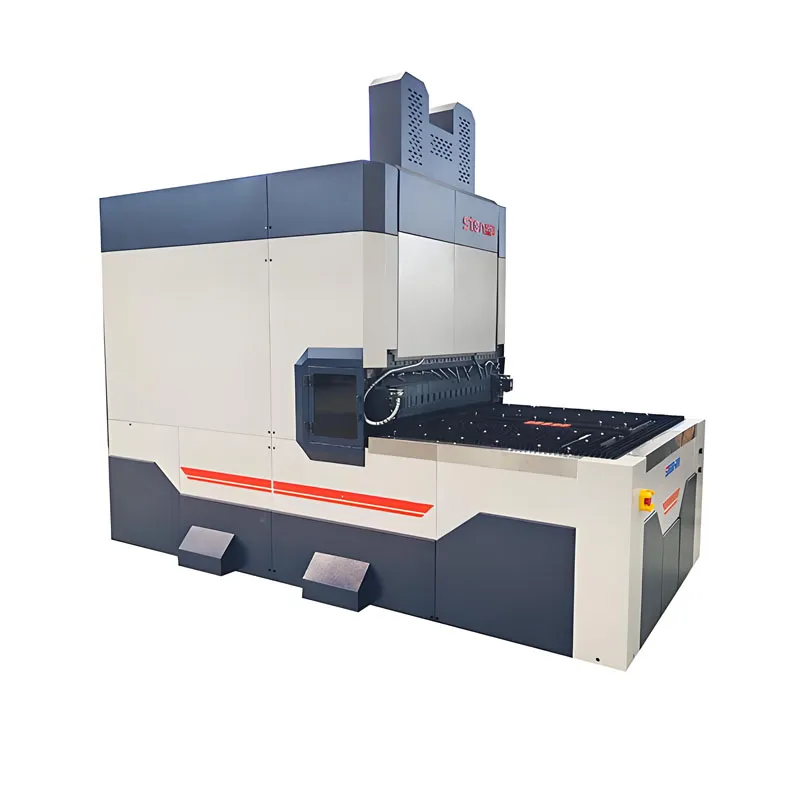
Panel bending technology is important because modern sheet metal fabrication faces three major pressures: higher labor costs, shorter delivery time, and stricter quality requirements. Customers want clean bends, accurate angles, good surface quality, and stable product consistency. Traditional bending methods can meet some needs, but they often depend heavily on skilled operators.
A панелегибочный станок helps automate the sheet metal bending process. It can reduce repeated manual positioning, shorten setup time, and keep bend angles more consistent. For factories producing electrical enclosures, filing cabinets, HVAC panels, stainless steel kitchen equipment, or new energy cabinets, this can directly improve production efficiency.
A simple comparison looks like this:
Traditional Bending
↓
High Operator Dependence
↓
Longer Setup Time
↓
More Quality Variation
↓
Higher Delivery Pressure
Panel Bending
↓
CNC Control
↓
Reduced Setup Time
↓
Стабильность гибки
↓
Better Production Flow
Panel bending technology also supports automation. A panel bender can work with automatic loading, unloading, storage, and production line integration. This allows sheet metal factories to upgrade from manual processing to a high-precision, high-efficiency, and low-labor-dependence production model.
This is exactly where STON CNC creates value. Instead of selling only one machine, STON helps customers plan the whole process: cutting, punching, bending, handling, storage, and production integration.
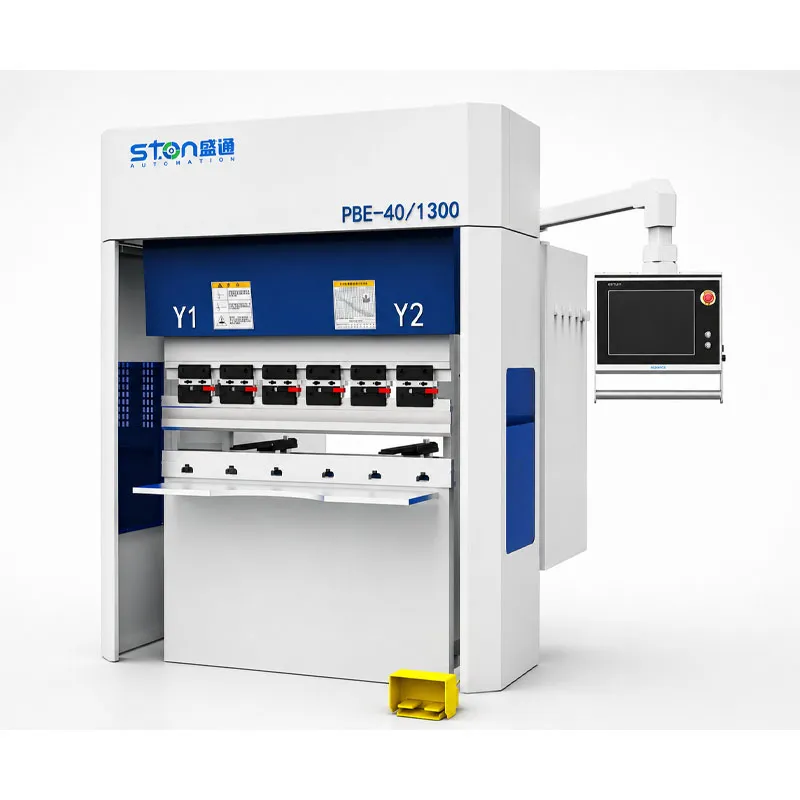
Panel Bender vs Press Brake: Which Is the Right Equipment?
The comparison of press brake vs панелегибочный станок is common among sheet metal buyers. Both machines bend sheet metal, but they are suitable for different production needs.
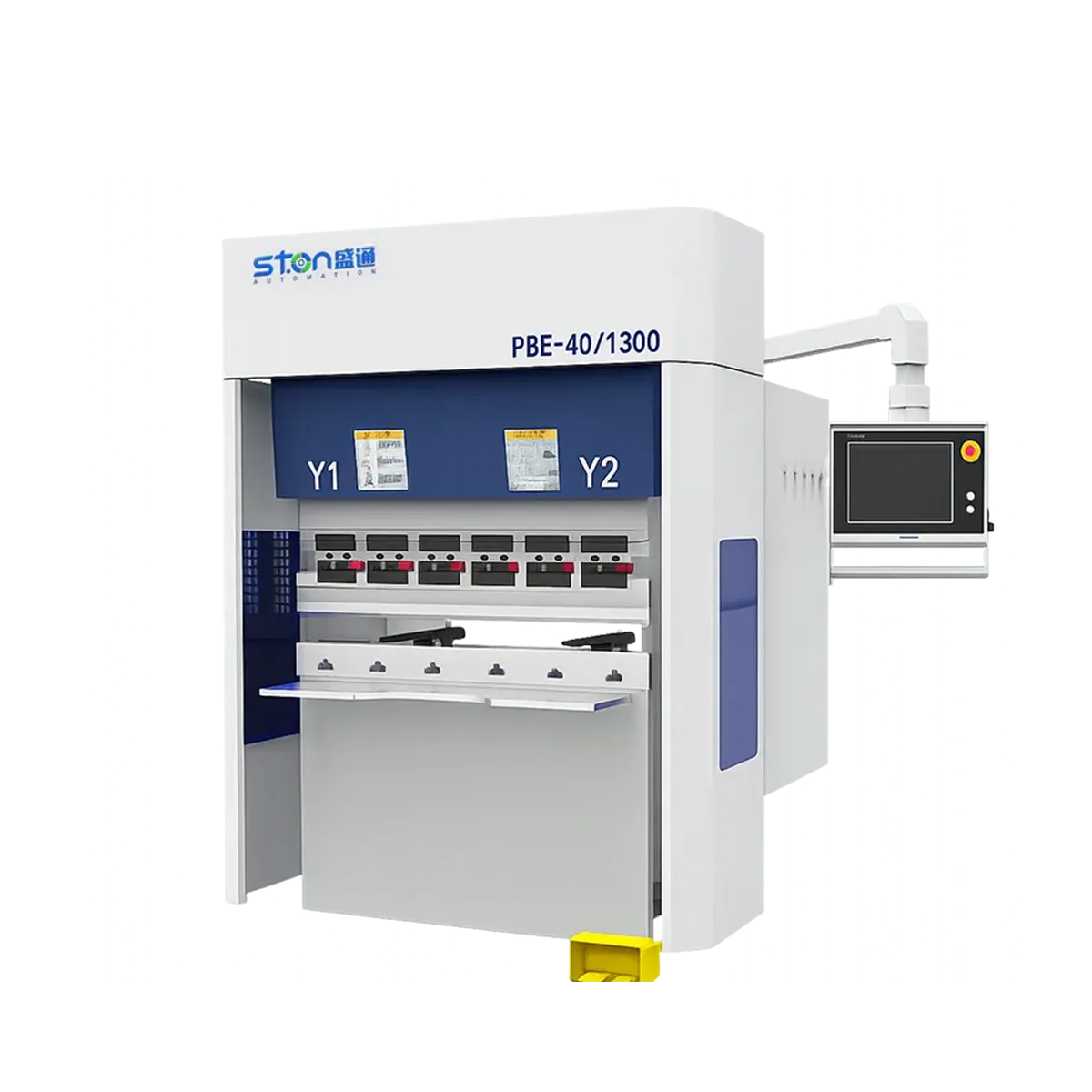
A press brake is a very flexible bending machine. It can process many materials, many thicknesses, and many custom parts. It is useful for general sheet metal fabrication and is still necessary in many factories. A traditional press brake uses upper and lower dies to bend the workpiece, so the operator’s experience is very important.
A panel bender is stronger for repeated panel bending. It is ideal for cabinet doors, side panels, drawers, shelves, covers, door panels, HVAC panels, and box-shaped sheet metal parts. It can reduce manual handling and improve speed and consistency for suitable parts.
The right equipment depends on your production needs. If your factory produces many similar panel parts every day, a panel bender can greatly improve productivity. If your factory processes many different thick parts or highly custom parts, a press brake may still be the better choice.
In many STON CNC projects, the best answer is not “panel bender or press brake.” It is panel bender plus press brake. The panel bender handles repeated high-volume panel work. The press brake handles special bending tasks. Together, they create a more balanced and efficient sheet metal fabrication system.
How Does a Panel Bender Improve Productivity and Reduce Labor Costs?
A panel bender improves productivity by reducing manual measuring, manual positioning, repeated flipping, and tool setup. In traditional bending, the operator may need to lift, rotate, align, and check the workpiece several times. This takes time and increases the chance of mistakes.
With a panel bender, the CNC system controls the bending process. The clamp fixes the workpiece. The tool bends the edge. The operator mainly loads, supervises, and checks the work. In a more advanced system, automatic loading and unloading can further automate the process.
Main productivity benefits include:
- Сокращение времени наладки
- Fewer manual steps
- Better repeatability
- Faster bending operations
- Lower operator skill dependence
- More stable part quality
- Better high-volume production
- Снижение затрат на оплату труда
- Easier delivery planning
A панелегибочный станок offers strong value when a factory produces many repeated panel parts. It does not only bend faster. It helps the whole production flow become more stable.
Here is a simple value chart:
Manual Bending
↓
More Operators
↓
More Handling
↓
More Variation
↓
More Rework
Panel Bender
↓
CNC Automation
↓
Fewer Manual Steps
↓
More Consistent Parts
↓
Better Delivery Control
For overseas sheet metal factories, labor costs are a major concern. Skilled bending operators are also difficult to train and retain. Investing in a panel bender can help reduce labor costs and make production less dependent on a small number of experienced workers.
This is one reason STON CNC focuses on automated sheet metal bending and intelligent production line solutions. A factory does not only need faster equipment. It needs a process that can grow with future orders.
How Do CNC Control, Tool Changes, and Automation Improve Bending Accuracy?
CNC control helps the panel bender improve precision. The machine follows programmed data, so the bending result does not depend only on the operator’s eyes and experience. The CNC system controls the bend angle, bend sequence, tool movement, clamp position, and part positioning.
Tool management is also important. Some advanced panel benders support automatic tool adjustment or automatic tool changes. This reduces manual tool changes and helps the machine process different part sizes faster. For factories with many product models, this can greatly reduce setup time.
Automation improves the process even more. Automated panel benders can connect with loading systems, unloading systems, storage systems, and production line software. This creates a more complete automated sheet metal bending process.
A smart bending workflow may look like this:
Хранение материалов
↓
Лазерная резка / пробивка на станке с ЧПУ
↓
Автоматическая загрузка
↓
Panel Bending
↓
Unloading and Sorting
↓
Assembly
This kind of automation helps factories handle larger orders, reduce manual intervention, and improve efficiency and accuracy. It also allows managers to control production output more clearly.
Modern panel benders are not only bending machines. They are part of modern sheet metal fabrication. They support speed and consistency, improve bend angles, and help factories move toward a more highly automated production model.
What Should Buyers Check Before Investing in a Panel Bender?
Before investing in a panel bender, buyers should check more than the machine price. The right panel bender must fit your product structure, material, thickness, production volume, factory layout, operator skill level, and future automation plan.
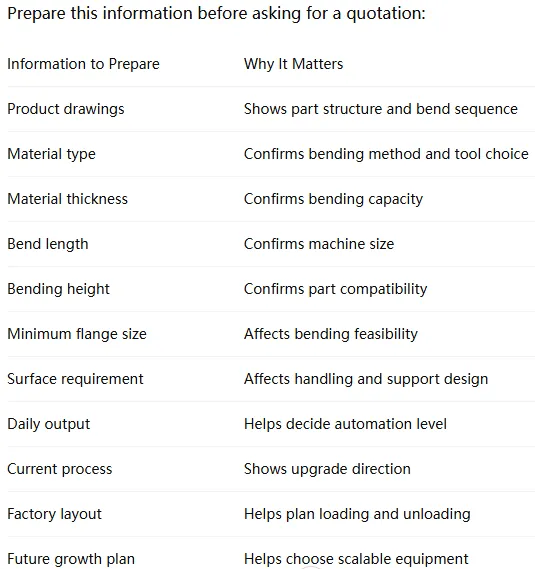
You should also ask the supplier these questions:
- Can the machine bend my actual parts?
- Can you review my drawings before quotation?
- What tool configuration do you recommend?
- Does the machine support automatic loading?
- Can it connect with press brakes, laser cutting machines, or storage systems?
- What installation and commissioning support do you provide?
- What spare parts and after-sales service are available?
- Can the production line be customized?
A good supplier should not only ask, “What model do you want?” A good supplier should ask, “What do you make, how many do you make, and how do you want to upgrade?”
That is the difference between selling a machine and providing a solution for your business.
How Can STON CNC Help Build an Automated Sheet Metal Bending Solution?
STON CNC is positioned as a high-end equipment provider for global B2B manufacturing customers. We focus on CNC sheet metal processing equipment and intelligent automated production line solutions. Our product range covers Панелегибы с ЧПУ, turret punching machines, press brakes, laser cutting machines, системы автоматической загрузки и выгрузки, and customized sheet metal production lines.
STON does not simply sell individual machines. We help sheet metal factories upgrade their cutting, punching, bending, handling, storage, and production line integration processes toward automation. This matters because real factory efficiency comes from the whole workflow, not one machine alone.
Среди наших основных зарубежных клиентов:
- Средние и крупные предприятия по обработке листового металла
- Производители электрических шкафов и распределительных устройств
- Фабрики по производству металлической мебели и картотечных шкафов
- Производители дверей
- Производители кухонного оборудования
- Заводы по производству оборудования для отопления, вентиляции и кондиционирования
- Производители оборудования для новой энергетики
- Дистрибьюторы оборудования
- Интеграторы автоматизации
These customers care about processing efficiency, bending and punching accuracy, labor costs, product consistency, surface quality, delivery pressure, automation level, equipment stability, customization capability, and long-term after-sales support.
For example, a cabinet factory may start with laser cutting and press brake bending. Later, it may add a panel bender to automate repeated panel work. Then it may add automatic loading, unloading, and storage. Step by step, the factory moves toward a high-precision, high-efficiency, and low-labor-dependence production model.
At STON CNC, we prefer a drawing-based solution approach. Send us your drawings, material thickness, daily output target, and factory layout. We can help you evaluate whether a panel bender, press brake, laser cutting machine, turret punching machine, or customized production line is the right equipment for your project.
How Does a Panel Bender Fit Into a Smart Sheet Metal Production Line?
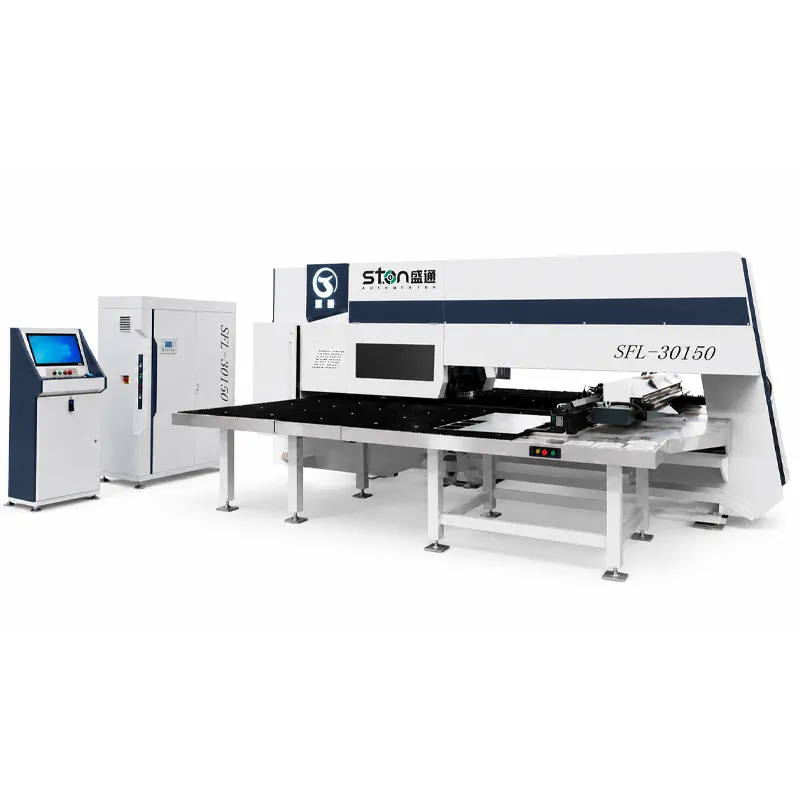
A panel bender fits into a smart sheet metal production line as the bending center for repeated panel parts. It can work with laser cutting machines, turret punching machines, press brakes, storage systems, and automatic handling systems.
A practical smart production layout may look like this:
Raw Sheet Storage
↓
Лазерная резка / пробивка на станке с ЧПУ
↓
Panel Bending
↓
Press Brake Bending for Special Parts
↓
Сортировка деталей
↓
Сварка / Сборка
↓
Готовое изделие
This layout helps each machine do what it does best. The laser cutting machine handles complex cutting. The turret punching machine handles high-speed hole punching. The panel bender handles repeated panel bending. The press brake handles special bending tasks. Automatic loading and unloading systems reduce manual handling.
This is the future of modern sheet metal fabrication. Not one machine trying to do everything. A connected system doing each step better.
STON CNC helps customers build this system step by step. Some factories may begin with one panel bender. Others may need a complete automated production line. The right solution depends on your current process, product type, factory space, and future growth plan.
When Should Your Factory Consider a Panel Bender?
Your factory should consider a panel bender when repeated bending work becomes a bottleneck. If workers spend too much time positioning parts, changing tools, checking angles, or handling large panels, it may be time to upgrade.
A panel bender may be suitable if your factory has these conditions:
- You produce many cabinet doors, panels, covers, shelves, drawers, or enclosures.
- Your parts need several straight bends.
- Your orders require stable bend angles and surface quality.
- Labor costs are rising.
- Skilled bending operators are difficult to hire.
- Your delivery time is under pressure.
- You want to automate cutting, punching, bending, and handling step by step.
- You need better production consistency for export orders.
However, a panel bender is not the best machine for every part. If your workpieces are very thick, very large, or highly irregular, a press brake may still be more suitable. This is why drawing review is important.
A professional panel bender manufacturer should help you compare options instead of forcing one machine. At STON CNC, we recommend equipment based on your real production needs, not only the product name.
FAQs About Panel Benders
What is a panel bender used for?
A panel bender is used to bend sheet metal panels, cabinet doors, covers, drawers, shelves, HVAC panels, door panels, and metal enclosures. It is best for repeated panel parts that need stable angles, good surface quality, and fast production.
How does a panel bender improve sheet metal bending efficiency?
A panel bender improves efficiency by reducing setup time, lowering manual handling, using CNC bending sequences, improving precision, and making repeated bending work faster. It can also connect with automation systems to reduce labor costs.
Is a panel bender better than a press brake?
A panel bender is better for repeated panel parts, multi-edge bending, and high-volume production. A press brake is better for general bending, thicker materials, and more varied custom jobs. Many factories use both machines together.
What materials can a panel bender process?
A panel bender can process carbon steel, stainless steel, galvanized sheet, aluminum, and coated sheet, depending on the machine model and tooling. Buyers should confirm sheet thickness, bend length, and bending height before choosing a machine.
Can a panel bender automate bending operations?
Yes. A panel bender can automate many bending operations through CNC control, automatic positioning, automatic tool adjustment, and optional loading or unloading systems. Some systems can become fully automated bending cells.
What should I check before buying a panel bender?
You should check your drawings, material, thickness, bend length, bending height, flange size, surface requirements, daily output, operator skill level, factory layout, and future automation plan.
Can STON CNC provide a complete bending solution?
Yes. STON CNC can review your drawings and production goals, then recommend CNC panel benders, press brakes, turret punching machines, laser cutting machines, automatic loading and unloading systems, and customized sheet metal production lines.
Conclusion: A Panel Bender Helps Factories Bend Smarter
A panel bender is a smart bending solution for factories that want faster production, better precision, lower labor dependence, and more stable sheet metal quality. It is especially valuable for electrical cabinets, switchgear, metal furniture, doors, kitchen equipment, HVAC, and new energy enclosure production.
The best choice starts with your parts. Review your drawings, material, thickness, bend length, bending sequences, surface quality needs, and daily output. Then choose the right panel bender and automation plan.
STON CNC helps overseas sheet metal manufacturers move from traditional bending to intelligent automated production. If you are planning to improve your sheet metal bending process, send us your drawings and production goals. We will help you evaluate the right equipment and build a practical bending solution for your business.



 22 июня 2026 года