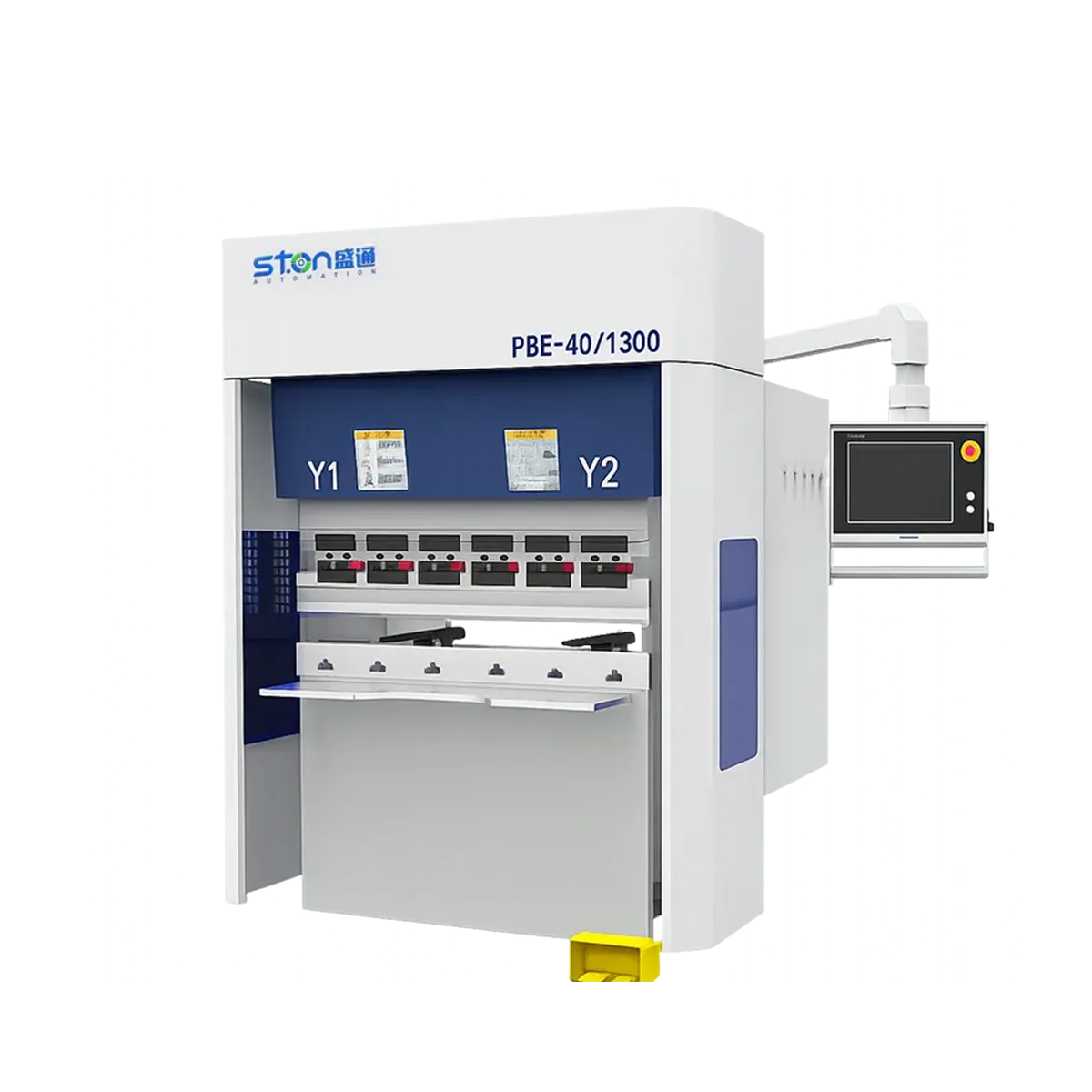
A metal folding machine clamps a sheet’s edge and lifts a folding beam to bend it — a narrower category than a full CNC panel bender, which forms multi-sided boxes. Confusing the two before ordering is the most common sourcing mistake in this category.Search results and supplier catalogs use “folding machine,” “panel bender,” and “edge bender” almost interchangeably, and that’s not accidental — several manufacturers, including STON, sell both a dedicated folding/flanging machine and a separate multi-axis panel bender line, and the marketing copy doesn’t always make the distinction obvious.
What a Metal Folding Machine Actually Is
A folding machine works in two mechanical steps: clamping fingers hold the sheet edge, then a folding beam lifts under the clamped section to bend it. This is mechanically distinct from a full panel bender, which uses a moving blade and back-gauge system to form multiple edges of a panel in sequence, including internal box folds a simple clamp-and-lift beam can’t reach.
The practical consequence: a folding machine is built for long, simple flanges — roofing trim, gutter profiles, cabinet edges, HVAC duct seams — where the bend runs the length of the panel and doesn’t need to wrap around a corner. A full panel bender is built for box-shaped parts with folds on two, three, or four sides, where the sheet needs repositioning between bends.
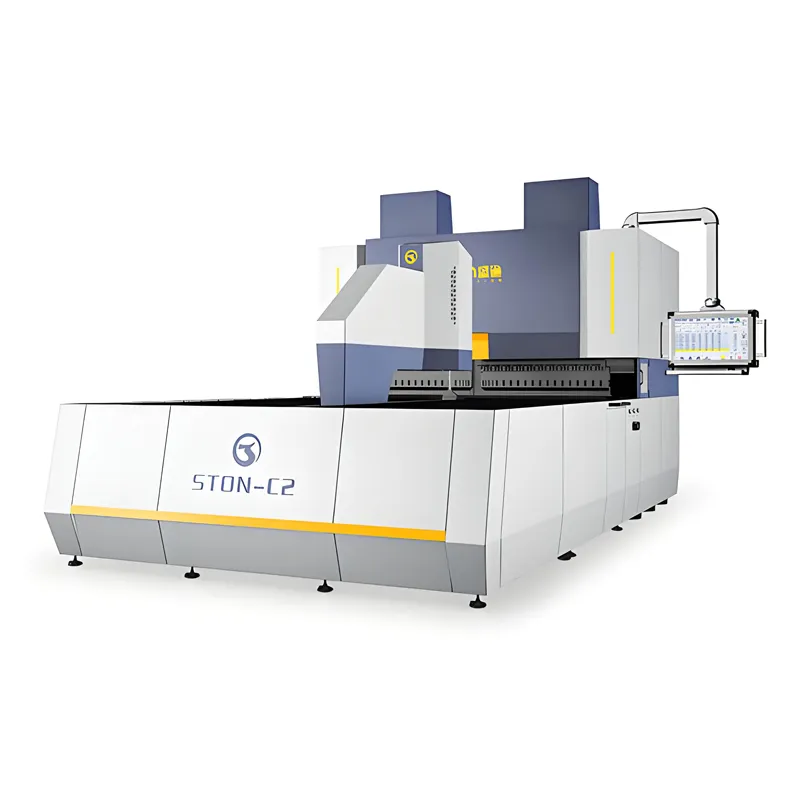
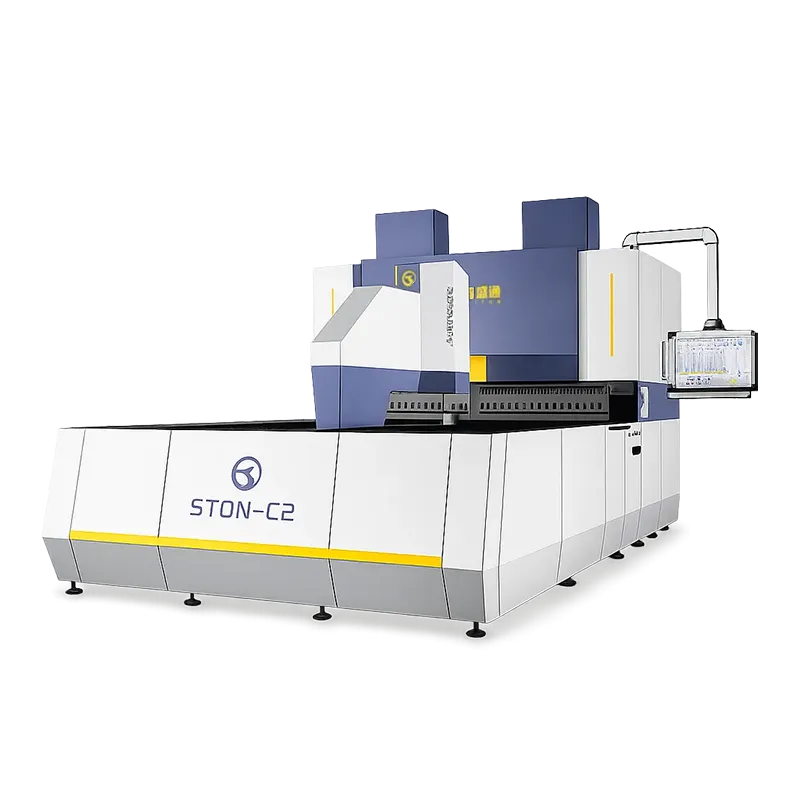
On STON’s own product range, this shows up as two separate product lines rather than one machine marketed two ways. The Flexible Edge Bending machine series — what STON’s website lists as its Metal Sheet Folding Machine — handles Positive and Positive-plus-Negative bending along with arc, dead-edge (hem), and offset processes, at a maximum bending height of 100 mm across its model range. The CNC Panel Bükme Makinesi series (A2–F2) forms full four-sided boxes at bending heights up to 400 mm depending on frame size, with a broader model range built specifically for enclosure and cabinet-style parts.
Neither machine is “better” in the abstract. The question is which one matches your part geometry, and that’s a question a supplier should be able to answer from your drawing, not from a generic capability list.
How to Verify a Supplier’s Claims: A Six-Step Check
1. Send your actual part drawing and ask which machine they’d quote — before you ask about price
A supplier who quotes a panel bender for a part that’s just a long simple flange (or a folding machine for a part needing internal box folds) either misread your drawing or is quoting whatever they have available. Either way, that’s information worth having before negotiating.
2. Confirm the maximum bending height and minimum internal dimension against your part, not the model name
Model numbers like “1200” or “1600” typically refer to the maximum forming dimension, not the minimum size the machine can handle. On STON’s folding machine line, the minimum internal dimension across the four sides is 200 mm × 200 mm regardless of model size — if your smallest part is close to that, say so before ordering, since going under it isn’t a configuration option.
3. Ask whether automatic loading and unloading changes the usable forming size
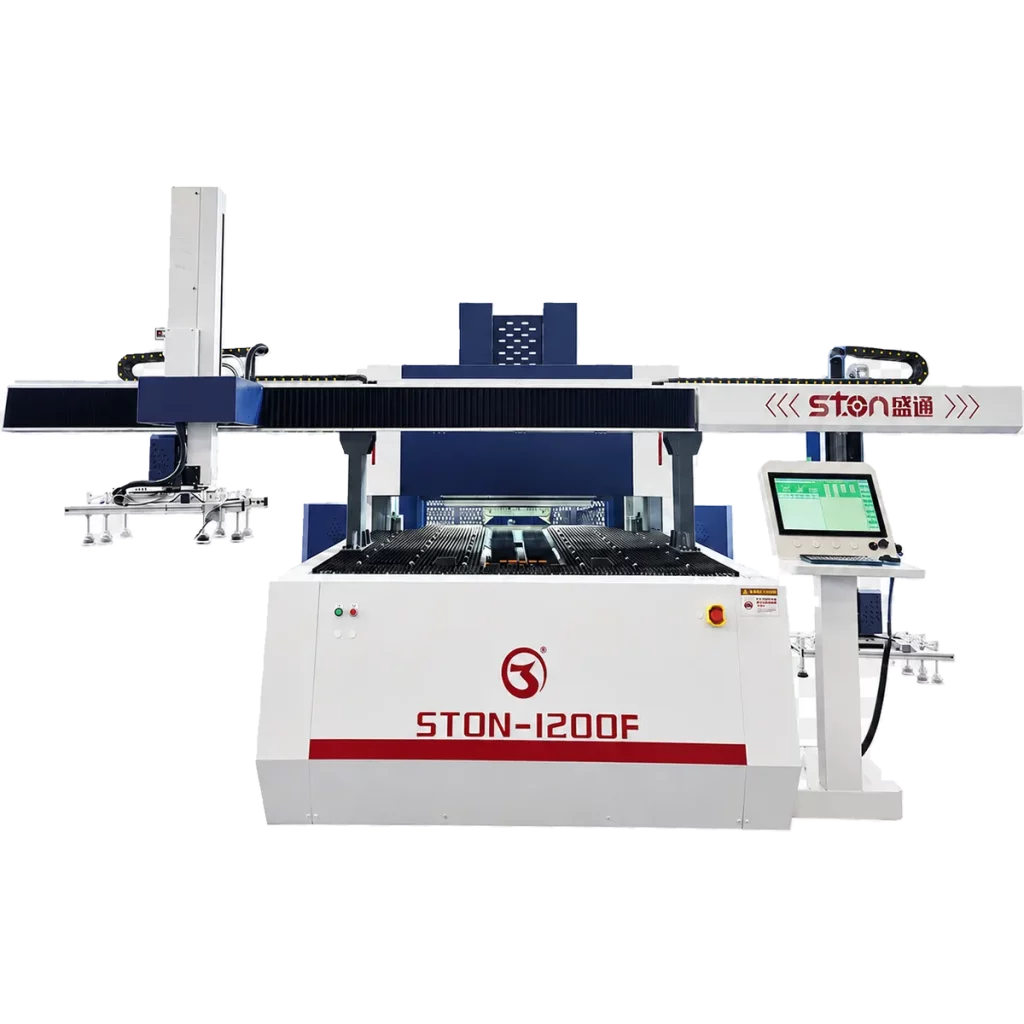
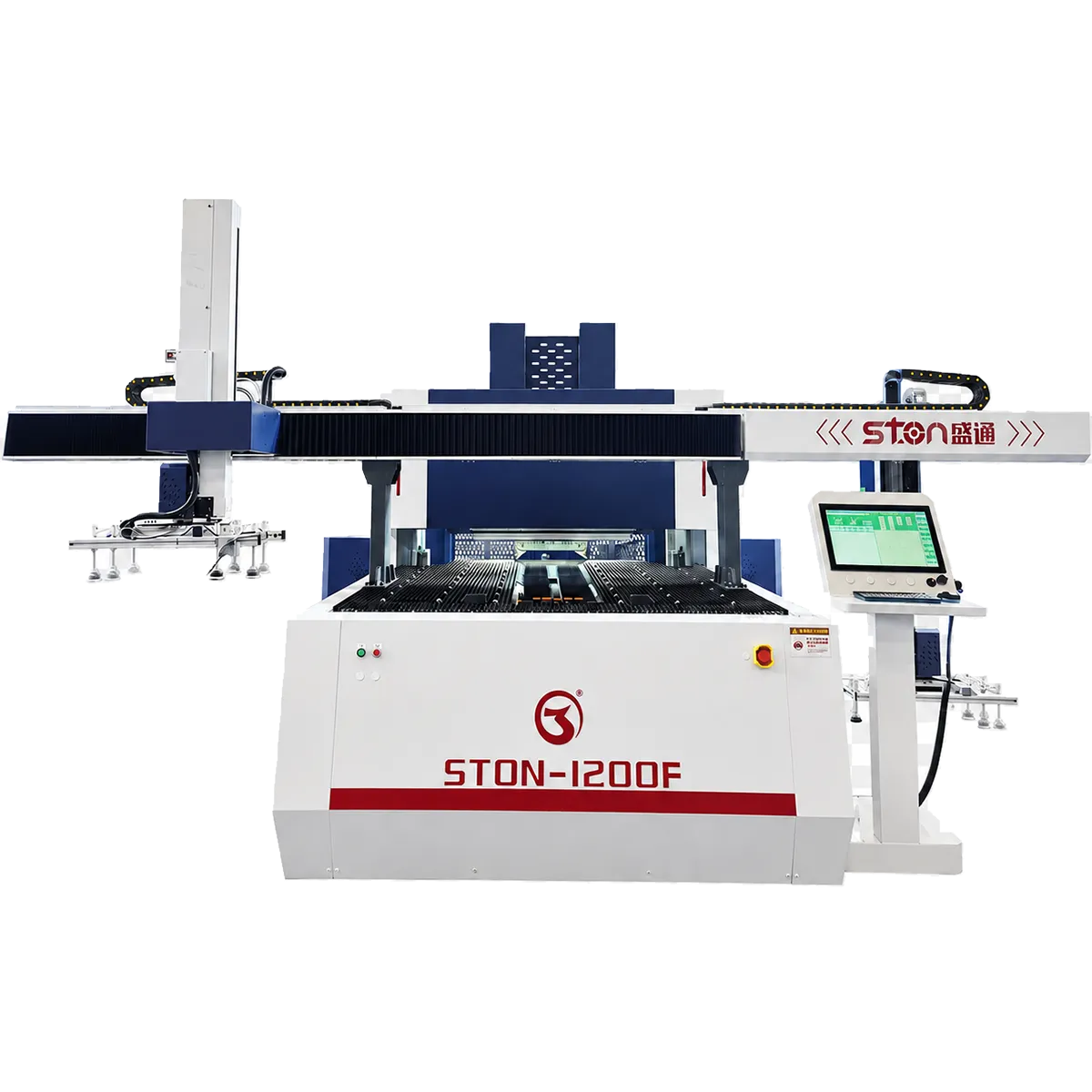
This is a detail that’s easy to miss on a spec sheet. On STON’s folding machine line, adding automatic loading and unloading reduces the maximum usable forming inner dimension compared to the manual-load version of the same frame size — for example, the 1600 mm frame’s automated variant tops out at 1600 × 950 mm versus a larger working area on the standard version. If a supplier quotes automation as a pure add-on with no change to working envelope, ask them to confirm that in writing against the specific frame size.
4. Ask what bending processes are actually supported — not just “yes, it bends”
“Positive/Positive+Negative” bending plus arc, hem, and offset processes are specific, nameable capabilities, not marketing adjectives. If a supplier can’t tell you which of these their machine supports without checking, they may be reselling a spec sheet they didn’t write.
5. Request a factory video call and watch for these red flags
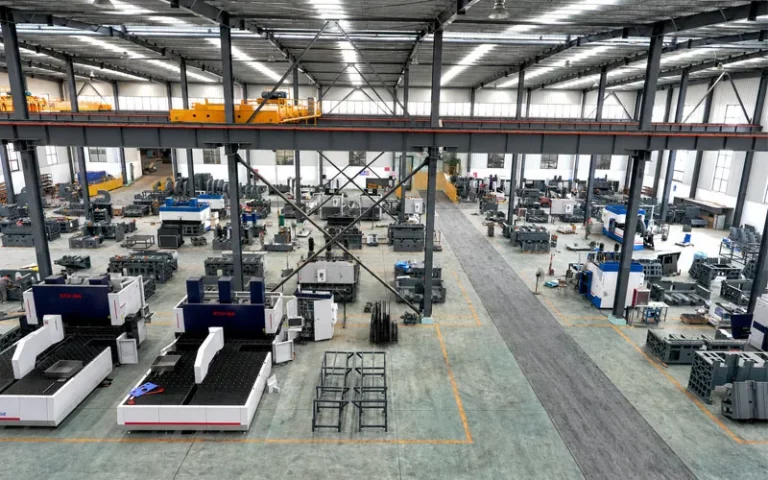
- No visible casting, welding, or machining floor — only an assembly or showroom area
- Inability to show the suction-cup or clamping mechanism in operation on camera
- Vague answers about servo brand (STON’s line uses named brands — Schneider Electric, Inovance/Trio, or equivalent top-tier suppliers — not “high quality servo”)
- No spare-parts area visible anywhere on the walkthrough
6. Confirm CE documentation is tied to the specific model, not the company in general
For EU-bound orders, ask for the technical file reference aligned to the Machinery Directive 2006/42/EC (transitioning to Regulation (EU) 2023/1230), with supporting risk-assessment documentation under EN ISO 12100. A company-wide CE claim without a model-specific technical file reference is not the same as a machine-specific declaration of conformity.
STON Flexible Edge Bending Machine: Spec Reference
| Model |
Max Forming Dimension (mm) |
Max Bending Height (mm) |
Min. Internal Four-Side Dimensions (mm) |
Bending Processes |
| 1200 |
1200 × 1200 |
100 |
200 × 200 |
Positive / Positive + Negative, plus arc, hem and offset bending |
| 1600 |
1600 × 1250 |
100 |
200 × 200 |
Positive / Positive + Negative, plus arc, hem and offset bending |
| 2000 |
2000 × 1500 |
100 |
200 × 200 |
Positive / Positive + Negative, plus arc, hem and offset bending |
With automatic loading and unloading added, the usable forming inner dimension changes:
| Model |
Standard Max Forming Dimension |
Max Forming Inner Dimension with Automatic Loading/Unloading |
| 1200 |
1200 × 1200 mm |
1200 × 650 mm |
| 1600 |
1600 × 1250 mm |
1600 × 950 mm |
| 2000 |
2000 × 1500 mm |
2000 × 800 mm |
Control system supports up to 25 axes of concurrent linkage on an all-electric servo closed-loop system. Feeding is via a patented 360°-rotating suction-cup mechanism rather than mechanical grippers, and the standard configuration includes a full enclosure safety fence.
Compared to sourcing based on a single “max bending length” figure — the approach most generic supplier-comparison content defaults to — checking bending height, minimum internal dimension, and whether automation changes the working envelope is what actually determines whether the machine fits a specific part family.
Folding Machine vs. Full Panel Bender: Quick Reference
| Factor |
Flexible Edge Bending Machine (Folding) |
CNC Panel Bender (A2–F2) |
| Bending Mechanism |
Clamp and lifting beam |
Moving blade and back gauge |
| Maksimum Bükme Yüksekliği |
100 mm |
Gövdeye bağlı olarak 400 mm’ye kadar |
| Kutu / Çok Kenarlı Şekillendirme |
Desteklenmiyor |
Desteklenir |
| Tipik Parça Uygulamaları |
Uzun flanşlar, kanallar, kıvrımlar ve trim bileşenleri |
Dolaplar, muhafazalar ve kutu şeklindeki parçalar |
| Servo Eksenler (Standart) |
25 eksene kadar bağlantılı çalışmayı destekler |
15 eksenli standart yapılandırma |
SSS
Is a “metal folding machine” the same thing as a panel bender?
Her zaman değil. Bazı tedarikçiler pazarlama metinlerinde bu terimleri birbirinin yerine kullanır; ancak mekanik açıdan bir katlama makinesi tek bir kenarı bükmek için parçayı sıkıştırıp kaldırırken, panel bükme makinesi kutu şeklindeki bir parçanın birden fazla kenarını şekillendirmek için bıçak ve arka dayama sistemi kullanır. Fiyatları karşılaştırmadan önce belirli bir teklifin hangi mekanizmayı ifade ettiğini doğrulayın.
Otomatik yükleme ve boşaltma eklemek makinenin şekillendirme kapasitesini azaltır mı?
STON'un katlama makinesi serisinde evet — kullanılabilir maksimum şekillendirme iç boyutu, aynı çerçeve boyutundaki manuel yüklemeli versiyona kıyasla otomatik versiyonda daha küçüktür. Otomasyonun maliyeti değiştirmeyen bir eklenti olduğunu varsaymadan önce bunu parçanızın boyutuna göre doğrulayın.
What’s the price range for a folding machine like this?
STON, Esnek Kenar Bükme makinesi serisi için sabit bir fiyat listesi yayımlamaz; çünkü fiyatlandırma çerçeve boyutuna, bükme işlemi yapılandırmasına ve otomatik yükleme ile boşaltmanın dahil olup olmamasına bağlıdır. Genel bir fiyat yerine, parçanıza ait teknik çizime göre yazılı bir teklif isteyin.



 31 Ağustos 2026