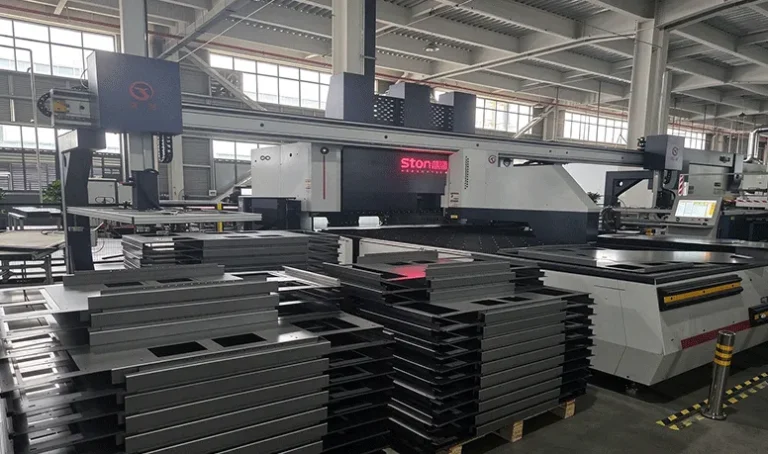
Baskı kollu ve vantuzlu CNC panel bükme makineleri arasında seçim yapmak yalnızca makine hızıyla ilgili değildir. Bir makine, malzemenizi ve bükme ölçülerinizi desteklese bile delikli, kaplamalı veya düzensiz şekilli panelleri konumlandırmakta zorlanabilir.
Asıl soru şu: Hangi besleme sistemi, gerçek iş parçalarınızı tüm bükme süreci boyunca güvenilir şekilde işleyebilir?
Baskı kollu CNC panel bükme makinesi, sacı kontrol etmek için mekanik konumlandırma kullanırken vantuzlu panel bükme makinesi vakum tabanlı taşıma kullanır. Baskı koluyla besleme, uygun ve tekrarlanabilir panel geometrileri için değerlendirmeye değerdir. Vantuzla besleme ise özelleştirilmiş bir vakum temas düzeninin iş parçasına daha iyi uyduğu durumlarda alternatif sunar. Hiçbiri her durumda diğerinden üstün değildir; doğru seçim parça çizimlerine, temas alanlarına, yüzey koşullarına, bükme geometrisine ve üretim gereksinimlerine bağlıdır.
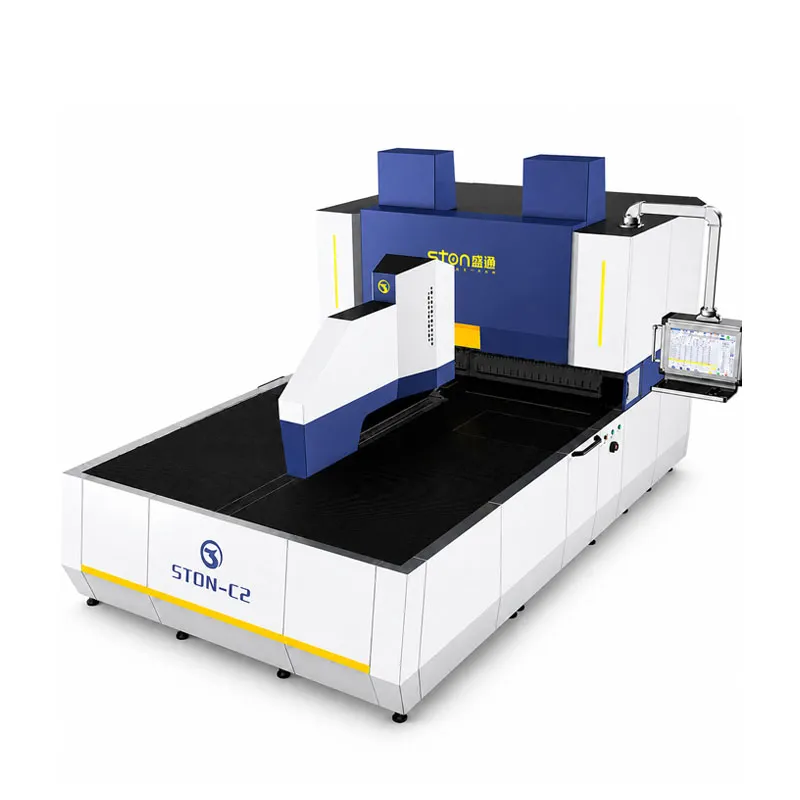
Bu kılavuz, aralarındaki farkları açıklamak için STON’un iki panel bükme makinesi konfigürasyonunu ele almakta ve sac metal üreticileri için pratik bir seçim yöntemi sunmaktadır.
1. Baskı Kollu ve Vantuzlu CNC Panel Bükme Makineleri Arasındaki Fark Nedir?
Her iki konfigürasyon da sac panel bükme işlemini otomatikleştirir, ancak boş parçayı tutmak, konumlandırmak ve hareket ettirmek için farklı yöntemler kullanır.
A pres kollu panel bükme makinesi mekanik olarak kontrol edilen bir konumlandırma düzeni kullanır. Bir Vantuzlu panel bükme makinesi taşıma sırasında sacla uygun teması sağlamak için vakumlu emiş düzenekleri kullanır.
Bir iş parçasında açıklıklar, düzensiz kenarlar, hassas bir yüzey kaplaması veya mevcut temas alanlarını etkileyen başka özellikler olduğunda bu fark önem kazanır.
Baskı Kolu ve Vantuz Karşılaştırması: Temel Farklar
| Karşılaştırma Faktörü |
Baskı Kollu Panel Bükme Makinesi |
Vantuzlu Panel Bükme Makinesi |
| Besleme yöntemi |
Mekanik baskı kolu konumlandırması |
Vakumlu emişe dayalı besleme |
| İş parçası teması |
Mekanik tutma alanları |
Vakumla kavramaya uygun temas alanları |
| Temel husus |
Tutucu erişilebilirliği ve hareket açıklığı |
Vakum sızdırmazlığı ve tutma güvenilirliği |
| Delikli saclar |
Delik ve kesiklerle çakışmayı kontrol edin |
Yeterli büyüklükte kesintisiz emiş alanları bulunduğunu doğrulayın |
| Düzensiz profiller |
Mekanik kavrama geometrisini değerlendirin |
Özelleştirilmiş vakum konumlarını değerlendirin |
| Hassas yüzeyler |
Temas basıncını ve olası iz oluşumunu kontrol edin |
Vakum temasını ve yüzey durumunu kontrol edin |
| Üretim değerlendirmesi |
Mekanik konumlandırma ve bükme testini tamamlayın |
Tam vakumlu taşıma ve bükme testi |
Besleme sistemi, makine seçiminde yalnızca bir unsurdur. Malzeme kalınlığı, açılmış sac ölçüleri, bükme yüksekliği, takımlar ve gerekli şekillendirme sırası da seçilen modelle uyumlu olmalıdır.
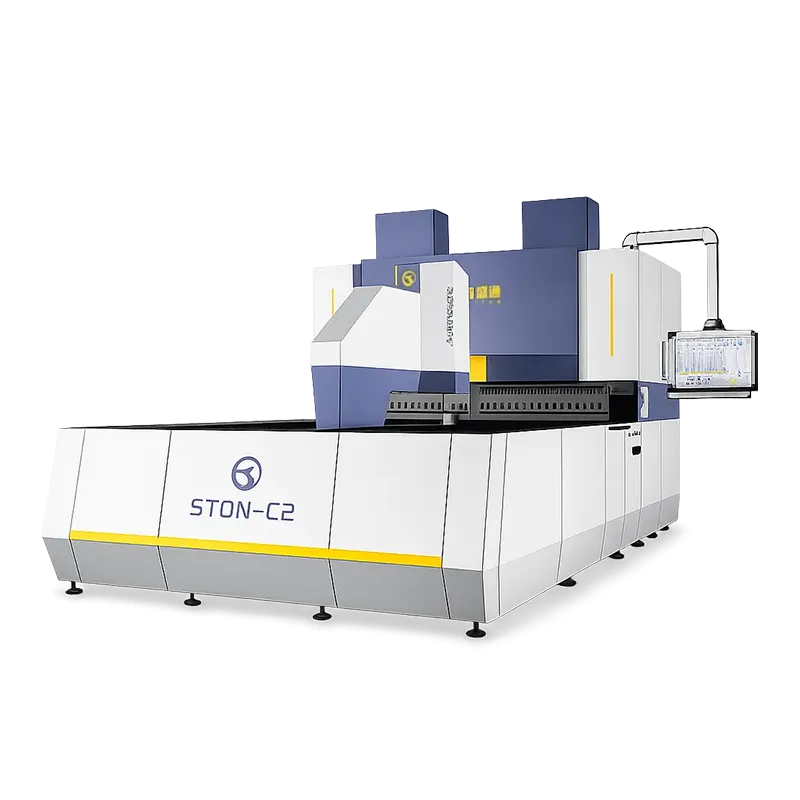
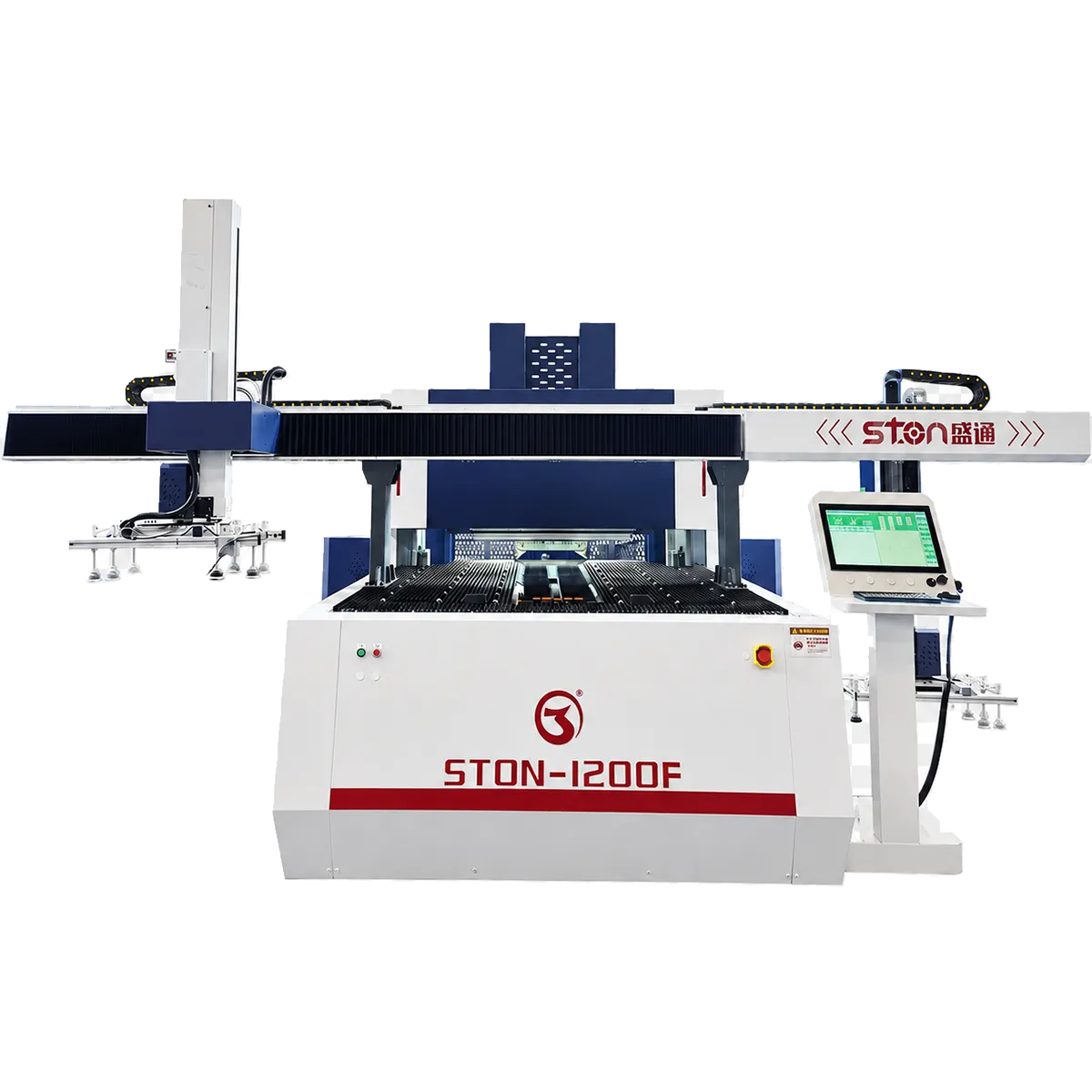
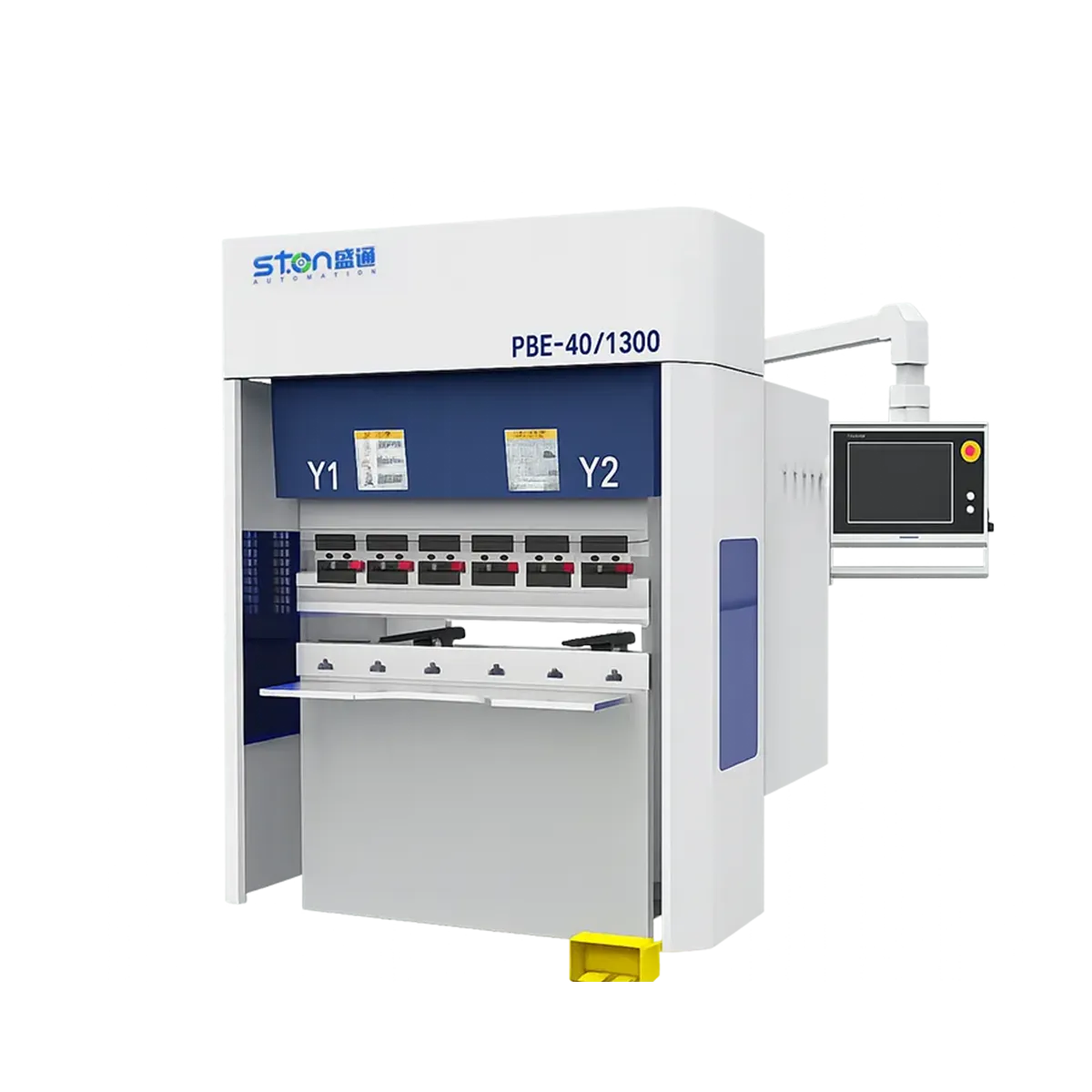
STON, CNC Panel Bükme Makinesi ürün yelpazesi içinde her iki yapılandırmayı da sunar CNC Panel Bükme Makinesi ürün yelpazesi.
2. Ne Zaman Baskı Kollu CNC Panel Bükme Makinesi Seçmelisiniz?
İş parçası mekanik konumlandırmaya uygun alanlar sunuyorsa ve fabrikanız tekrarlanabilir, programlanmış büküm işlemlerine ihtiyaç duyuyorsa baskı kollu bir CNC panel bükme makinesini değerlendirmeye değer.
STON’s press arm range dolaplar, muhafazalar, kapılar, çerçeveler ve metal mobilya bileşenleri gibi panel tipi sac metal ürünler için tasarlanmıştır. Makine konfigürasyonları CNC kontrolü, rijit bir makine yapısını, servo tahrikli hareketi ve büküm telafisi özelliklerini bir araya getirir.
Baskı koluyla besleme hangi durumlarda avantaj sağlar?
Tekrarlanabilir dolap üretimi
Sürekli olarak dolap kapakları, çekmece panelleri veya muhafaza bileşenleri işleyen bir üretici, kararlı ve tekrarlanabilir konumlandırma için baskı kollu beslemeyi değerlendirebilir.
Mekanik kontrollü taşıma
İş parçası, tanımlanmış bir mekanik düzenek aracılığıyla konumlandırılır; bu düzenek, parçanın gerçek teknik resmi ve büküm programı dikkate alınarak değerlendirilmelidir.
Production integration
Daha ileri düzeyde otomasyon planlanırken STON’un baskı kollu makineleri; uyumlu robotik, portal veya kafes kirişli yükleme düzenekleriyle birlikte değerlendirilebilir.
What should you check before selecting it?
The main concern is whether the mechanical holding arrangement can access and move the part correctly.
A sheet with a large opening, narrow section, or special cutout may require closer evaluation. Operators should also confirm that the positioning components will not interfere with formed features or the subsequent bending sequence.
For visible surfaces, mechanical contact and the finished appearance should be checked using actual production material.
3. Vantuzlu CNC Panel Bükme Makinesi Ne Zaman Daha Uygundur?
Vantuzlu bir CNC panel bükme makinesi, uygun sac parçaları tutmak ve konumlandırmak için vakum tabanlı bir sistem kullanır.
STON’s suction cup configuration combines customizable suction cup assemblies, all-electric servo closed-loop control, and coordinated multi-axis movement.
Emiş konumlarının yapılandırılabilmesi, iş parçası için farklı bir temas düzeni gerektiğinde incelenmeye değer bir seçenek sunar.
Bununla birlikte, vakumla taşıma gerçek malzeme ve taslak yapısı üzerinde doğrulanmalıdır.
Vantuz uyumluluğunu ne belirler?
Available contact area
The blank must provide suitable areas where the suction cups can establish reliable contact.
Yüzey durumu
Yağ, toz, kaplamalar, koruyucu filmler, doku ve diğer yüzey özellikleri vakumla tutma performansını etkileyebilir.
Sac parça şekli ve açıklıklar
Large openings or extensive perforations may limit suitable suction positions. A customized arrangement may be required.
Handling requirements
Emiş sistemi, iş parçasının boyutlarını, ağırlık dağılımını, konumlandırma hareketlerini ve bükme sırasını desteklemelidir.
Does suction feeding guarantee better surface protection?
Hayır. Vakumla taşıma, mekanik bir pres kolundan farklı bir temas yöntemi kullansa da bu, çizilmeye karşı tamamen güvenli olduğu anlamına gelmez.
Vantuzların durumu, malzeme yüzeyi, hareket yolu ve temas noktalarının tümü nihai parçayı etkileyebilir.
If your products have visible stainless steel, coated, or decorative surfaces, request a handling and bending test using the actual production material.

4. Gerçek Parçalarınıza Göre Bir Besleme Sistemini Nasıl Seçersiniz?
En pratik seçim yöntemi, makinenin adından ziyade iş parçasını temel almaktır.
Masif bir dolap kapağı, delikli bir havalandırma paneli ve dekoratif paslanmaz çelik bir kapak, genel boyutları benzer olsa bile farklı konumlandırma gereksinimlerine sahip olabilir.
Aşağıdaki tabloda, besleme sistemlerinden herhangi biri seçilmeden önce değerlendirilmesi gereken unsurlar belirtilmiştir.
Workpiece-Based Panel Bender Selection Guide
| İş Parçasının Durumu |
Press Arm: What to Check |
Suction Cup: What to Check |
| Standart dikdörtgen paneller |
Mechanical holding positions and movement |
Available suction area and positioning |
| Heavily perforated sheets |
Deliklerin tutuşu engelleyip engellemediği |
Yeterli miktarda kesintisiz vakum alanının kalıp kalmadığı |
| Large central cutouts |
Grip access and workpiece support |
Suction positions around the opening |
| Irregular external profiles |
Mechanical positioning clearance |
Özelleştirilmiş vantuz yerleşiminin uygulanabilirliği |
| Decorative stainless steel |
Contact pressure and possible marks |
Vacuum contact, residue, and surface condition |
| Coated or pre-painted panels |
Holding contact and coating protection |
Suction cup and coating compatibility |
| Large cabinet panels |
Machine capacity and stable handling |
Machine capacity and holding reliability |
| Mixed production orders |
Compatibility across different part drawings |
Compatibility across different suction layouts |
Important: These are engineering evaluation criteria, not guaranteed processing capabilities. The final recommendation should be confirmed for the exact machine model and representative workpieces.
Example: A perforated electrical cabinet panel
Consider a hypothetical cabinet panel with ventilation holes, cable openings, and folded edges.
A press arm evaluation would examine whether the mechanical holding areas remain accessible and whether the positioning system interferes with the openings.
A suction cup evaluation would examine whether sufficient solid contact areas are available for the proposed vacuum arrangement.
The correct choice depends on the actual hole distribution, blank dimensions, and bending sequence—not merely on the fact that the product is an electrical cabinet panel.
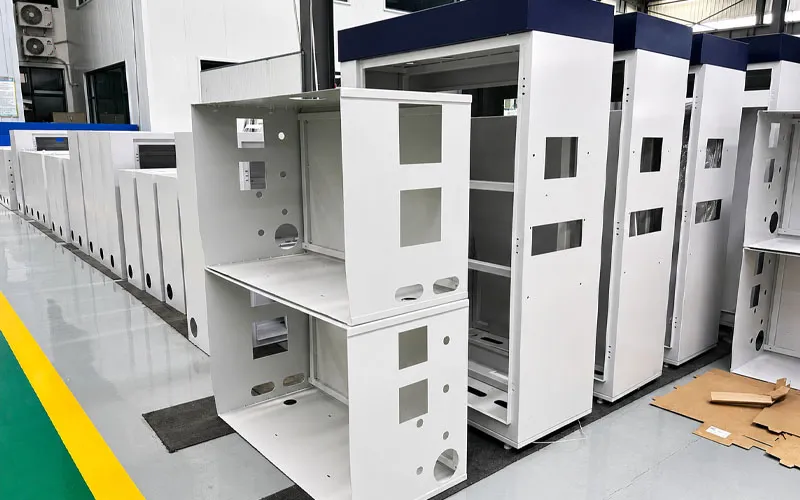
This distinction is useful for manufacturers working with cabinets, enclosures, ventilation covers, and other sheet metal products containing functional cutouts.
5. Which Technical Specifications Should You Compare Before Buying?
Once both feeding methods have been evaluated, the next step is to confirm machine capacity.
A suitable feeding arrangement cannot compensate for a machine that lacks the required bending size, material capacity, or forming clearance.
According to STON’s published product information, the company offers different press arm and suction cup machine sizes, welded or cast body configurations, CNC servo control, and model-dependent bending capacities.
These specifications vary by model and must not be treated as universal values across the entire product range.
Essential Technical Checklist
| Teknik Özellikler |
Why It Matters |
| Material grade |
Different materials have different forming requirements |
| Minimum and maximum thickness |
Helps identify a suitable machine configuration |
| Flat blank length and width |
Determines machine size and feeding compatibility |
| Finished flange height |
Confirms whether the required forming geometry is possible |
| Return bends and corner details |
Helps identify potential tool interference |
| Minimum forming dimensions |
Determines compatibility with smaller features |
| Bending accuracy |
Establishes finished-part acceptance requirements |
| Surface finish |
Helps define permissible contact and handling conditions |
| Tooling configuration |
Confirms compatibility with the required bending sequence |
| Üretim kapasitesi |
Supports model selection and workflow planning |
Why should you avoid comparing maximum thickness alone?
A maximum thickness specification is normally defined under particular material and processing conditions.
For example, the capacity for cold-rolled steel should not automatically be applied to stainless steel or aluminum. Machine size, bending length, material properties, and tool configuration can also affect the actual forming limits.
The same principle applies to accuracy and production speed: performance should be confirmed for the workpiece and machine configuration under consideration.
For model-specific information, review the STON CNC Panel Bender technical range and request engineering confirmation for your parts.
6. How Does STON Evaluate Feeding Compatibility Before Machine Selection?
A reliable equipment proposal should begin with an engineering review of the customer’s actual product requirements.
Rather than making a selection based only on whether a customer produces cabinets, furniture, or HVAC equipment, the review should establish how the proposed machine will handle the workpiece during the full bending process.
Recommended Drawing Review Process
Step 1 — Collect Representative Drawings
Provide flat blank drawings and finished-part drawings, including bends, holes, openings, dimensions, and material specifications.
Step 2 — Identify Suitable Holding Areas
Evaluate where the workpiece can be contacted during positioning. For press arm feeding, review mechanical holding accessibility. For suction cup feeding, review suitable vacuum contact areas.
Step 3 — Check Forming Feasibility
Confirm the bending height, return edges, corner geometry, forming clearance, and required bending sequence.
Step 4 — Match the Machine Configuration
Compare the requirements with the appropriate STON model, feeding assembly, tooling plan, and available automation options.
Step 5 — Define Representative Sample Tests
Select parts that can demonstrate actual handling reliability, finished-part accuracy, surface appearance, and production workflow.
This process helps reduce the risk of selecting a machine that performs well during a simple demonstration but is not suitable for the factory’s more demanding production parts.
What Should a Representative Test Verify?
| Test Item |
Required Verification |
| Loading |
Workpiece can be handled reliably |
| Positioning |
Sheet remains correctly located during processing |
| Clearance |
No unacceptable interference with holes or formed features |
| Bükme |
Required sequence can be completed |
| Finished dimensions |
Part meets agreed drawing tolerances |
| Yüzey durumu |
No unacceptable contact marks or scratches |
| Döngü süresi |
Complete production time is measured |
| Operator involvement |
Manual adjustments are identified |
These are recommended validation criteria. Specific sample results should only be published after actual testing.
For context, STON has published overseas panel bending projects, including three CNC panel benders supplied for cabinet and furniture manufacturing in Turkey. That project confirms the general equipment application, but its published information does not identify the individual machines’ feeding configurations or measured cycle times.
7. Which Feeding System Offers Better Production Efficiency?
Neither press arm nor suction cup feeding is automatically faster in every application.
A machine’s published bending movement speed is only one part of the production cycle. Actual output also depends on how efficiently the sheet is loaded, positioned, bent, and unloaded.
For an effective comparison, evaluate:
Total Cycle Time = Loading + Positioning + Bending + Unloading + Required Handling Adjustments
A representative comparison should use the same workpiece drawing, material, acceptance criteria, and production conditions wherever practical.
What Should Buyers Measure?
| Evaluation Item |
Why It Matters |
| Loading time |
Identifies how quickly the blank enters the process |
| Positioning time |
Shows the handling efficiency of each feeding method |
| Complete bending cycle |
Measures the actual finished-part processing time |
| Operator intervention |
Reveals additional adjustments or handling |
| Finished-part quality |
Prevents speed gains from hiding quality problems |
| Product changeover |
Evaluates suitability for different production orders |
For high-volume production, reliable repeated handling can be as important as the bending speed itself.
For a high-mix sheet metal workshop, compatibility across different part designs may offer greater value than achieving a short cycle time on one standard sample.
If your factory intends to introduce robotic loading or a larger automated production layout, feeding compatibility should also be reviewed alongside the material transfer and unloading requirements.
8. What Information Should You Send STON to Get the Right Panel Bender Recommendation?
The fastest way to narrow down the right configuration is to provide sufficient information before requesting a formal quotation.
A basic enquiry containing only the desired machine size and material thickness may not reveal the handling and bending difficulties of the actual part.
| Information to Provide |
Recommended Details |
| Part drawings |
2D and/or 3D files |
| Malzeme |
Grade and surface condition |
| Kalınlık |
Minimum and maximum production thickness |
| Flat blank dimensions |
Length and width |
| Finished geometry |
Flange height, return bends, and corner details |
| Openings |
Holes, slots, ventilation patterns, and cutouts |
| Surface requirements |
Visible areas, protective films, and finish criteria |
| Üretim hacmi |
Expected daily or shift output |
| Product variety |
Number of recurring part designs |
| Current workflow |
Existing cutting, punching, and bending process |
| Otomasyon ihtiyaçları |
Manual loading, robotic handling, or future integration |
Provide at least one frequently produced part and one difficult part. This gives the engineering team a more realistic understanding of your factory’s requirements.
Final Selection Recommendation
Choose a press arm CNC panel bender when its mechanical positioning arrangement is compatible with your actual workpieces and planned production.
Consider suction cup feeding when a customized vacuum contact arrangement offers a suitable alternative for the part geometry, contact locations, and handling requirements.
For either configuration, verify machine capacity, tooling, forming clearance, finished-part quality, and the complete production cycle before finalizing the purchase.
The best CNC panel bender is the one that can produce your parts reliably—not simply the one with the most attractive catalogue specifications.
Sık Sorulan Sorular
Is a press arm CNC panel bender better than a suction cup panel bender?
Neither is universally better. Press arm feeding uses mechanical positioning, while suction cup feeding uses vacuum-based handling. The correct choice depends on the workpiece’s contact areas, geometry, surface condition, and bending requirements.
Which feeding system is better for perforated metal panels?
It depends on the opening distribution and available holding areas. Press arm feeding requires compatible mechanical positioning locations, while suction cup feeding requires suitable vacuum contact areas. Actual drawings and representative tests should determine the choice.
Can a suction cup panel bender handle stainless steel?
Yes, suitable suction cup panel bender configurations can process stainless steel within their specified capabilities. However, the actual material grade, thickness, surface condition, suction contact, and forming requirements must be verified.
Does suction cup feeding prevent surface scratches?
Not automatically. It uses a different contact method, but suction cup condition, material surface, protective films, and handling movements can still influence finished-part appearance. Testing with actual production material is recommended.
Which CNC panel bender is more suitable for electrical cabinet manufacturing?
Both configurations can be evaluated for electrical cabinet production. The selection should be based on cabinet door dimensions, openings, panel structure, material, production volume, and the required handling method.
What does STON need to recommend a CNC panel bender?
Provide material specifications, thickness, flat blank dimensions, finished-part drawings, surface requirements, product variety, target production capacity, and automation requirements. These details support model selection and a representative testing plan.
Conclusion: Choose Around the Workpiece, Not Just the Feeding Technology
Press arm and suction cup CNC panel benders offer different methods of automated sheet positioning and feeding. Their suitability should be evaluated through actual workpiece requirements rather than general assumptions about which technology is better.
Key Takeaways:
- Press arm feeding uses mechanically controlled positioning.
- Suction cup feeding uses vacuum-based holding and can be evaluated with customized suction arrangements.
- Perforations, irregular shapes, coatings, and sensitive surfaces may influence feeding compatibility.
- Material thickness, machine dimensions, tooling, and bending geometry must also match the selected model.
- Representative drawing reviews and sample tests provide stronger purchasing evidence than catalogue comparisons alone.
Need Help Choosing the Right CNC Panel Bender?
STON provides press arm and suction cup panel bending solutions for different sheet metal production requirements.
Share your product drawings, material specifications, panel dimensions, and expected production volume. Our engineering team can review the application and recommend a suitable machine and feeding configuration.
Submit Your Drawings & Request a Custom Solution



 21 Ekim 2026